












Africa’s economic crisis expected to continue after creditors’negative response to appeals for debt relief.
By John Baptist Tumusiime
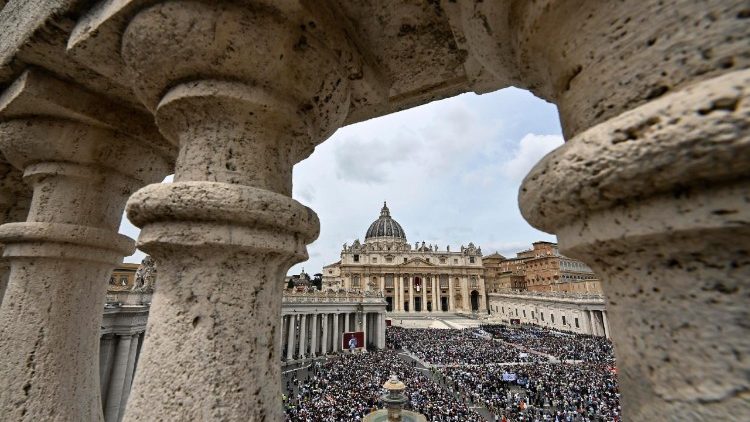
The Holy Year 2025, also commonly referred to as the Jubilee year, will officially conclude on January 6th 2026, the solemnity of the Epiphany, with the closing of the Holy Door of St. Peter’s Basilica in the Vatican. The objectives of the Holy Year have been to promote reconciliation, conversion, and a deeper relationship with God, with one another, and with creation. Some of its goals have been to foster hope and peace in our troubled world, performing acts of mercy, and encouraging social justice, such caring for the poor, the sick, and migrants and in line with biblical tradition, cancelling debts of poor countries. Advocacy for debt cancellation has been a major theme of the Jubilee Year by the Catholic church and by many secular leaders and organisations.
The late Pope Francis, for example, called several times for the cancellation of foreign debt for the world’s poor countries during the Jubilee year, citing the current debt crisis as a major obstacle to development and justice. According to statistics privided by Caritas Internationalis 54 countries are in a debt crisis today compared to 22 in 2015. Thirty-four of these are in Africa.
Unfortunately, while many creditors cancelled the debts of poor countries 25 years ago, following the appeals and campaign mounted by St. Pope John Paul II in 2000, this time large-scale cancellation has not occurred despite the appeals of the Church and of many humanitarian organisations, which have highlighted the devastating consequences of the ongoing debt crisis on developing countries.
According to Roberto Carlés, a lawyer, researcher and author on the debt crisis, most countries in Africa are spending more than half of their revenues on paying their debts. This year alone, African countries have paid around 89 billion US dollars in debt service. These countries spend more on interest payments than on social investment in health, education and infrastructure. Such levels of indebtedness, according to Mr. Carles, erode the efforts of these nations to reduce poverty and achieve sustainable development.
Why African countries Fall into Debt
African countries are continuously falling into debt due to a combination of factors: first, they borrow money from international lending institutions such as the World Bank and the International Monetary Fund and from rich countries at high interest rates to finance infrastructure and other projects. During economic crises such as sharp drops in the value of the dollar and the devaluation of national currencies, the interest rates are usually raised by creditors, leading to a rise in the amount of money the borrower must pay to the lender to service the debt.
At this actual time, many African countries have not been in position to start paying the actual debts they took 15 years ago because their revenues are sometimes not enough to cover the annual interest. Secondly, natural disasters, epidemics, rises in oil prices, and sudden changes in policy often compel governments to borrow money to cover the crises. Thirdly, African countries have a weak domestic tax base. This means they have few economic activities that are taxable for government revenue. Consequently because of insufficient revenue, in order to pay salaries of public servants and to cover the costs of providing services such as education, health, security, etc, they borrow money by issuing securities and bills to institutions and other countries, which have to berepaid with interest.
Fourthly, many Africa countries are victims of public financial mismanagement. This includes corrupt handling of government money, which starts with dishonesty in collecting revenue, corrupt allocation of funds in the national budgets, poor planning, deliberate misuse of government funds, and illegal diversion of funds for private gain. Mismanagement leads to loss of funds and inability to deliver services, and keeps governments in a vicious circle of borrowing. Solutions to the debt crisis must correctly address these factors.
The Declaration of the G20
The G20, a club of the world’s major economies, which held its summit from November 22nd to 23rd this year in the South African City of Johannesburg, addressed the debt crisis of poor countries, after its 2020 debt cancellation schemes came under strong criticism for being extremely slow and for providing inadequate relief. In its final declaration it recognized that high debt levels and mounting financing costs are gravely affecting many low and middle-income countries, especially in Africa, by limiting their capacity to invest in development and to reduce poverty and inequality.
The heads of state and government at the summit expressed concern over the sharp rise in interest payments over the past decade and reaffirmed their commitment to help the affected countries to address debt vulnerabilities in a comprehensive way. They pledged to enhance debt transparency, and support the review of the International Monetary Fund and World Bank debt sustainability framework for low-income countries. That framework is a joint tool that guides a country’s borrowing decisions by comparing its financing needs with its capacity to repay debt. The declaration underlined the importance of dialogue in debt management and repayment, and reflected a shared awareness of today’s debt challenges, and how to address them.
The Catholic Church’s Debt Cancellation Campaign
For the past 40 years, the Catholic Church has pressed for reform of the international debt system, beginning with the Millennium Jubilee campaign inspired by St. Pope John Paul II, which secured debt relief in 2000. Since then, every pope has called for debt relief as an instrument of poverty reduction. Currently, the church is promoting a global campaign, Turn Debt into Hope, through its charity, Caritas Internationalis.
In his message to the United Nations Climate Conference that took place in Brazil from November 10th to 21st this year, Pope Leo XIV, in continuity with his predecessors, called for a new human-centred international financial system that ensures that all countries, especially the poorest and those most vulnerable to climate disasters, can reach their full potential and see the dignity of their citizens respected, taking into account both external debt and ecological debt.
According to Roberto Carlés, the gravity of today’s debt crisis calls for large-scale efforts that only the wealthiest states can initiate and sustain. Unfortunately, deep divisions continue within them, as shown by the boycott of the G20 summit in South Africa by the United States of America. These divisions make it difficult to reach the kind of agreements needed to confront the debt crisis, and other great challenges facing humanity today, for example, the climate emergency and the inequality emergency. Mr. Carles appeals to the major powers to understand that these problems go beyond borders and will eventually reach their own territories in one way or another, if they don’t cooperate in finding actual solutions.
Thank you for reading our article. You can keep up-to-date by subscribing to our daily newsletter. Just click here
© Dicastery for Communication – Vatican News