Check out the latest Catholic news here. This news keeps you updated on what’s happening within the Church and the world from a Catholic perspective. Stay informed and discover how faith is moving – both locally and globally.
A pilgrimage in the footsteps of St. Stanislaus Kostka reaches Rome
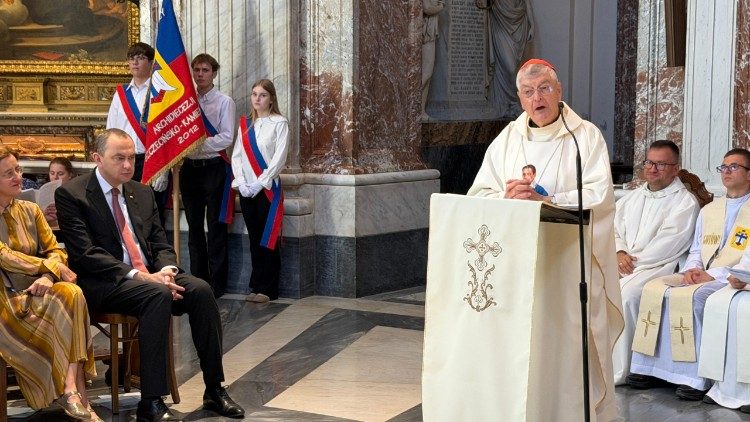
In 1567, St Stanislaus Kostka left Vienna and crossed Germany on his way to Rome, hoping to enter the Society of Jesus against his father’s wishes. This year, young Polish pilgrims retraced the same 1,713-kilometer route to pray for vocations. At the tomb of St Stanislaus in the Church of Sant’Andrea al Quirinale in Rome, they gave thanks for the pilgrimage with a Mass presided over by Cardinal Gianfranco Ghirlanda.
By Krzysztof Bronk
In 1567, St Stanislaus Kostka left Vienna, Austria and crossed Germany on his way to Rome, hoping to enter the Society of Jesus against his father’s wishes. This year, young Polish pilgrims retraced the same 1,713-kilometer (1,064.5 miles) route to pray for vocations.
The pilgrimage marked the 300th anniversary of the canonization of St Stanislaus and was carried out as a relay, with 160 participants.
The first stage, from Vienna to Linz, began on July 3. “We wanted to remind the world and Europe of St Stanislaus,” said Bishop Szymon Stułkowski, who created the pilgrimage, which passed through Austria, Germany and Italy.
Pilgrims arrived at the tomb of St. Stanislaus Kostka
The dramatic journey of the young Stanislaus
On September 15, at the tomb of St Stanislaus in the Church of Sant’Andrea al Quirinale in Rome, the pilgrims gave thanks for their journey. In his homily, Cardinal Gianfranco Ghirlanda recalled the dramatic course of the young saint’s life.
While studying at the Collegium Nobilium in Vienna, Stanislaus discovered his vocation to the Jesuits. Anticipating opposition from his family, he fled Vienna. He first went to Germany, where he received support from St Peter Canisius, and then continued to Rome, where he was admitted to the novitiate.
Despite the many obstacles he faced, Stanislaus showed remarkable determination. The Cardinal noted that this strength came partly from his character and resolve, and partly from a supernatural source.
Pilgrims in the footsteps of St. Stanislaus Kostka (kostka300.pl)
In Mary’s presence
While still in Vienna, Stanislaus endured a serious illness. During that time, he experienced a vision of the Virgin Mary with the Child Jesus. She allowed him to hold the Child in his arms and made him understand that the hour of his death had not yet come and that he was to enter the Society of Jesus.
He would encounter Mary once more two years later, while already a Jesuit novice in Rome, at the hour of his death. St. Stanislaus Kostka died on August 15, 1568, at just 18. He is the patron saint of novices and young Jesuits.
A lesson in resisting the vanity of the world
Cardinal Ghirlanda noted that St Stanislaus Kostka, who came from a wealthy and influential family, “fully understood the vanity of worldly things, in the sense that they disappear like mist, while what remains forever is the will of God.”
For this reason, the cardinal said, the Polish saint remains relevant today.
“The pagan society in which we now live is a constant temptation for all of us,” Cardinal Ghirlanda said. “In many ways, it attracts us with its vanity, and the Evil One deceives us by presenting it as something solid, as something that can give us happiness. St Stanislaus teaches us that we must resist it and remain faithful to God, even if this may lead to misunderstanding from those around us.”
Thank you for reading our article. You can keep up-to-date by subscribing to our daily newsletter. Just click here.
Catholics and Orthodox Christians make a pilgrimage to Mount Athos
The Apostolic Vicar of Northern Arabia and the Greek Catholic Metropolitan of Kuwait and Baghdad jointly led a pilgrimage to Mount Athos, which took place from September 6 to 9. The delegation received the blessing of Ecumenical Patriarch Bartholomew and was able to visit twelve of the twenty monasteries.
Vatican News
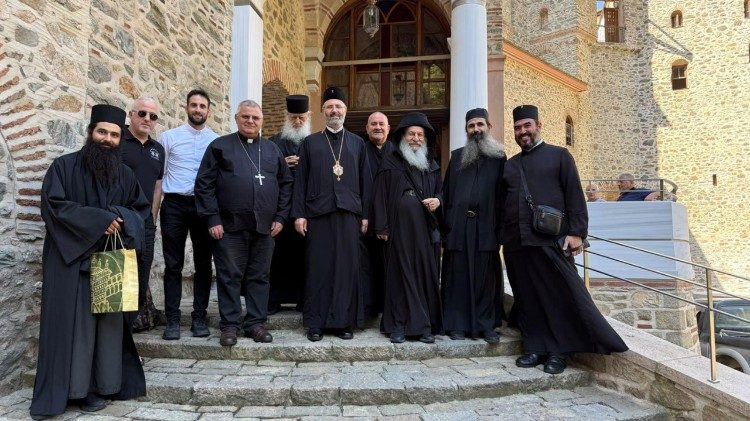
The Apostolic Vicar of Northern Arabia (with jurisdiction over the territories of Qatar, Kuwait, Saudi Arabia, and Bahrain), Bishop Aldo Berardi, and the Greek Catholic Metropolitan of Kuwait and Baghdad, Archbishop Ghattas Hazim (of the Patriarchate of Antioch), jointly led a pilgrimage to Mount Athos, which took place from September 6 to 9. The participants, who also received the blessing of Ecumenical Patriarch Bartholomew, were able to visit twelve of the twenty monasteries. Bishop Berardi described it as a “historic journey.”
“Historic” as it reflects “the good relationship between the Catholic and Orthodox Churches in Kuwait.” This is how Bishop Berardi explained the pilgrimage to Mount Athos, as reported in a press release from the Vicariate.
The Delegation of Catholics and Orthodox
Bishop Berardi—accompanied by a delegation that included Fr. Sliman Hifawi (of the Co-Cathedral of the Holy Family in Kuwait), Fr. Boutrus Gharib (of the Greek Catholic Church in Kuwait), seminarian Pedro Mendoza (of the Latin Patriarchate of Jerusalem), and Mr. Pierre Maalouf; and, representing the Orthodox Church, Father Ephrem Al Toumi—had the opportunity to gain firsthand insight into the monastic spirituality of Mount Athos, the statement explains.
Welcomed first at Simonopetra and later at Vatopedi, the delegation visited 12 of the 20 monasteries that make up the “third finger” of the Chalkidiki Peninsula in Greece. Although these monasteries are subject to the Ecumenical Patriarchate of Constantinople, they enjoy a high degree of autonomy, thanks to the administrative, disciplinary, and spiritual authority that each abbot exercises within his own monastic community.
Ecumenical Patriarch Bartholomew's blessing
The statement from the Vicariate goes on to say that Patriarch Bartholomew welcomed Metropolitan Hazim’s request to move forward with this initiative, “aimed at continuing to open paths toward Christian unity,” and agreed to bestow his blessing upon its participants.
Mount Athos: A place rich in holiness
Mount Athos has always been a place rich in holiness, where a number of saints have ties including St. Gregory Palamas (14th century) and St. Areta (6th century)—the latter being one of the patron saints of the Church on the Arabian Peninsula for both Catholics and Orthodox Christians.
Thank you for reading our article. You can keep up-to-date by subscribing to our daily newsletter. Just click here.
DRC: Bukavu puts to rest 27 victims of a school fire
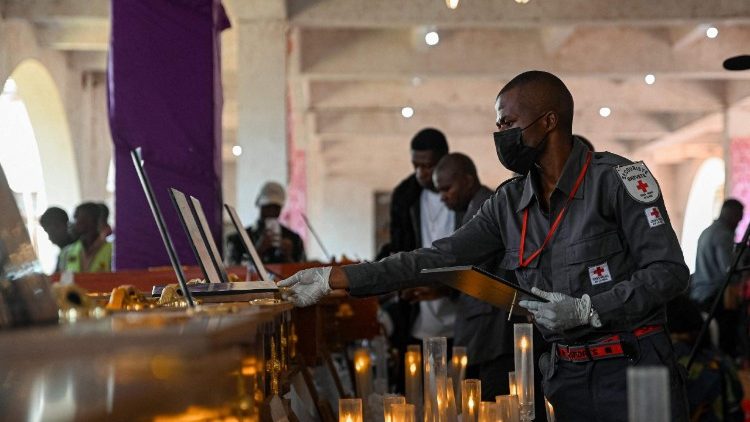
The funerals of the 27 victims of the fire that devastated a school on 10 September in the Cimpunda district of Bukavu, capital of South Kivu Province in eastern Democratic Republic of the Congo (DRC) have taken place.
Vatican News.
The Church’s Agenzia Fides reports thatsix of the victims killed in the fire were adults, while the rest were minors. These were pupils at the school affected by the blaze. The grief of the population is compounded by anguish over a series of “mysterious” fires that have been affecting the city for at least a week. The City of Bukavu is currently under the control of M23 rebels.
‘Mysterious fires’
According to a statement from the provincial coordination of Civil Society of South Kivu, sent to Agenzia Fides, “in less than a week, hundreds of homes, two schools, a church and a row of 66 shops in the Kadutu market have been reduced to ashes.”
The fires include 40 homes in Ponzi, where three people died, leaving 174 families homeless in Nyamugo. Citing figures from the Congolese administration based in Uvira, the last stronghold of the Kinshasa government in South Kivu, the statement says that 2,500 homes were destroyed by fire between July and August this year.
“This is a humanitarian catastrophe,” Bukavu’s civil society says, calling on the M23 administration to account for the situation.
In particular, civil society members are asking where the fire services are and why the causes of the fires have not been investigated.
“Every fire without an investigation is a form of complicity,” the statement says.
Taxes and the lack of services
Civil society representatives also point out that the administration controlled by M23 is forcibly collecting taxes from the local population without providing any services in return, particularly to those who have lost their homes in the fires.
Bukavu’s civil society is appealing to the international community and the authorities of the DRC to assist the 12,000 people who are in a situation of “extreme vulnerability.”
The statement concludes by calling for urgent assistance for communities affected by the fires, the deployment of fire engines donated by a well-wisher, and the reconstruction of the two destroyed schools.
Thank you for reading our article. You can keep up-to-date by subscribing to our daily newsletter. Just click here.
The Bible of Aquileia comes to life in the Vatican
A medieval treasure linking faith, history and craftsmanship is being brought back to life through a new facsimile edition. The first of five volumes of the Bible of Aquileia is presented to the Pontifical Academies of Sciences and of Social Sciences in the Vatican.
Vatican News
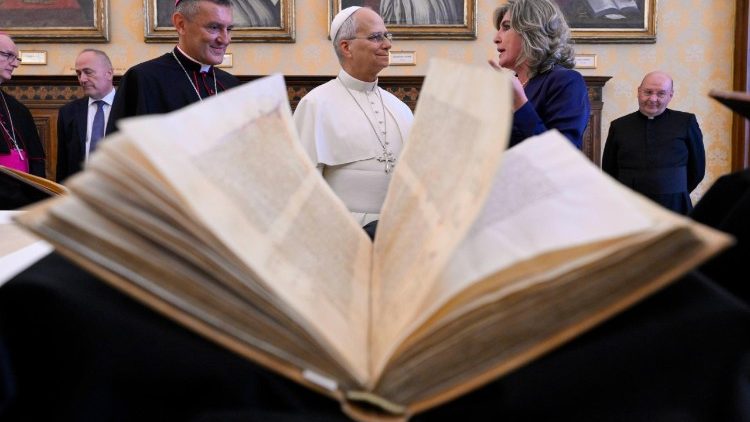
A medieval manuscript rooted in the history of the Patriarchate of Aquileia is beginning a new journey in the Vatican. The first volume of a faithful facsimile of the Bible of Aquileia was presented on Sunday to the Pontifical Academy of Sciences and the Pontifical Academy of Social Sciences at the Casina of Pio IV in the Vatican Gardens.
The project, promoted by the Scriptorium Foroiuliense Foundation, aims to reproduce all five volumes of the monumental manuscript by 2031.
The original Bible is preserved in the Treasury of the Cathedral of Gorizia. Written in Gothic book script between the 12th and 13th centuries, with annotations continuing into the 14th century, it is one of the significant surviving witnesses to the literary and cultural tradition of the Patriarchate of Aquileia.
The manuscript's historical importance extends beyond its religious use. Aquileia was for centuries a major ecclesial and cultural centre in the region, and its patriarchate played an important role in the development of European Christianity and culture.
The facsimile project combines detailed digital technology with traditional craftsmanship in an effort to reproduce not only the appearance of the original but also the materials and techniques used in its creation.
The manuscript was scanned in extremely high resolution, recording both the writing and the physical characteristics acquired by the pages over centuries. The resulting digital archive is intended to ensure the long-term preservation of the information contained in the original.
The physical reproduction then returns to traditional methods. The materials, inks and colours have been developed according to historical formulas, while the individual gatherings are assembled by hand and bound using naturally tanned leather and handcrafted metal elements.
The process has also raised questions about the manuscript's origins. A detailed digital reconstruction of its gatherings and pages revealed that its unusual binding does not correspond to conventional Western bookmaking practices. This feature has prompted renewed discussion among scholars about where and in what context the manuscript may have been produced.
Its beauty, meanwhile, lies less in elaborate decoration than in the quality of its writing, materials and craftsmanship, offering a tangible record of the knowledge and labour invested in the making of medieval books.
The Bible of Aquileia
A bridge between past and future
The project seeks to show that the preservation of cultural heritage is not simply a matter of conserving objects from the past. By combining ancient techniques with digital technology, it creates new possibilities for study, conservation and transmission.
The five-volume edition will be produced in a strictly limited number of copies, with completion planned for 2031. One copy is intended for Japan's National Diet Library, while collaboration has also begun with the University of Tokyo.
The initiative thus looks beyond the geographical and cultural setting in which the Bible was produced. Its organisers see the manuscript as a work capable of engaging cultures far beyond the Christian tradition, as a witness to the history of writing and to humanity's search for meaning.
Culture in the service of solidarity
The Vatican presentation also highlighted a further dimension of the project: culture as an instrument of solidarity and peace.
A special copy of the facsimile will be auctioned, with the proceeds going to the Buzzi Children's Hospital in Milan. In this way, the reproduction of a medieval biblical manuscript becomes connected with a concrete work of service to children and families.
For the Pontifical Academies, the initiative is also an opportunity to reflect on the continuing cultural influence of the Bible. Its language and imagery have shaped Western culture for centuries, leaving traces in everyday expressions and in literature, art and collective memory.
Thank you for reading our article. You can keep up-to-date by subscribing to our daily newsletter. Just click here.
Archbishop Gallagher: States should renounce nuclear weapons
In his remarks at the 70th General Conference of the International Atomic Energy Agency, the Secretary for Relations with States and International Organizations, Archbishop Paul Richard Gallagher, calls for the responsible use of nuclear technology, which is “inseparable from the commitments and responsibilities that accompany it.”
By Edoardo Giribaldi
The peaceful use of nuclear technology is possible, especially “in meeting increasing energy demand,” and serves as a significant example of how scientific progress can be harnessed for the benefit of humanity.
However, this is not always the case.
It is therefore crucial to remember that the responsible use of such tools comes with non-negotiable commitments and responsibilities: ensuring that development programs do not lead to the acquisition of nuclear weapons, protecting facilities in wartime, and applying artificial intelligence with an awareness of the associated risks and sound safety standards.
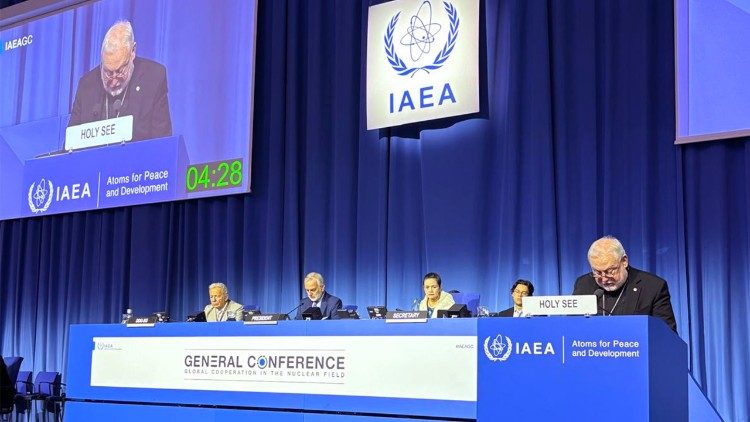
These are the points Archbishop Paul Richard Gallagher, Secretary for Relations with States and International Organizations, addressed in his remarks delivered on September 15, during the 70th General Conference of the International Atomic Energy Agency (IAEA), which opened the day prior in Vienna, Austria and will continue through Friday, September 18.
An evolving reality, unchanged perspectives
Conveying Pope Leo XIV's best wishes for the conference, Archbishop Gallagher recalled the Holy See’s longstanding commitment—as one of the IAEA’s original signatories seventy years ago—based on the conviction that a technology with such vast potential as nuclear energy “must be guided by sound ethical principles, be used for the service of peace and integral human development, and be protected from any destructive use.”
Archbishop Gallagher addressing the conference
Although geopolitical realities and the technology itself have evolved, the Vatican’s perspective remains unchanged—“the peaceful use of atomic energy must continue to be guided by those same enduring ethical principles.”
IAEA's unique role
The archbishop then emphasized the value of the peaceful use of nuclear technology as an application of scientific innovations in the service of the common good. However, it is essential to ensure that there is no discrimination in the ability to access its benefits. In this regard, through its technical cooperation program, capacity-building initiatives, and support for national institutions, the IAEA's unique role in strengthening countries' “capacity to utilize nuclear science and technology is a vital step towards sustainable development and reducing disparities among nations.”
The Agency’s efforts alone are not enough. Archbishop Gallagher pointed out that “the responsible exercise of the right to the peaceful use of nuclear technology is inseparable from the accompanying commitments and responsibilities – most importantly, the commitment of non-nuclear-weapon States not to acquire nuclear weapons.”
Safety and security in remembrance of Chernobyl
Marking the 40th anniversary of the Chernobyl disaster, in which a nuclear reactor explosion caused extensive short- and long-term damage, the Vatican secretary emphasized “that the benefits of the peaceful use of nuclear technologies, particularly in meeting increasing energy demand, must always be balanced with responsibility, transparency, and a firm commitment to nuclear safety and security.”
In this regard, ensuring “the safety and physical protection of nuclear facilities is an urgent and shared concern, especially in situations of armed conflict.” Here too, the Holy See’s position remains unchanged: “attacks on nuclear facilities must never occur,” as they could lead to radioactive releases with serious humanitarian and environmental consequences, both within and beyond national borders.
The “recent troubling developments” at the international level, Archbishop Gallagher noted, further highlight the need to adopt “responsible and sustainable approaches to all nuclear activities, including uranium mining and the management of radioactive waste, while taking into account environmental protection, public health, and the well-being of current and future generations.”
Applying AI thoughtfully
The secretary also devoted a section of his speech to the use of artificial intelligence in the nuclear sector. The Holy See welcomes the IAEA’s initiatives, calling for careful ethical consideration and responsible governance. As Pope Leo XIV emphasized in his encyclical Magnifica humanitas: “If we focus solely on contingencies, we risk letting the succession of emergencies dictate the direction of our path.”
The application of AI in the nuclear sector, Archbishop Gallagher concluded, “should therefore be underpinned by consciousness of the risks involved, effective human oversight, robust safety and security standards, as well as strengthened international cooperation, so that these technologies may truly advance peace, security, human health and prosperity for present and future generations.”
Thank you for reading our article. You can keep up-to-date by subscribing to our daily newsletter. Just click here.
Pope Leo XIV’s “Freedom Under Grace” released in English
Pope Leo XIV’s book “Freedom Under Grace” hits bookshelves in English, bringing together his reflections on the legacy of St. Augustine that has shaped his spirituality.
Vatican News
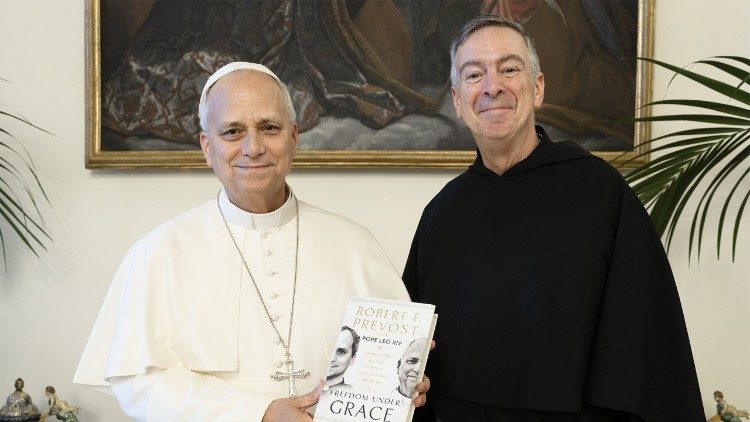
The English version of Pope Leo XIV’s book “Freedom Under Grace: Reflections on the Spiritual Tradition That Formed Me,” went on sale on Tuesday, September 15, in the US, UK, Australia, and across the Commonwealth.
“Freedom Under Grace” brings together the Holy Father’s reflections on the legacy of St. Augustine that have shaped his spirituality and vision for the world.
In addition to being the first-ever Pope from the Order of Saint Augustine, this book is of special interest to English-language readers, bringing to light the unique insights and perspective of the Church’s first American Pope whose mother tongue is English.
According to a press release from Penguin Random House, the book containes addresses, homilies, and personal writings from Fr. Robert Prevost’s time as Prior General of the Order of St. Augustine, revealing the “why” behind his contemplative responses.
The future Pope Leo XIV “invites readers to sit at the table, as if in real time, responding to the aftermath of 9/11, emerging political ideologies, and the Church’s response to poverty and human rights conflicts.”
“Drawing from the work of St. Augustine, whom he calls his spiritual father,” notes the press release, Pope Leo “advances a vision for life rooted in community, solidarity, and service to marginalized communities.”
Pope Leo XIV and Fr. Joseph Farrell look at the back cover of the Pope's book (@Vatican Media)
The English version of “Freedom Under Grace” is published in the US by Image Books, an imprint of the Penguin Random House Christian Publishing Group.
In the UK and Australia, the book is published by the Enlighten imprint of Penguin Random House UK.
The original Italian was published by the Vatican Publishing House (LEV) under the title “Liberi sotto la Grazia.”
The audiobook edition will feature opening homilies and addresses read by Emmy award-winning comedian and devout Catholic Stephen Colbert, and the main text will be narrated by award-winning narrator and Grammy nominee Scott Brick.
Jordan’s Crown Prince visits baptism site ahead of 2,000 years since Jesus’ Baptism
Jordan's Crown Prince Al Hussein bin Abdullah II visits the Baptism Site of Jesus Christ (Bethany Beyond the Jordan) and emphasizes the need to carefully plan for the 2030 millennium celebrations, commemorating two thousand years since the baptism of Jesus Christ.
By Fr. Paweł Rytel-Andrianik
The year 2030 will mark 2,000 years since the traditional date of Jesus' baptism by John the Baptist. Bethany Beyond the Jordan — today known as Al-Maghtas — is regarded as the site of Christ's baptism.
Crown Prince Al Hussein bin Abdullah II during his visit to this site on September 13 issued directives to improve the site to enhance the experience of Christian pilgrims and visitors.
"The Crown Prince emphasised the need to carefully plan for the 2030 millennium celebrations, commemorating two thousand years since the baptism of Jesus Christ, in a manner that reflects the profound history of the site and occasion, and reaffirms Jordan’s status as a premier global destination for Christian pilgrimage," read a statement of The Royal Heshemite Court.
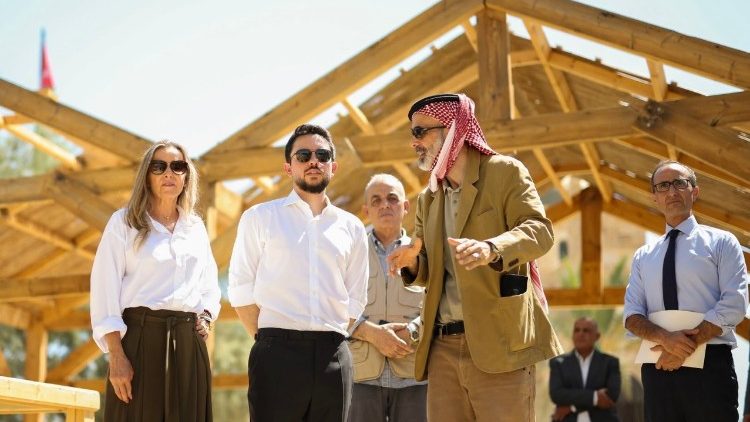
“The Crown Prince—accompanied by Prince Ghazi bin Muhammad, His Majesty’s chief adviser for religious and cultural affairs and personal envoy, and chairman of the Baptism Site Commission’s board of trustees—was briefed on the services offered to pilgrims and visitors. Her Royal Highness Princess Miriam Ghazi, Minister of Tourism and Antiquities Imad Hijazin, Director of the Office of the Crown Prince Zaid Baqain, and Baptism Site Commission Director General Abdullah Bawareed accompanied the Crown Prince on the visit,” it said.
The Crown Prince Al Hussein bin Abdullah II visited the Baptism Site of Jesus Christ (Bethany Beyond the Jordan, today known as Al-Maghtas)
Crown Prince Al Hussein bin Abdullah II underlined the need to promote the Baptism Site more widely, in coordination with the Ministry of Tourism and Antiquities, Jordan Tourism Board, and all relevant partners.
At Al-Maghtas, in Jordan, archaeological excavations have uncovered the remains of churches, chapels, hermits’ caves, and a baptistery — places of worship tied to Jesus’ Baptism. In 2015 this area was inscribed on the UNESCO World Heritage List.
Three Popes have made pilgrimages there: John Paul II, Benedict XVI, and Francis.
The Crown Prince Al Hussein bin Abdullah II visited the Baptism Site of Jesus Christ
Thank you for reading our article. You can keep up-to-date by subscribing to our daily newsletter. Just click here.
Study: Doctors don’t screen for abortion coercion — and it hurts women
A recent study found that women who are pressured to undergo unwanted abortions are at highest risk of negative outcomes and harm from abortion.
The study, published in the Journal of the Alliance for Hippocratic Medicine (JAHM), found that physicians rarely screen for coercion and pressure to abort, even though it is the highest predictive risk factor for negative outcomes.
The authors, David C. Reardon, Dr. Martha W. Shuping, and Dr. Patricia K. Giebink, called the failure to screen for this “medical negligence.”
“Women considering abortions should be evaluated for risk factors predictive of negative outcomes,” the study read. “The failure to screen for these risk factors is medical negligence. Screening and informing women of their personal risk factors as required by ethical and legal standards may lead to consideration of alternatives to abortion by women who consider the risks unacceptable.”
Michael New, a senior associate scholar at the Charlotte Lozier Institute, a pro-life group that does abortion-related research, said it was a “methodologically strong study,” noting that 1,000 women were surveyed, 226 of whom had an abortion in the past.
“Pro-lifers and the medical community should learn several important lessons from this study,” New told EWTN News. “First, coerced abortions are not uncommon. Secondly, … this study adds to a body of research that finds that a substantial percentage of abortions are unwanted or are inconsistent with the values of the woman seeking the abortion.”
“Third, even though supporters of legal abortion claim that women obtaining abortions report low levels of mental health problems, they should acknowledge that mental health risks are substantially higher among the subset of women who are emotionally conflicted or who would prefer not to have the abortion,” he continued.
Father Tadeusz Pacholczyk, a senior ethicist at The National Catholic Bioethics Center, urged physicians “to provide full disclosure of the risks and side effects to their patients.”
“The long list of bad mental, emotional, and health effects that regularly arise in the wake of an induced abortion should give pause to anyone seeking, or counseling, abortion, especially when it comes to medical professionals who themselves need to be fully informed regarding the seriousness of these risks,” Pacholczyk told EWTN News.
“I think it’s fair to say that a key duty of the physician or healthcare professional, in seeking to ‘do no harm,’ would be to try to dissuade their patients from acting on any desire to procure a direct abortion,” he continued. “And a candid discussion about the broad range of potential bad outcomes from the procedure provides an excellent starting point for dialoguing with their patients in a moment of crisis.”
Pacholczyk urged medical professionals to have references for pre-abortion counseling for women considering abortion.
“While medical professionals may not be able themselves to provide all the support a young woman requires when confronted with an unexpected pregnancy, they should be able to recommend or refer the woman to obtain additional helpful pre-abortion counseling so she can ponder, and bring to the surface, her own motives and fears, and by doing so, hopefully strengthen her to steer clear of the pseudo-remedy of abortion and instead address her situation with a heightened awareness of the care, accompaniment, and support coming from those around her,” Pacholczyk said.
Though difficult to enforce, legislation to require medical professionals to screen for coercion may enable victims of coercion to sue abortion clinics, if put into effect, according to New.
“It is unsurprising that physicians performing abortions rarely screen for coercion,” New said. “Many abortion are done in high-volume clinics where abortion doctors spend very little time with women seeking abortions.”
Kelsey Pritchard, a spokeswoman for Susan B. Anthony Pro-Life America, said the abortion industry doesn’t prioritize women.
“The abortion industry prioritizes profit — not women’s well-being, informed consent, or health, the overwhelming evidence shows,” Pritchard said.
“Previous peer-reviewed research by Charlotte Lozier Institute scholars indicates most women who’ve had abortions would have preferred not to if they had more support, with nearly a quarter describing their abortions as unwanted or coerced,” Pritchard continued.
She voiced concerns about the ease of abortion coercion due to mail-order abortion.
“Since Democrats made it as easy as ordering an Amazon package for anyone anywhere to buy and ship dangerous abortion drugs, even to states with pro-life laws, this hidden epidemic has gone from bad to worse, with alarming cases of women assaulted and poisoned across the country,” Pritchard said.
“Women pressured, coerced, or forced to abort go on to report higher levels of mental health and quality-of-life difficulties, which they all too often endure silently as they can face significant hurdles to coming forward,” Pritchard said.
“The loudest pro-abortion voices refuse to acknowledge the truth behind their narrative of ‘freedom’ and ‘choice,’” Pritchard said.
Sainthood cause for Virginia farmer who saved his son moves forward
The sainthood cause of Tom Vander Woude is moving forward, according to his home diocese of Arlington, Virginia. Vander Woude, a father of seven sons, died saving the life of his youngest son, Joseph, who has Down syndrome.
The diocese will begin gathering information — a key initial stage in the Catholic Church’s process of determining sainthood.
When Joseph, a teenager at the time, fell into a septic tank, Tom climbed into the tank with him, pushing him up toward the surface, away from the toxic fumes, saving his son’s life. Tom, 66, died on Sept. 8, 2008, in the accident, leaving behind his wife and seven sons.
His legacy didn’t end there, however. Because of his self-sacrificial act, a group of Catholics, formally called the Tom Vander Woude Guild, began to advocate for his cause.
“His final act of self-sacrificial love was widely regarded as the culmination of a Christian life marked by faith, charity, humility, fortitude, and generous service to others,” read Arlington Bishop Michael Burbidge’s edict, also signed by Monsignor Paul deLadurantaye, the chancellor of the diocese.
After receiving a formal petition from the cause’s postulator, Waldery Hilgeman, the diocese is asking for all information that could affect the cause to be brought forward. The bishop is also collecting any writings by Vander Woude and any documents about him.
“We see in the life and death of Thomas Vander Woude a sincere response to the Christian call to sainthood,” Burbidge said. “As heroic as were the circumstances of Thomas Vander Woude’s death, this husband and father showed in a profound way that sanctity is to be sought first and foremost through personal faithfulness in daily life and to a consistent and sincere yes to God in the circumstances of one’s vocation and responsibilities.”
Burbidge spoke about the cause in a podcast on Sept. 10, describing Vander Woude as “a holy, faithful, selfless, sacrificial man who serves as an inspiration for us.”
“That’s what saints do,” he continued. “They show us that we, who are ordinary and flawed, can live heroic and holy lives."
“When you move forward in this cause, itʼs not just because of that one heroic event, but also the day-to-day faithfulness as a husband, as a father, as a citizen, as a man of God,” Burbidge said.
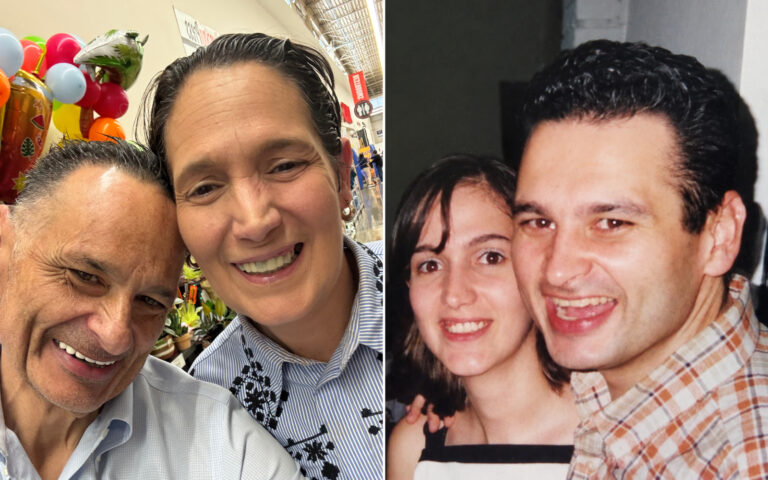
Tom Vander Woude with two of his grandchildren, Michael and Bobby Vander Woude (from left to right). The Diocese of Arlington, Virginia, is investigating Tom Vander Woude’s cause for sainthood almost two decades after he died saving his son. | Credit: Photo courtesy of the Tom Vander Woude Guild
Chris Vander Woude, a son of Tom Vander Woude who is advocating for his cause, expressed his excitement at the progress.
“I am grateful to the Diocese of Arlington and Bishop Burbidge for taking this step in the investigative process; it is truly exciting and incredibly humbling at the same time,” Chris Vander Woude told EWTN News.
“Not a day goes by without missing Dad, but witnessing how his story continues to inspire so many is a consolation,” he said. “I think his commitment to his daily vocation as a husband and father, culminating in his sacrifice for my brother, resonates with all sorts of people — especially parents. We continue to pray that Godʼs will be done in this process.”
Report flags weak funding and low completion in natural family planning programs
A report by the United States Conference of Catholic Bishops (USCCB) found diocesan natural family planning (NFP) programs across the country are experiencing continued low course completion among couples.
In January 2025, 196 dioceses were invited to take part in the annual Diocesan Natural Family Planning Ministry National 2025 Profile Report by the USCCB. Of the dioceses, 61 completed the questionnaire.
Similarly to past years, there is a wide gap between the numbers of couples who enroll in an introductory NFP education program and those who follow up with a full course.
The report found that a total of 18,211 individuals received some information or instruction on NFP across dioceses in 2025. In comparison, there were only 7,518 individuals who attended a full course in NFP.
The report noted that further research must be done among dioceses to understand the disparities and adjust NFP efforts to combat them.
It is important to strengthen NFP programs for many reasons but especially for the overall health of women, according to Dr. Annevay Conlee, vice president of the Women’s Health Service Line at OSF HealthCare, an integrated health system founded by the Sisters of the Third Order of St. Francis.
“When looking at the overall health of the couple, but also the woman in particular, fertility awareness-based methods (FABMs) are better than artificial contraceptive methods when looking at the wellness aspect and monitoring health, recognizing abnormalities, and being able to help in a restorative way sustain and support health,” Conlee told EWTN News.
“It does not cause the side effects and long-term potential consequences that contraception does,” she said.
To best ensure that couples continue the NFP learning process, Conlee suggested dioceses and other NFP providers ensure that they offer different types of options to “fit the needs and time commitment of the couple,” she said.
Also, they should be “making sure that there is awareness of not only the ability to achieve and avoid pregnancy with this but also monitor health and wellness,” she said.
Report reveals few employees and low budget
The 2025 report also found that employment for NFP programs differs among dioceses.
Of the 2025 respondents, 30% reported they rely on paid part-time staff and volunteers, and 16% have a full-time paid NFP coordinator.
Most instructors are volunteers (58%) who do not receive any stipend, while some are volunteers who do receive a stipend (16%) to cover expenses.
Steve Mattern, senior vice president of mission services at OSF HealthCare, noted high levels of volunteers may contribute to some of the low numbers.
“It seems like volunteers staff much of the demands of this work and while some … pre-marriage work does involve expectation of education and training, many dioceses do not expect this nor have the ability to serve it if they did expect it,” Mattern said.
“Still, there are some wonderful things happening where the next generations of Catholics are stepping up to give witness talks, to help give orientation, and to support education,” he said.
Along with employees, the survey also found that limited funding continues to be a significant issue for NFP programs. Of dioceses surveyed, 68% budgeted less than $5,000 for NFP programs.
Most diocesan NFP programs rely on indirect funding from other sources including donations from parishes, grants from local Knights of Columbus councils, a fee for course instruction, and follow-up fees, according to the report.
Next steps for the Church
“We hear anecdotally in healthcare that fewer couples are coming to seek marriage in the Catholic Church,” Mattern said.
As “more people are living together and may be seeking marriage outside the Church when they do marry,” there is more of a question around what “needs to be in the required marriage prep pathway,” he said.
“Should the couple go through a course of their choosing within a range of offered methodologies for NFP, and should the diocese offer a coupon or resource for them to do this?”
“This has been tried and it does work; many do go on to take a course offering,” he said. “However, other dioceses may seek to do a very basic course … and may not really get to NFP or may make only a brief mention of it.”
“It seems like a strong and effective communication approach and partnership across both the diocese and the Catholic healthcare ministry, and its professionals can bring a stronger approach for life and for the good of these couples and their family life,” Mattern said.
Overall, “people still need basic awareness of what the fertility awareness-based methodologies offer and provide and so this work is ongoing and invites our creativity, hope, and imagination,” he said.
While discussion around NFP is usually in regard to pregnancy, “it is so much more important to start forming our minds and hearts when we are young and in the context of our families,” Sister M. Mikela Meidl, FSGM, president of OSF HealthCare, said.
“Learning about modesty, purity, and the beauty of our bodies as we grow and develop helps create an openness to understand ourselves long before we marry,” she said.
“Supporting and helping parents to hold these conversations without embarrassment and full of confidence and attentive listening will go a long way in making people desire what is true and good,” she said.
Nearly 700 young Christians gather in Iraq for Baghdeda Youth Festival
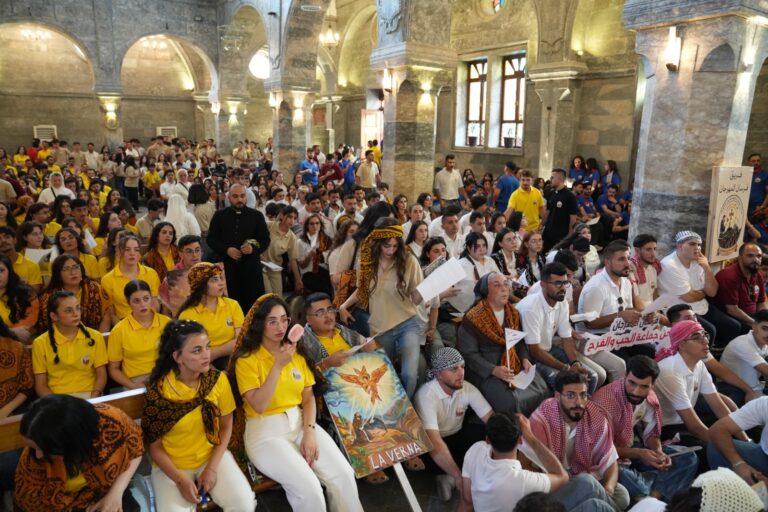
The sixth Baghdeda Youth Festival concluded Saturday, Sept. 12, with a large faith procession that brought together nearly 700 young men and women, led by Bishop Benedictus Younan Hanno of the Syriac Catholic Diocese of Mosul and its dependencies, along with former diocesan bishops Yohanna Boutros Moshe and Georges al-Qass Moussa, priests, religious men and women, and thousands of faithful.
The procession, which organizers called the “Hosanna Procession,” began at the Cathedral of the Immaculate Conception in Baghdeda, also widely known as Qaraqosh — a predominantly Christian town on Iraq’s Nineveh Plains. Participants followed the traditional Palm Sunday procession route toward St. John Church.
The sixth Baghdeda Youth Festival concluded Saturday, Sept. 12, 2026, with a large faith procession that brought together nearly 700 young men and women, led by Bishop Benedictus Younan Hanno of the Syriac Catholic Diocese of Mosul and its dependencies, along with former diocesan bishops Yohanna Boutros Moshe and Georges al-Qass Moussa, priests, religious men and women, and thousands of faithful. | Credit: Ragheed Nenwaya/ACI MENA
Along the way, young people and other faithful prayed, sang hymns, and chanted while carrying olive branches as a symbol of peace. The procession concluded with the “Service of the Cross — Teshmeshta,” a prayer service from the Syriac tradition, followed by the lighting of the festival torch.
Before setting out from the cathedral, participants attended a spiritual conference titled “St. Francis: A Living Model for Our Young People in Living Hope,” presented by Dominican Father Nuwairan Nasser. He encouraged the young people to follow the example of St. Francis of Assisi, seeking to embody his spiritual values in their daily lives and to live more deeply the meaning of the festival’s theme.
‘In the footsteps of St. Francis’
The festival began Thursday under the theme “In the Footsteps of St. Francis.” The opening program included a spiritual reflection by Hanno titled “Leave Everything That Makes You Lose Yourself.”
The bishop stressed the importance of understanding Christian freedom as a free response of obedience to God rather than as freedom without accountability or responsibility. His reflection drew on the festival’s theme and the life of St. Francis.
Participants then divided into groups for pilgrimages and prayer at several churches in Baghdeda, including St. Ephrem the Syriac Church, Sts. Behnam and Sarah Church, St. James the Mutilated Church, St. John the Baptist Church, and St. Joseph Church.
Bishop Benedictus Younan Hanno of the Syriac Catholic Diocese of Mosul and its dependencies hosted and led the sixth Baghdeda Youth Festival in northern Iraq on Sept. 12, 2026. | Credit: Ragheed Nenwaya/ACI MENA
Mosul welcomes Baghdeda’s young Christians
The festival’s second day included visits to restored churches belonging to the diocese in Mosul, a city where the Christian community suffered severe persecution and displacement during the occupation of the Islamic State group.
The sixth Baghdeda Youth Festival concluded Saturday, Sept. 12, 2026, with a large faith procession that brought together nearly 700 young men and women, led by Bishop Benedictus Younan Hanno of the Syriac Catholic Diocese of Mosul and its dependencies, along with former diocesan bishops Yohanna Boutros Moshe and Georges al-Qass Moussa, priests, religious men and women, and thousands of faithful. | Credit: Ragheed Nenwaya/ACI MENA
Residents greeted the crowds of young Christians and welcomed what organizers described as “the renewed Christian presence in the community’s historic homeland.”
The day also featured a spiritual conference titled “Forgive So That You May Be Free,” presented by Chorbishop Emmanuel Kallo, the bishop’s special vicar and official responsible for the Syriac Catholic churches in Mosul.
Kallo reflected on the Christian understanding of forgiveness and explained how forgiving others can help free a person from the burden and pain caused by wrongdoing.
The young people also participated in Eucharistic adoration at Our Lady of the Annunciation Church.
This story was first published by ACI MENA, the Arabic-language sister service of EWTN News. It has been translated and adapted by EWTN News English.
UN asked to recognize surrogate motherhood as a new form of slavery
The Casablanca group of experts and the French nongovernmental organization Juristes Pour l’Enfance (Legal Professionals for Children) have asked the United Nations to officially recognize surrogacy as “a new form of slavery involving women and children.”
The request was submitted to the U.N. special rapporteur on contemporary forms of slavery and human trafficking, Katarina Schwarz, to mark the centennial of the 1926 Slavery Convention and the upcoming Human Rights Council session dedicated to the occasion, “the agenda of which includes, among other issues, new forms of slavery.”
The request is based on the argument that surrogacy reduces the child in utero to an object of disposal, which corresponds to the definition of slavery set forth in the 1926 Geneva Convention, namely, the exercise of the attributes of the right of ownership.
In the case of the woman carrying the baby, her body is subjected to the will of third parties, which includes control over her diet and medical care as well as, potentially, embryo reduction or abortion, the statement explains.
The Casablanca Declaration experts and Juristes Pour l’Enfance point out that "at the international level, several United Nations bodies have already characterized surrogacy as the sale of children, including the Special Rapporteur on the sale of children in 2018 and the Committee on the Rights of the Child in 2019."
Furthermore, in her July 2025 report, the special rapporteur on violence against women and girls called for the eradication of all forms of surrogacy and the adoption of a binding international instrument to abolish this practice. Finally, a June 22 joint statement by states calls for a moratorium with a view to the universal abolition of surrogacy.
In their statement, the Casablanca Group of Experts and Juristes Pour l’Enfance also called on Schwarz to urge states to put an end to this practice within their territories and to commit to its universal abolition.
The Catholic Church also condemns the practice of surrogacy.
In his 2024 address to the diplomatic corps accredited to the Holy See, Pope Francis described the practice of so-called surrogacy as "deplorable," noting that it is "a grave violation of the dignity of the woman and the child, based on the exploitation of situations of the mother’s material needs. A child is always a gift and never the basis of a commercial contract.”
The Holy Father urged the international community “to prohibit this practice universally,” as “human life must be preserved and defended” at every stage of its existence.
This story was first published by ACI Prensa, the Spanish-language sister service of EWTN News. It has been translated and adapted by EWTN News English.
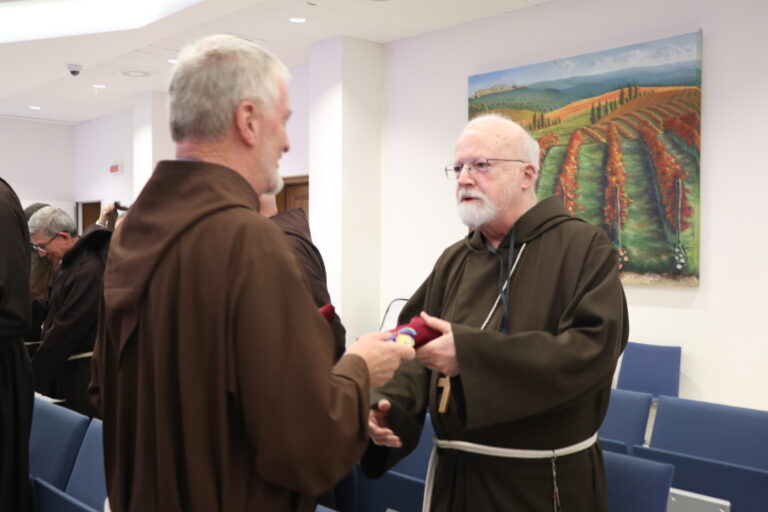
Capuchin bishops reflect on dual calling as friars and diocesan shepherds
How can a Capuchin friar remain faithful to his Franciscan vocation while serving as a diocesan bishop responsible for secular clergy and the lay faithful?
That question was at the heart of an assembly of approximately 55 Capuchin bishops from around the world held Sept. 9–13 in Assisi, Italy, for prayer, study, and fraternal reflection.
Set against the historic backdrop of the Jubilee of St. Francis and the approaching 500th anniversary of the Capuchin Reform, prelates serving in Africa, Asia, Latin America, North America, Europe, and Indonesia shared their pastoral realities and reflected on their service to the universal Church.
“We are going back to Assisi in this wonderful year of the Jubilee of St. Francis,” Cardinal Seán Patrick O’Malley, archbishop emeritus of Boston, said. “It is a great honor. It’s a wonderful opportunity to experience the fraternity of so many bishops from all over the world.”
According to Vatican statistics, there are 5,525 Catholic bishops worldwide. Of those, 4,332, or 78.4%, are diocesan bishops formed within the secular clergy, while 1,193, or 21.6%, are members of institutes of consecrated life, including Capuchins, Dominicans, Jesuits, and Salesians. The Capuchin order counts more than 74 bishops among its members.
The assembly offered the bishops an opportunity to share their experiences as members of a religious order governing dioceses made up of secular clergy and lay faithful. In particular, they considered how to live the Capuchin values of contemplative prayer, fraternal life, minority, poverty, and closeness to the people in their governance and pastoral care of local Churches.
Capuchin bishops arrive in Assisi, Italy, for a retreat held Sept. 9-13, 2026. | Credit: General Curia of the Capuchin Friars Minor
The Capuchin value of ‘vicinanza’
According to Archbishop Emeritus Andrés Stanovnik of Corrientes, Argentina, the Capuchin value of “vicinanza” — closeness or proximity to others — is the bridge between his Capuchin identity and his episcopal ministry.
Though a bishop must, in his words, “leave behind his identity as a friar and take up the identity of a bishop,” what unites the two vocations is “vicinanza.”
This is profoundly a Franciscan instinct, not an incidental one, because St. Francis of Assisi did not renew the Church through abstractions or distance. He embraced the leper, sat with the poor, and preached in public squares rather than only from the pulpit.
Franciscan closeness is not merely being nice or sociable but a theological stance: Holiness is discovered in proximity to the concrete, wounded, and ordinary human person, not in withdrawal from others.
Stanovnik said proximity to the people must survive the transition into hierarchical office; otherwise, the episcopate risks becoming purely administrative rather than pastoral. The question for Capuchin bishops is whether closeness to the poor and ordinary people has been preserved or traded for institutional distance.
Returning to the Gospel without becoming fossilized
Reflecting on the historical significance of the Capuchin Reform, Archbishop Jude Thaddaeus Ruwa’ichi of Dar es Salaam, Tanzania, emphasized that the movement begun in 1528 was born of a divine prompting to return to the original charism of St. Francis of Assisi.
Drawing on his 50 years as a friar and 27 years as a bishop in four Tanzanian dioceses — Mbulu, Dodoma, Mwanza, and Dar es Salaam — Ruwa’ichi said: “God prompted the founders of the Capuchin Reform to desire to go back to their sources, to desire to live faithfully the charism of St. Francis.”
“The charism must be lived faithfully in the course of time, and as we live the charism faithfully, we should not be fossilized,” he continued. “We should not allow ourselves to be trapped in a certain approach that does not allow us to continue listening to the Holy Spirit and to continue responding to the promptings of the Holy Spirit.”
He also expressed gratitude for the concrete support of his fellow friars.
“I have always been given a friar to work and live with me, and that has been very helpful,” he said. “So, along with living with my diocesan clergy, I also have the support of a confrere who understood me, who served as my confessor, who served as my driver, who served as my private secretary.”
Capuchin bishops in Assisi, Italy, during a retreat held Sept. 9–13, 2026. | Credit: General Curia of the Capuchin Friars Minor
Combating isolation through fraternal solidarity
O’Malley said the international assembly, organized at the initiative of the Capuchin minister general, Father Roberto Genuin, and his council, offered essential encouragement to bishops, most of whom serve in mission territories.
Exchanging experiences of evangelization in a fraternal setting helps bishops “know that they are not alone and that there are many brothers who share their ministry,” he said.
“They do not work in isolation,” O’Malley added, saying the gathering imparted fresh spiritual energy to their ministry. “So, it is a wonderful opportunity for us.”
Addressing contemporary cultural pressures, he pointed to increasing secularization and social divisions as paramount challenges for Church leaders.
“It is very encouraging that the Holy Father, Pope Leo XIV, is trying to bring peace and unity, themes of his pontificate, and they are certainly very Franciscan themes,” O’Malley said. “Francis called us to be universal brothers and to be instruments of peace and to try and bring people together to follow Christ with the joy of the Gospel.”
Restoring the original gift to the universal Church
Stanovnik described the approaching 500th anniversary as a crucial moment to rediscover the core Gospel of Jesus Christ.
“The Capuchins, 500 years ago, revived this practice, placing certain emphases on it,” he said. “For example, mental and contemplative prayer, simplicity in community life, closeness to the people and preaching.”
He said Capuchin bishops are called to absorb these original gifts anew and offer them back, fully restored, for the revitalization of the universal Church.
Pope’s Alma Mater reveals first Pope Leo XIV Sustainability Medal recipient
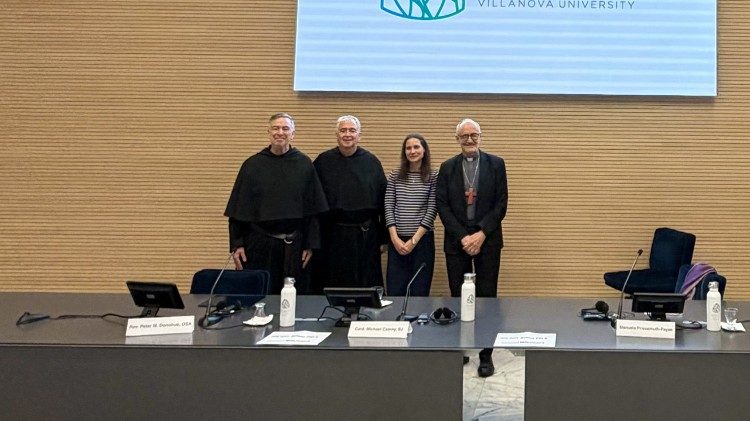
At a press conference held in the Sala San Pio X of the Vatican, Villanova University announces that Cardinal Michael Czerny, S.J., was selected as the inaugural recipient of the Pope Leo XIV Sustainability Medal, and reveals new details about the upcoming 2026 Villanova University International Sustainability Conference.
By Deborah Castellano Lubov
The winner of the first-ever Pope Leo XIV Sustainability Medal is Cardinal Michael Czerny, S.J., Prefect Emeritus of the Dicastery for Promoting Integral Human Development, in recognition of his decades of "remarkable service" and as "a leader whose life reflects the very best of what this medal represents."
This was revealed by the President of Villanova University, Fr. Peter Donahue, Ph.D., O.S.A. on Monday during a press conference hosted by the university on September 14 in the Vatican's Sala San Pio X, down the street from St. Peter's Square, to announce the inaugural recipient of the Medal.
Alongside the University President at the conference were Cardinal Czerny and Dr. Manuela Priesemuth-Payan, Ph.D., Faculty Director for Ethics and Social Responsibility at Villanova School of Business, and Alessandro Gisotti, Deputy Director Editorial of the Dicastery for Communication, who moderated.
Villanova University is an Augustinian Catholic institution located near Philadelphia in the United States, where Pope Leo XIV, then Robert Prevost, earned a Bachelor of Science in Mathematics in 1977. The University later awarded him an honorary Doctor of Humanities degree in 2014.
Alessandro Gisotti opened the event by recalling that all were gathered on this special day, as September 14 marks the birthday of Pope Leo, reflecting on how it is a gift to be discussing these themes important to him.
Recalling that the Prior General of the Augustinian Order Worldwide, Fr. Joseph Farrell, O.S.A., was in attendance, Mr. Gisotti observed that Fr. Farrell's presence underlines the great Augustinian inspiration behind the events being discussed today.
The Prior General of the Augustinians, Fr. Joseph Farrell, O.S.A., reflects on Pope Leo's birthday
Fr. Donahue: ‘moving from dialogue to meaningful action’
Before discussing the Medal itself, Fr. Peter Donahue thanked Pope Leo for his leadership, witness, and steadfastness in working to protect our common home and promote human rights.
He explained that the Pope Leo XIV Sustainability Medal is intended to recognize individuals from any field or discipline whose leadership reflects a holistic approach to sustainability. Laureates are selected for work that integrates care for the environment, social justice, protection of vulnerable communities, and responsible economic stewardship.
Presented every two years during the Villanova University International Sustainability Conference, he said it seeks to inspire leadership, encourage innovation, and promote collaboration in building a more just and sustainable world.
The President of the University went on to highlight that this year's winner was Cardinal Michael Czerny, with his decades of remarkable experience in advancing human dignity, human rights, and environmental stewardship, "reflects the spirit the Medal was meant to honor."
Cardinal Czerny says Medal represents a call to responsibility and action
Cardinal Czerny expressed his gratitude for the honor.
“I commend Villanova," he said, "for courage to stand up in this very public way to say we pledge to serve society by preparing people to take real responsibility for the world that is coming into being – and that’s not just ecology responsibility, but also responsibility for artificial intelligence and more broadly and deeply with political responsibility, where it is always harder to exercise it.”
The Medal, he said, has great significance for the person who receives it, but what is more important here is the donor, the fact that this American university is making such a commitment to sustainability is noteworthy.
‘The Medal challenges us to ask what future we are preparing for’
Moreover, Cardinal Czerny suggested the Medal symbolizes the challenge for the University to ask itself: "what are we preparing these future graduates for?"
“Now there are very serious questions about the future, and to say we prepare you for the future," the Jesuit Cardinal underscored, "is a very bold promise.”
“We dare to offer them an education which claims to prepare them for life. That’s quite an offer. I feel the meaning of that offer is all the more eloquently expressed by Pope Leo in his encyclical Magnifica humanitas, ‘where he asks what type of world are we building.’”
International Sustainability Conference
In addition to focusing on the award, the speakers focused on the upcoming 2026 Villanova University International Sustainability Conference, titled “Responding to the Cries of the Earth and the Poor.”
The 2026 Villanova University International Sustainability Conference is expected to bring together approximately 300 academics, researchers, Church representatives, foundations, and leaders from the public and private sectors in Rome from Oct. 12–15.
The Conference is presented with the support of the Dicastery for Promoting Integral Human Development and the Laudato Si' Center for Higher Education.
Fr. Donahue stressed the conference seeks “to move from dialogue to meaningful action,” and Dr. Manuela offered the academic perspective.
She expressed that the conference will foster dialogue and collaboration across many different disciplines, sectors, and communities, including those most on the front lines in the various areas, those working in the Global South, as well as eventual policymakers, and explained that a keynote will be presented each day to set the tone.
Pope Leo to present Medal
Pope Leo XIV himself will officially present the Medal on October 13 at Laudato Si’ Village in the Pontifical Gardens of Castel Gandolfo, during the Conference.
With at its core the relationship between ecological degradation and social inequality, the conference will foster interdisciplinary collaboration and explore how research, ethics, and lived experience can contribute to more just and sustainable communities.
On October 13, participants will gather for a morning program and lunch at the Augustinianum in Rome before traveling to the Laudato Si’ Village in the Pontifical Gardens of Castel Gandolfo for a visit and the inaugural presentation of the Pope Leo XIV Sustainability Medal.
Thank you for reading our article. You can keep up-to-date by subscribing to our daily newsletter. Just click here.
Cardinal Farrell: Rekindling hope in a young person takes humanity a step forward
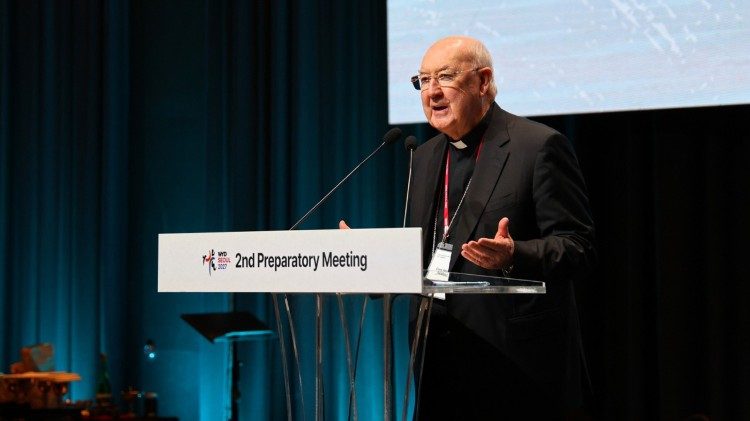
Cardinal Kevin Farrell, Prefect of the Dicastery for Laity, Family and Life, celebrates Mass and opens the Second Preparatory Meeting for World Youth Day Seoul 2027.
By Isabella H. de Carvalho
While many young people are struggling, World Youth Day can help them lift up their gaze to Christ and also show a new humanity that can overcome hatred and division, said Cardinal Kevin Farrell, Prefect of the Dicastery for Laity, Family and Life, while celebrating Mass on September 14, 2026, during a preparatory meeting for World Youth Day Seoul 2027.
“It is worth committing to this preparation; it is worth working, making sacrifices, investing resources, and mobilizing so many people – because young people are the future of the Church and of the world,” the Cardinal highlighted.
“To rekindle hope in even one young person means helping all of humanity take a step forward," he said.
With less than one year to go to the World Youth Day (WYD) in Seoul – scheduled to take place from August 3 to 8, 2027 – 300 delegates from all over the world gathered in the South Korean capital for the Second Preparatory Meeting for WYD. The first one was held right after the previous international WYD, which took place in Lisbon in 2023.
Present at the meeting, lasting from September 14 to 17, were also Archbishop of Seoul, Peter Chung Soon-taek; the Apostolic Nuncio in Korea, Archbishop Giovanni Gaspari; and, other representatives of previous WYD and the Dicastery for Laity, Family and Life.
The first sessions were dedicated to reflecting on the legacy of the WYDs – which have been taking place since 1985 – and then, in the afternoon, Cardinal Farrell celebrated the opening Mass on the Feast of the Exaltation of the Holy Cross.
The Second Preparatory Meeting for WYD Seoul 2027
Mission of Church and WYD: open people’s hearts
In his homily, the Cardinal reflected that many young people today “find themselves in the desert of life, going through difficult trials, moments of confusion, rebellion, and emptiness,” with many of them struck by “sin, sadness, depression or unbelief.”
He explained that for them salvation lies not in human strategies, material possessions or new technologies, but rather “in lifting their gaze and receiving from God forgiveness, love, and life,” which takes place before the cross, “the clearest manifestation of Jesus’ love for us.”
The Prefect of the Dicastery for Laity, Family and Life thus emphasized that the mission of the Church and of WYD is to encourage that “many hearts may open themselves to grace,” that the cross of Christ may be raised “so that many young people may look to Him, welcome His love, and become His disciples.”
“Lift up your head and look – nothing more!” the Cardinal insisted, adding that an act of faith is “not relying on one’s own strength, but lifting one’s gaze toward God and asking Him for help.”
The Second Preparatory Meeting for WYD Seoul 2027
Finding unity, overcoming hatred and division
Cardinal Farrell also pointed out that the cross is “the symbol of universal reconciliation, where the vertical beam unites heaven and earth – God and humanity – and the horizontal beam unites all of humanity in a single embrace of forgiveness and brotherhood.”
In this regard, he noted that WYD has this same mission, as one of its “most beautiful aspects” is “the presence of different cultures, languages, and races, all united in the one faith.”
“During World Youth Day, young people show the world that divisions, prejudices, and hostilities can be overcome. Young people show that by welcoming Christ, a new humanity is born. A desire emerges to encounter and discover others, to embrace diversity, without fear or closed-mindedness. This is the miracle of communion in the one Spirit that the cross of Christ has brought into the world,” the Prefect underlined, adding that he is sure this will happen in Seoul as well.
The fruits of WYD
Looking ahead, Cardinal Farrell imagined how young people gathering in the Korean capital next year will be enriched by those they meet, how they will discover faith in God and “the beautiful face of the Church,” and how they will also “rediscover faith in humanity” and “regain confidence in the future.”
This will allow them to “to devote their lives to something great, rather than wasting time on vain and deceptive idols,” whether that be discerning a call to priesthood or religious life or seeing the importance of starting a family.
“The fruits of a World Youth Day are many, and I cannot list them all now – not least because many will remain known only to God,” the Cardinal continued, adding however that he mentioned them in order to encourage all those present to continue with the preparations for next year’s event.
“Let us lift our gaze to the cross of Christ; let us ask Him for every blessing for Korea, for this World Youth Day, for all the young people who will come, and for all the young people of the world,” the Cardinal concluded, praying that the everything they do “in preparation for the upcoming World Youth Day may be inspired by the same love for souls that overflows from the heart of Jesus.”
Thank you for reading our article. You can keep up-to-date by subscribing to our daily newsletter. Just click here.
Pope: A library is not just place of books but of relationships and exchange
Speaking to the staff of the Vatican Archives and Library, Pope Leo XIV highlights the importance of the mission of these two institutions in service of the Church and the world and notes that the Library is not simply a place full of books, but a place built by relationships, exchange, and sharing ideas.
By Kielce Gussie
Visiting the historic Apostolic Archives and the Apostolic Library in the Vatican on Monday, Pope Leo XIV inaugurated the ““AQVA. Catastrophe and Wonder” Exhibition”.
Speaking to staff of the Library and Archives, the Pope highlighted his first visit to the Library as pontiff, “following in the footsteps” of his predecessors.
He expressed his closeness and appreciation for the mission and work of the two institutions, which he described as “at the service of the development and spreading of culture, for the benefit of the Church and all humanity.”
“AQVA. Catastrophe and Wonder” Exhibition in the Vatican (@Vatican Media)
The Vatican Archives and Library work to preserve and maintain “acts and documents concerning the government of the universal Church”, according to the Apostolic Constitution Praedicate Evangelium No. 242. They also work to collect preserve a large patrimony of arts and learning, while making it available to scholars (No. 243).
In search of truth
While a library can be seen as a restful, quiet place, Pope Leo highlighted that a book also “awakens a restlessness, feeding the desire and daring to search.” Saint Augustine is an example of this dynamic. Through reading the Letter of Saint Paul, the Bishop of Hippo’s doubt disappeared.
“But not the desire, which became even stronger, driving him to explore the breadth and depth of Sacred Scripture,” the Pope explained. By studying biblical books, Saint Augustine’s spirit was opened.
In the same way—through study, preservation, and making books of the successor of Peter available—Pope Leo noted, “you help the Church and humanity to reach the depths of desire. Without it, everything withdraws from the living God, the source of truth and love.”
A beating heart
Furthermore, he asked: How can we describe the Pope’s Library?
Using a metaphor, Pope Leo called the Apostolic Library a heart. “A beating heart is a symbol of life, and it results from two opposing movements, systole and diastole: a contraction and a relaxation, a movement towards the center and another towards the periphery,” he explained.
The Pope’s Library remains alive as long as it maintains its systole and diastole. The systole of the Apostolic Library is that it continues to be a place characterized by quiet, discretion, respect, and care.
The Pope addressed the staff of the Vatican Archives and Library (@Vatican Media)
Pope Leo expressed his desire that the “monastic atmosphere of the Apostolic Library” be a reminder of a passage from Saint Luke’s Gospel: “If you have to build, if you have to fight, first sit down and study” (14:28-32).
The interior life of the Apostolic Library also stems from its unique and priceless treasure preserved inside.
“While on the one hand it is right to facilitate access to this treasure for study, including through digitization and online access,” he continued, “on the other it is also necessary to preserve and encourage the ancient practice of physically making one’s way to the Library.”
It is not simply a place full of books, but a place built by relationships, exchange, and sharing ideas.
More open to the world
Continuing the metaphor, the Apostolic Library lives through this diastole (relaxation). In the room dedicated to his predecessor, Pope Leo XIV remembered the role of Pope Leo XIII in the time of the Industrial Revolution. This included opening the Vatican Archives up to scholars around the world and giving wider access to the Library.
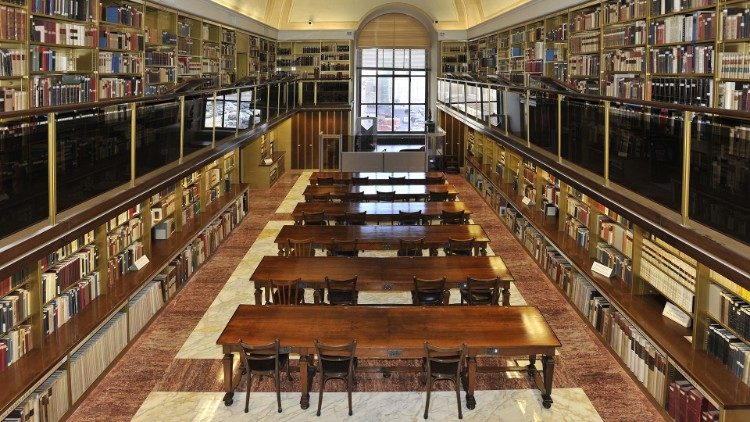
The reading room contains literature, theology, botany, zoology, medicine, law, art, and economics, among other topics. Works from across the globe are held in the library.
All of this, Pope Leo highlighted, occurred before it was a universally common practice. “Through this approach, the Apostolic Library bears witness to the Church’s ancient and ever-new cultural openness,” he said.
Inaugurating this current cycle of exhibitions is confirmation of this tradition. Another example of this cultural openness is the “gentle diplomacy that finds an open path among the documents and books of the Vatican Archives and Library, one of the ‘open pathways to reconciliation’ of which the Encyclical Magnifica Humanitas speaks” (No. 211).
The Pope examines some of the documents in the Vatican Library (@Vatican Media)
The Pope urged the staff of the Vatican Archives and Library to continue this and challenged them to be faithful to the past and to the future, to use the languages and means relevant to their work, and to find new ways to achieve reconciliation.
Pope Leo concluded his speech highlighting a problem the Vatican Archives and Library is currently facing: the need for new space. He announced that he has given instructions to help respond to this need.
“I intend to continue along the path traced by my predecessors, who over the centuries have demonstrated the care the Apostolic See has for the institutions entrusted with preserving and promoting its cultural and administrative memory,” he stressed.
Thank you for reading our article. You can keep up-to-date by subscribing to our daily newsletter. Just click here.
Pope orders expansion of Vatican Apostolic Archive and Library
Given the increase in the Holy See’s bibliographic holdings and documentary production, the Pope expands the Vatican’s archive and library, and asks that a new building be constructed to meet their needs.
Vatican News
With a chirograph, Pope Leo has granted the Vatican Apostolic Archive and Vatican Apostolic Library an additional area within the Vatican City State, and asked that a new building be constructed.
The need for the new building arises, the Pope writes, from the “considerable increase over recent decades in the Holy See’s bibliographic holdings”, as well as the increase in “the documentary production of its Institutions,” which have made the spaces available to the Archive and the Library “insufficient.”
The chirograph recalls that Pope Francis had identified an area belonging to the Lateran, on the other side of Rome’s city centre, as “a suitable location for this purpose.” In recent months, however, Pope Leo says, “new opportunities have arisen for creating new spaces within the territory of the Vatican City State,” which are “preferable for multiple reasons to the solution already identified.”
A new building
The Pope, therefore, noting the importance of “the institutions that preserve and safeguard the administrative and cultural memory of the Apostolic See,” orders that the area of the so-called ‘Fontana dell’Autoparco’ and its adjoining areas be assigned to the Vatican Apostolic Archive and the Vatican Apostolic Library, according to the boundaries indicated in the attached plan.
The Pope also asks that “in accordance with the most modern architectural and technological principles, and in compliance with the regulations in force, a new building be constructed, to be primarily dedicated to the needs of the Vatican Apostolic Archive and the Vatican Apostolic Library,” one which will be split equally between the two with one section for the Vatican City State’s other needs.
Provision and management of resources
The Pope writes that “the Governorate of Vatican City State will act in full agreement with the Vatican Apostolic Archive and the Vatican Apostolic Library, bearing the cost of the spaces intended for State services, with the exception of the relocation of the motor pool and the new parking area, which will be borne by the Apostolic Archive and Library.”
Furthermore, in order to “obtain the financial resources necessary for the construction of the spaces” intended for the Archive and Library and for the effective management of resources, the Pontiff establishes that the two, “in their capacity as Founding and Promoting Entities,” establish “a Vatican instrumental foundation.” The foundation is to be governed according to the legal and operational rules set out in the Motu Proprio “on instrumental juridical persons of the Roman Curia,” of 5 December 2022.
Pending the construction of the new building, the chirograph concludes, the Vatican Apostolic Library will continue to use the storage spaces that it currently occupies at the Pontifical Major Roman Seminary.
Thank you for reading our article. You can keep up-to-date by subscribing to our daily newsletter. Just click here.
EWTN to offer extensive coverage of Fulton Sheen beatification
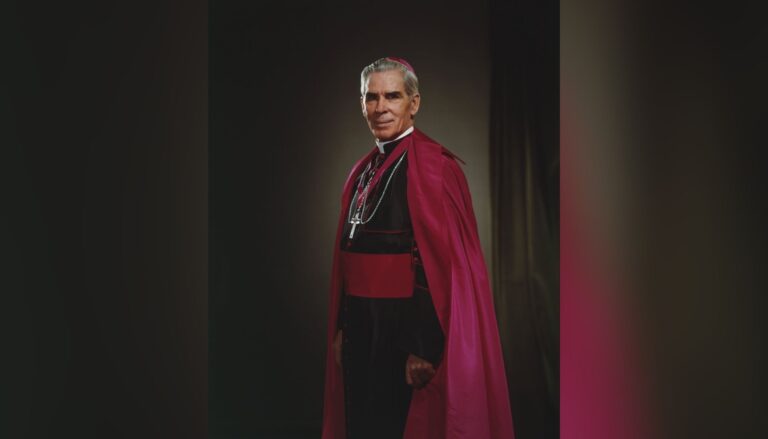
The highly-anticipated beatification of Venerable Fulton Sheen will take place on Sept. 24 in St. Louis. As Catholics prepare for this historic day, EWTN is offering the faithful a plethora of Sheen-focused programming.
Throughout September, EWTN’s television, streaming, news, and digital platforms are providing comprehensive coverage leading up to and following the beatification, on-the-ground reporting of events from both Peoria, Illinois, and St. Louis, and special coverage exploring the life and legacy of Sheen.
“Archbishop Fulton Sheen was one of the great evangelists of the 20th century and a pioneer in using the media to proclaim the Gospel,” Michael P. Warsaw, chairman and CEO of EWTN, said in a statement.
“His beatification is a historic moment for the Church in the United States and a powerful reminder of the universal call to holiness. EWTN has always understood its mission as a service to the Church, and part of that service is bringing the great moments in the life of the Church to people wherever they may be,” he added. “It is a privilege to bring this celebration to audiences across the United States and around the world.”
From Sept. 15–23, EWTN will air nightly broadcasts of the nine-day novena of Holy Hours at 8 p.m. ET from the Cathedral of St. Mary of the Immaculate Conception in Peoria, Illinois.
On Sept. 20 at 4 p.m. ET viewers can watch the anniversary Mass of Sheen’s priestly ordination live from the Cathedral of St. Mary in Peoria. On Sept. 23, the solemn vespers at the Cathedral Basilica of St. Louis will be broadcast live at 6 p.m. ET.
On the day of Sheen’s beatification, Sept. 24, EWTN will have live, all-day coverage starting at 9 a.m. ET. The beatification Mass at The Dome at America’s Center in St. Louis will begin at 2 p.m. ET.
EWTN’s live coverage of the beatification Mass will be hosted by Lila Rose, host of “The Lila Rose Show” podcast, which airs on EWTN+; Father Aquinas Guilbeau, OP, vice president of ministry and mission and university chaplain at The Catholic University of America; and Matthew Bunson, vice president and editorial director of EWTN News, who will provide historical context, commentary, analysis, and reaction throughout the celebration.
For EWTN, this day carries significance. Decades before the network was founded, Sheen exemplified the potential of using emerging media to evangelize through his radio broadcasts and television series, “Life Is Worth Living,” which brought Catholic teaching into the homes of millions.
“Archbishop Sheen showed what was possible when someone with deep faith was willing to enter a new medium and use it boldly for Christ,” said Peter Gagnon, president of EWTN Studios. “Mother Angelica admired Sheen and was inspired by his ability to use television to reach people with the truths of the Catholic faith. In many ways, he helped blaze the trail that she would later follow. It is especially meaningful for EWTN to celebrate his beatification and to introduce his extraordinary legacy to a new generation.”
During the live event, EWTN News will also provide reporting before, during, and after the beatification across its television, print, and digital platforms, with feature stories, interviews, analysis, and more.
Mark Irons will serve as EWTN News’ broadcast and digital correspondent reporting from St. Louis and Peoria, while Jonah McKeown will provide coverage from St. Louis for EWTNNews.com and the National Catholic Register.
Other EWTN News team members will be stationed in both cities to cover the celebrations, pilgrimages, liturgies, and local communities at the center of the historic events.
From Peoria on Sept. 25, the Mass of thanksgiving will be aired at noon ET, followed by the Divine Liturgy of thanksgiving on Sept. 26 at 4 p.m. ET.
Additional special coverage
In celebration of Sheen, EWTN has featured special programming highlighting Sheen’s life, spirituality, ministry, and enduring influence, including: “The Spiritual Legacy of Archbishop Fulton J. Sheen” (Seasons 1 and 2) running daily throughout September at 6:30 a.m. ET; “Archbishop Fulton J. Sheen: Servant of All” will air on Sept. 19 at 2 p.m. ET; and “A Matter of Faith — Mother’s Day with Archbishop Fulton J. Sheen” will be available on EWTN.com starting on Sept. 19.
Select “Life Is Worth Living” episodes can be watched online for a limited time at EWTN.com and on the EWTN YouTube Channel from Sept. 19–25.
EWTN Publishing will release “America’s Apostle: Celebrating the Life and Legacy of Blessed Fulton J. Sheen,” which is the official commemorative book of the beatification, on Sept. 15 on the EWTN Religious Catalogue.
The faithful can also download multimedia resources and a free eBook titled “In His Presence: Fulton Sheen on Our Time with the Lord,” which is available here.
Pope Leo ends Covid-era salary cuts for Cardinals and senior officials
Pope Leo XIV repeals Pope Francis’ 2021 Motu Proprio “A Sustainable Future,” which reduced the salaries of Cardinals, Dicastery heads and secretaries, and clergy and religious in response to the Covid-19 emergency, leaving unchanged the effects produced while the law was in force, including the suspension of biennial seniority increases.
By Salvatore Cernuzio
With the Covid-19 emergency now over, the austerity measures associated with that period can also be brought to an end.
With a Motu Proprio published on Monday, Pope Leo XIV repealed the provisions introduced by Pope Francis in March 2021 that reduced the salaries of Holy See personnel, beginning with Cardinals and heads of Dicasteries of the Roman Curia, and suspended biennial seniority increases.
The measure was adopted in response to the consequences of the pandemic, which had worsened “the deficit that has characterised the economic management of the Holy See for several years and has negatively affected all sources of revenue for both the Holy See and Vatican City State,” as the Motu Proprio A Sustainable Future stated.
Above all, it represented a spending review by Pope Francis intended to avoid even more drastic measures, such as dismissing employees—particularly lay staff and, especially, mothers and fathers with families.
Pope Francis’ measure
Pope Francis reduced the salaries of Cardinals serving in the Curia by 10 percent. Employees of the Holy See, the Governorate and other related institutions classified in salary grades C and C1—namely, the heads and secretaries of Dicasteries—received an 8-percent reduction.
A general reduction of 3 percent was also applied to employees who were clergy or members of religious institutes.
The accompanying suspension of biennial seniority increases—the pay rises normally awarded every two years—affected all serving personnel.
In the case of lay employees, however, it applied only to those at level four and above, and therefore did not affect the lowest salaries.
Pope Leo’s decision
In the document, Pope Leo XIV explains that his predecessor’s “salary-containment measures” had been necessary in order to confront “the exceptional challenge of the pandemic.”
The provisions had already been partially amended in 2025 through the repeal of Article 3 by a Rescriptum ex Audientia dated 16 June 2025.
“Now,” Pope Leo says, “they can be brought to an end, in the certainty that the institutions of the Holy See and Vatican City State will continue, through different means, their commitment to ensuring economic sustainability.”
Previous effects remain unchanged
For this reason, “having heard the competent opinion of the Secretariat for the Economy” and “having carefully considered everything,” the Pope establishes the definitive repeal of the Motu Proprio A Sustainable Future, effective from 1 September 2026.
The document specifies, however, that the effects produced while the Motu Proprio was in force remain definitively preserved.
These include “the effects produced by the suspension of the accrual of the biennial seniority increases referred to in Article 5, which remain definitively acquired.”
In other words, everything that occurred or was applied while the law was in force remains unchanged, including the freezing of accrued seniority increases.
Thank you for reading our article. You can keep up-to-date by subscribing to our daily newsletter. Just click here.
‘Love is a decision’: Husband loves his wife even more after early-onset Alzheimer’s
For nearly 30 years, José Ignacio and Claudia Celis built a marriage filled with joys, children, shared projects, and the difficulties inherent in life together. But about six years ago, an unexpected trial arose: Claudia was diagnosed with early-onset Alzheimer’s at the age of 44.
Since then, José Ignacio has had to learn a new way of loving, one that is deeper and more self-sacrificing, reaffirming his vocation and his desire to reach heaven together with Claudia.
“I am a man eternally in love with his wife, a family man who, before being in love with his wife, is a child of God who has found answers to many questions along the way, precisely through suffering,” he recounted in an interview with ACI Prensa, the Spanish-language sister service of EWTN News.
José Ignacio and Claudia Celis today. | Credit: Photo courtesy of José Ignacio and Claudia Celis
Claudia’s illness has changed many things in their marriage, but, he affirmed, it has not changed the promise they made on their wedding day.
“Love is a decision. Love is not a feeling. Love is a decision, and you have to decide to love every day,” he emphasized.
For him, their story is an opportunity to speak about the beauty of Catholic marriage and a promise that is not conditional on everything going well. It’s the story of a husband who, amid exhaustion, pain, and uncertainty, strives to remain by the side of the woman with whom he chose to share his life.
José Ignacio and Claudia Celis were married on March 20, 1999, at St. Engratia Parish in the Archdiocese of Monterrey, Mexico. | Credit: Photo courtesy of José Ignacio and Claudia Celis
‘God blessed us with 30 years of a very happy marriage’
José Ignacio and Claudia, both Mexicans, met on a blind date on Aug. 31, 1997. When he saw her for the first time, José Ignacio said he remembers thinking, “Wow.” Over time, they discovered that they shared many interests and, above all, that they enjoyed being together.
They were married on March 20, 1999, at St. Engracia Parish in the Archdiocese of Monterrey in Mexico. Claudia was 24 and José Ignacio was 28. They raised a family with three children: María José, Federico José, and Anaisabel, who are their pride and joy.
They currently live in Houston; they have a 6-month-old grandson and are expecting the arrival of two more grandchildren.
From the time they were dating and throughout their married life, they have lived out a steadfast faith.
“We went to Mass every day from the time we got married,” said José Ignacio, noting that they were both aware their journey as a married couple was heading toward a destination far greater than themselves: heaven.
José Ignacio and Claudia Celis in the early days of their relationship. | Credit: Photo courtesy of José Ignacio and Claudia Celis
“God blessed us with 30 years of a very happy marriage though not without setbacks, like everyone else,” he related.
At the wedding, the priest shared a thought with them that José Ignacio still remembers: “You entered as single individuals; you will leave forever united as one.”
They looked at each other and understood that being one was not merely a nice expression.
“We truly are one,” they thought.
As the years went by, children, responsibilities, and difficult times came with it.
“Obviously, there were unpleasant moments. But I don’t remember them anymore, because I strive to always see her with love and for that love to grow,” he said.
José Ignacio and Claudia Celis with their young children. | Credit: Photo courtesy of José Ignacio and Claudia Celis
The diagnosis that changed their lives
Claudia was 44 years old when she was diagnosed with early-onset Alzheimerʼs.
José Ignacio had already begun to notice some confusion, but he attributed it to fatigue. Moreover, the disease was not entirely unfamiliar to the family: Both her mother and her mother-in-law had suffered from it.
It was during a medical consultation that a neurologist noticed signs that led to further evaluations.
The diagnosis was devastating. Alzheimer’s is a neurodegenerative disease that eventually leads to death.
According to the U.S. Department of Health and Human Services’ website, the disease “slowly destroys memory and thinking skills and, eventually, the ability to carry out even the simplest tasks.” Furthermore, “people with Alzheimer’s also experience changes in behavior and personality.”
It is estimated that more than 6 million people living in the United States, many of whom are 65 or older, have Alzheimerʼs disease. According to the Mayo Clinic, early-onset Alzheimerʼs affects 41 out of every 100,000 people between the ages of 30 and 64.
The disease impacts many more people, such as the patientʼs family members and, above all, the person who takes on the role of caregiver, as is the case with José Ignacio.
Full-time care
Claudiaʼs treatment began shortly after her diagnosis. There is no cure for the disease, but treatment helps slow its progression. Claudia receives infusion therapy at the hospital every two weeks, or sometimes even more frequently.
José Ignacio and Claudia Celis today. | Credit: Photo courtesy of José Ignacio and Claudia Celis
During the early years, the decline was not very noticeable. However, José Ignacio explained that over the last two years, the disease has become much more apparent, particularly regarding orientation and the performance of simple tasks.
Her memory, he explained, still holds onto many recollections. But other abilities have begun to fade, and with them, the family dynamic has changed as well.
José Ignacio left his job in the financial sector and now devotes himself full time to caring for Claudia.
‘Marriage is about making your wife happy’
For José Ignacio, however, there is something that has not changed: the presence of God.
“When you have God in the midst, God dwells among Christian spouses and never leaves them,” he maintained.
That is why he views marriage not merely as living together or as a feeling that lasts only as long as circumstances are favorable.
“Marriage is about making your wife happy, and your wife’s role is to make you happy. You must dedicate yourself to your wife and choose to love her every day, because you have to nurture that love,” he explained.
Illness made the meaning of a promise even clearer to him. “When you get married, you make a promise. It is a promise in sickness and in health, for all the days of my life,” he added.
Adversity, he said, is not something couples usually imagine when they marry, yet it is part of life.
“Illness comes along. The last thing on your mind is illness, but the reality of marriage is that the very illness you vowed to face together does arrive. It will happen to one of you or the other, sooner or later.”
José Ignacio Celis, Claudia, and their daughter. | Credit: Photo courtesy of José Ignacio and Claudia Celis
‘God does not send suffering’
José Ignacio rejects the idea that God is the one who sends suffering.
“God does not send suffering. Suffering happens because that is simply how life is. Quite the opposite: God is with you in your suffering; he doesn’t like to see you suffer, he weeps with you, and he gives you or tries to give you the joy to move forward and he gives you the strength,” he stated.
That conviction is what by his own account enables him to do things every day that he often feels he could not accomplish on his own. Bathing Claudia, dressing her, and assisting her with her daily activities have become part of his life.
“I couldn’t take care of Claudia on my own; the pain is overwhelming. Yet God does it — it is not to my own credit. God takes care of Claudia.”
There are even seemingly small moments that for him reflect the dignity with which he wishes to continue treating his wife: “I apply her makeup because she needs to leave the house with the dignity of a queen. And it is God who does that through me.”
“I couldn’t do it alone. Without God, I am nothing,” he emphasized.
St. Joseph and a new way of caring
When the illness began, José Ignacio turned especially to St. Joseph.
“St. Joseph, help me care for Claudia. How would you care for the Virgin if she had Alzheimer’s? [I want to do it] just like that, exactly the same way. Don’t let me fail,” he said he always prays.
St. Joseph thus became a model of a husband and caregiver: a man called to protect and serve without seeking the spotlight. Yet, José Ignacio admits it’s far from easy.
“I don’t want to lie to you by saying I don’t get tired, or that I don’t feel the urge to run, to just run away; that would be lying to you,” he acknowledged.
José Ignacio and Claudia Celis. | Credit: Photo courtesy of José Ignacio and Claudia Celis
Loving even when illness changes the other person
One of the most difficult aspects of Alzheimer’s is the gradual loss of the reciprocity that characterizes married life.
“I know that perhaps due to the illness itself she sometimes cannot offer the reciprocity one expects, but I look for it in small gestures,” he said.
For José Ignacio, love does not vanish when the other person is no longer able to respond in the same way. On the contrary, that is precisely when the marriage vow takes on a new meaning.
“Authentic love bears the mark of permanence, of spending oneself, wearing oneself down, and giving until you can give no more... yet as long as you live, you will be able to give,” he maintained.
José Ignacio has also had to learn to take care of himself in order to be able care for his wife. His routine includes professional and spiritual guidance during the week as well as support from friends and family.
However, he points out that there is one priority above all others: “The first priority is the spiritual one. If you don’t have it, if you don’t hold fast to your spiritual life, to God, you can’t do it. We are God’s creatures. And without God, we are nothing.”
A family also learning to live with Alzheimer’s
Claudia’s illness affects more than just José Ignacio; it has also changed the lives of their three children.
One of their daughters feels the pain of losing the chance to have her mother present in the way she had envisioned for her own family. Their son wonders if his mother will be able to attend important milestones, such as his graduation. And the youngest daughter has lost the mother with whom she could talk and share her worries.
The illness has taught them that the family, too, needs to stand by and support one another.
José Ignacio and Claudia Celis with their son Federico at his graduation from the University of Notre Dame, South Bend, Indiana. | Credit: Photo courtesy of José Ignacio and Claudia Celis
‘Pain has taught me to try hard to be happy’
Among the things that move José Ignacio the most is the way he looks at Claudia now.
Illness has transformed her face and the way she relates to the world. He speaks of a kind of innocence he perceives in her.
And then he asks himself: “How could you not fall more in love with that every day?”
His answer lies not in denying the pain but in discovering that love can take on new forms. “Pain has taught me to try hard to be happy,” he explained.
But he also does it for Claudia. When she sees him sad, he knows his sadness affects her as well. That is why he strives for joy.
José Ignacio often says he is “God’s favorite.” Not because his life is easy, but because, despite the suffering, he recognizes that he has received the strength to keep loving.
“Because I love her more every day,” he said.
And in the most difficult moments, he said he feels they are not alone: “I know that God weeps with me, and sometimes I feel that St. Joseph and the Virgin Mary wipe away our tears.”
A promise that lives on
José Ignacio knows that Claudia’s Alzheimer’s is progressing, but his focus is on something he considers even more important.
“I have to work to earn my place in heaven. She doesn’t, but I do. So I say, ‘My God, I am increasingly aware that my work here is to earn my place in heaven.’ And at the same time, I want to be with her, walking that path.”
With each passing day, José Ignacio chooses to love. He chooses to stay. He chooses to care. He chooses to start over. Because, for him, marriage is not about hoping the cross never comes, but rather discovering that when it does, the spouses don’t have to shoulder the burden alone.
“It is very painful to walk that Way of the Cross, but what a joy it is to do so with God by your side.”
And that is perhaps the lesson he wants to leave to other husbands: that love in marriage does not lose its beauty when dark days arrive. On the contrary, it reveals the depth of the promise made one day before God.
“Love is a decision,” José Ignacio often says.
José Ignacio and Claudia Celis and their grandson. | Credit: Photo courtesy of José Ignacio and Claudia Celis
Those who wish to support José Ignacio and Claudia on this journey may do so through prayer and financial assistance. Having left his job to care for his wife, José Ignacio, along with his family, is facing the challenges brought about by the progression of Claudia’s Alzheimer’s disease.
This story was first published by ACI Prensa, the Spanish-language sister service of EWTN News. It has been translated and adapted by EWTN News English.
Asian digital missionaries called to turn influence into Christian witness
The first Asian Catholic Digital Missionary Assembly concludes in Manila after bringing together more than 100 communicators and content creators to strengthen collaboration and develop a shared vision for digital evangelisation.
Vatican News
More than 100 Catholic digital missionaries, communicators, content creators, and faith influencers from across Asia have concluded a four-day gathering aimed at transforming online influence into authentic Christian witness.
The first Asian Catholic Digital Missionary Assembly took place on 10–13 September at the Radio Veritas Asia campus in Quezon City, in the Philippines.
Organised under the theme “Influencers to Witnesses: Synodal Way for Digital Mission in Asia,” the gathering drew inspiration from the words of the Apostles: “We cannot keep from speaking about what we have seen and heard” (Acts 4:20).
The assembly encouraged participants to move beyond simply producing online content and instead become witnesses rooted in communion and the missionary dimension of faith. It also promoted formation and a shared vision for digital evangelization across the continent.
The event was jointly organised by the Federation of Asian Bishops’ Conferences Office of Social Communication (FABC-OSC) and Radio Veritas Asia, in partnership with the Vatican Dicastery for Communication through the Fully Present Network.
Pope Leo XIV sent a message signed by Cardinal Secretary of State Pietro Parolin, encouraging participants to grow “as authentic witnesses of Jesus Christ in their digital content.”
Nataša Govekar, Director of the Dicastery for Communication’s Theological-Pastoral Department, attended the event.
Archbishop Gilbert Garcera of Lipa, President of the Catholic Bishops’ Conference of the Philippines, delivered the homily at the opening Mass.
“We bring Jesus, not by shouting over Asia, but by drawing close to Asia, listening to its people, walking with our people, serving them, and gently making the love of Jesus heard and experienced,” Archbishop Garcera said.
Young people attend the first Asian Catholic Digital Missionary Assembly in Manila
Authentic witnesses of Christ
In his keynote address, Bishop Marcelino Antonio “Junie” Maralit, Jr., Chairman of the FABC Office of Social Communication, said the Church must recognise that people are already living, seeking meaning, and forming relationships in digital spaces.
“The digital highways are waiting,” he told participants, noting that the Church is already present in digital spaces so the question is what kind of Church people will encounter online.
Bishop Maralit outlined five necessary shifts: from content to encounter, audiences to communities, virality to fidelity, competition to collaboration and influence to witness.
“Social media is an appetizer; Eucharist is the destination,” he said.
Flyer for the event
Building bridges online
Cardinal Pablo Virgilio David, Bishop of Kalookan, presided over the assembly’s closing Mass on Sunday.
Reflecting on the Gospel’s call to forgiveness, he warned that the internet can connect millions while leaving people lonely, and that algorithms can gather users into groups while also dividing them into hostile camps.
“When others spread anger, answer with courage,” he said. “When others spread contempt, answer with dignity. When others close the door, become a bridge.”
Thank you for reading our article. You can keep up-to-date by subscribing to our daily newsletter. Just click here.
Aid to the Church in Need: Bringing hope to the persecuted
Aid to the Church in Need holds an assembly in Rome and elects Austrian Msgr. Friedrich Bechina as the Pontifical Foundation’s new coordinator.
By Piotr Kowalczuk
Founded nearly 80 years ago, Aid to the Church in Need now works in more than 140 countries. The Pontifical Foundation cooperates with over 1,300 dioceses and supports more than 5,000 projects each year.
It has National Sections in 24 countries, with Ecclesiastical Assistants who help foster the spiritual life of the foundation.
Pope Leo XIV’s ties with ACN go back to Peru
At their meeting in Rome, Ecclesiastical Assistants elected Msgr. Friedrich Bechina as the Pontifical Foundation’s new coordinator.
Speaking to Vatican News after his election, Msgr. Bechina recalled Pope Leo XIV’s longstanding connection with ACN.
“This time, we only attended the General Audience,” Msgr. Bechina said. “It was good to take a photo with the Pope and exchange a few words with him.”
“When he was a bishop in Peru, he was one of our project partners, so he worked with us. He wants us to take responsibility, especially in the area of evangelization.”
A deeper understanding of the universal Church
“We came here to meet one another and also our new president, Cardinal Kurt Koch, who heads the Dicastery for Promoting Christian Unity,” Msgr. Bechina said. “We also came so that each of us could gain a deeper understanding of the universal Church.”
Msgr. Bechina stressed that the foundation’s work is made possible by the generosity of its many benefactors. Its mission, he explained, is not simply to provide financial assistance, but to support projects that strengthen the life of local Churches through evangelization and pastoral assistance.
“We help local Churches and faithful in need. Part of our mission is to tell the story of people and Churches persecuted for their faith,” he said. “At the same time, we must remember that persecuted Churches have their own unique riches, which they share with us. They have hope.”
ACN’s focus is evangelization
Asked about specific projects and decisions, Msgr. Bechina explained that the meeting in Rome was not a business meeting.
He said Cardinal Koch gave a particularly valuable reflection on evangelization.
“His words were very important for us, because our main goal is to serve the Church and support evangelization. We build churches and help priests, lay people, and consecrated men and women prepare well for proclaiming the Word of God.”
“We do not work on water purification or provide medical aid, because other Catholic organizations do that much better than we do.”
Helping the Church survive
Speaking about where the Church currently needs the greatest support, Msgr. Bechina pointed to the Middle East, where many churches have been destroyed and Christian communities displaced.
“Thanks to our benefactors, we can support local Christian communities, give them some hope, and encourage them not to leave their homes and countries,” he said. “By supporting Church structures, as well as the priests and religious serving there, we help give the Church a chance to survive.”
Supporting priestly formation in Africa
Msgr. Bechina pointed to the large number of priestly vocations in Africa, where many candidates lack adequate opportunities for formation and study.
“We currently support 250 seminarians or priests studying abroad, including some in Rome,” he said. “They receive direct financial assistance from us.”
The foundation also supports local Churches in Venezuela, Colombia, and other countries affected by natural disasters, civil conflict, or other crises requiring a rapid response.
Advocacy for the persecuted Church
“We also spoke with several of the Pope’s closest collaborators,” Msgr. Bechina said.
“They told us that because our foundation also works in advocacy and awareness-raising for the persecuted Church, we can sometimes speak clearly and directly about issues that, for various reasons, the Holy See cannot always address publicly in the same way.”
Thank you for reading our article. You can keep up-to-date by subscribing to our daily newsletter. Just click here.
Pope Leo XIV celebrates his 71st birthday on September 14, 2026, following a year marked by appeals for peace, Apostolic Journeys, and concern for human dignity.
Vatican News
As Pope Leo XIV celebrates his 71st birthday on Monday, September 14, messages and expressions of good wishes have been arriving at the Vatican from around the world.
The presidency of the Italian Bishops’ Conference, or CEI, sent a message conveying the greetings of Italy’s local Churches and thanking the Pope for his service.
The Italian Bishops recalled Pope Leo’s emphasis on the Gospel as the fundamental priority of ecclesial life and on faith as a personal encounter with Christ.
They also highlighted his call for missionary communities, welcoming parishes and effective structures of participation.
Referring to the Pope’s Angelus address on Sunday, the Italian Bishops' Conference underlined the connection between forgiveness and peace, noting that conflicts arise when reconciliation is absent.
A year marked by peace
Peace has been one of the most frequently recurring themes of Pope Leo’s words over the past year.
Since speaking after his election of an “unarmed and disarming” peace, he has repeatedly returned to peace and reconciliation during his Apostolic Journeys, encounters, and public addresses.
During the first year of his pontificate, the Pope referred to these two themes more than 400 times, while also frequently speaking about unity, dialogue, hope, and human dignity.
His first Apostolic Journey took him to Türkiye and Lebanon. At Nicaea, marking the 1,700th anniversary of the first Ecumenical Council, he stressed Christian unity, while in Lebanon he focused on dialogue and peace.
Pope Leo later became the first pontiff to visit Monaco and Algeria. In Annaba, ancient Hippo, he visited places associated with Saint Augustine. During his journey to Spain, he became the first Pope to address the Spanish Parliament.
On January 6, he closed the Jubilee Year 2025, begun by Pope Francis, by shutting the Holy Door of St. Peter’s Basilica.
His first encyclical, Magnifica humanitas, addressed artificial intelligence and insisted that technology must remain at the service of human dignity, freedom, responsibility, and the common good.
He also completed Dilexi te, the Apostolic Exhortation begun by Pope Francis on love for the poor, revisiting the theme during his July visit to Lampedusa and meeting with migrants.
Born in Chicago on September 14, 1955, Pope Leo XIV enters his 72nd year with the central themes of his pontificate clearly defined: peace, unity, and the defence of human dignity.
Thank you for reading our article. You can keep up-to-date by subscribing to our daily newsletter. Just click here.
Practice of ember days bearing fruit for missionary religious community
The General Chapter of the Clerical Branch of the Society of Our Lady of the Most Holy Trinity (SOLT) is embracing the traditional practice of ember days as a spiritual means of fostering and growing vocations.
Ember days — the Christian periods of prayer, fasting, and thanksgiving — take place for three days over the four seasons each year. The next ember days will be Sept. 16, 18, and 19.
“The Church, although it doesnʼt require it, still encourages it,” Father Dave Brokke, SOLT priest and vocations director, told EWTN News.
“Even in terms of the [United States Conference of Catholic Bishops] document on fasting,” he explained. “It encourages people to do the ember days, and you can find different canons about it still today.”
The document clarifies that “Vigils and Ember Days, as most now know, no longer oblige to fast and abstinence.”
“However, the liturgical renewal and the deeper appreciation of the joy of the holy days of the Christian year will, we hope, result in a renewed appreciation as to why our forefathers spoke of ‘a fast before a feast,’” the bishops wrote.
While the prayer is not required, the SOLT chapter voted on the addition of ember days to create a more intentional way of asking God for vocations. It passed in 2023 and over the past three years, the community has seen almost as many men enter into formation as it had in the previous 10 years.
Ember days
The phrase “ember days” is an alteration of the Latin phrase “quatuor tempora,” meaning “four seasons.” Ember days are documented as being celebrated as early as the fifth century and are among the oldest traditions of the Church’s liturgical calendar.
Their original purpose was to thank God for the gifts of nature, notably the crops used to make bread and wine for the Eucharist.
“Jesus said: ‘Ask the master of the harvest to send laborers into the vineyard.’”
“With the master of the harvest, thereʼs this understanding that we have the need to ask Our Lord for help in providing the grain and the wheat and the grapes,” Brokke said.
In total, there are 12 ember days throughout the liturgical year.
“From an early time in the Church,” it was established that the ember days “would be a Wednesday, Friday, and Saturday.”
The “penitential days” were “Wednesday, because that was the day that Judas betrayed Jesus, Friday because of the Passion, and then Saturday because Our Lord was in the tomb.”
“The way that I remember it is ‘Lenty, Penty, Crucy, and Lucy,’” Brokke said.
“Lenty” is to indicate the full Wednesday, Friday, and Saturday of ember days that follow Ash Wednesday in the springtime, and “Penty” is the ember days after Pentecost in summer. The “Crucy” ember days then follow the Exaltation of the Holy Cross in fall, and “Lucy” is for the days after the memorial of St. Lucy in winter.
“They correspond to the time of both the sowing of the seeds and the reaping of the harvest of the wheat and the grape. So even then it is connected to the elements that is used for the Eucharist,” he said.
The Church would “fast and pray not only for a good harvest but also for vocations, for laborers in the vineyard to the priesthood, and they would often ordain men on the Saturdays of ember days,” Brokke said.
SOLT witnesses ‘lots of good fruit’
Brokke and the General Chapter of the Clerical Branch of the SOLT began looking into embers days as a way of “community fasting and praying for vocations,” Brokke said.
“We do have a prayer that we say every day for vocations,” which “started from the very foundation of our community,” Brokke said.
SOLT is “a community of priests, brothers, sisters, and members who work together to show the relationship of Our Lady with the most Holy Trinity,” Brokke said.
The community reflects how “the Father, and the Son, and the Holy Spirit are distinct, but not separate. Theyʼre united.”
“Similarly, the vocations are distinct, but theyʼre not separate. So we strive to live with a united will of charity and our service to areas of deep need,” Brokke said.
“We go where a bishop has identified his deepest need and serve as missionaries in the world, trying to bring that communion of the Most Holy Trinity in imitation of Our Lady, who leads us into those relationships because she was mother of the Son and daughter of the Father, spouse of the spirit.”
For more vocations, SOLT wanted to add another act “specifically geared towards vocations,” in addition to its daily prayer.
“I mentioned the ember days,” which would “dedicate at least 12 days a year to fasting and praying and to be more intentional with it,” he said. “When we started discussing it, we didnʼt focus so much on the agricultural aspect but the vocational aspect.”
When the idea of incorporating the days of prayer was under discussion, Brokke looked up some of the prayers for ember days.
“We discovered that the prayer that we have prayed every day from our foundation of the community is actually one of the ember day prayers for vocations,” he said.
Shortly after the community began the traditional prayer, vocation numbers began to rise.
A group of novices with the Society of Our Lady of the Most Holy Trinity. | Credit: Photo courtesy of Father Dave Brokke/Society of Our Lady of the Most Holy Trinity
“The first September doing ember days … one guy showed up from a mission in Honduras at our mission in Belize and expressed his interest in the community. He is now a novice with our community.”
“On the Saturday of that first ember days, we had 27 men from Franciscan University show up for the priestly discernment program to learn more about our community. The man who led that is now anaspirant with our community.”
“The year that we started, we had seven men in formation. And in three years, we now have 18 men in formation,” Brokke said. Before, “we were maybe averaging one or two to enter a year. In that very first year we had nine men.”
“Weʼve seen lots of good fruit,” he said.
“I know thereʼs a mystical body of Christ and weʼre all connected. The Lord is going to use it, like heʼll use everything, and nothing goes to waste.”
A group of aspirants with the Society of Our Lady of the Most Holy Trinity. | Credit: Photo courtesy of Father Dave Brokke/Society of Our Lady of the Most Holy Trinity