Nigeria: Your compassion became a lifeline – the gratitude of the OLA Sisters
Vatican News |
2 January 2026
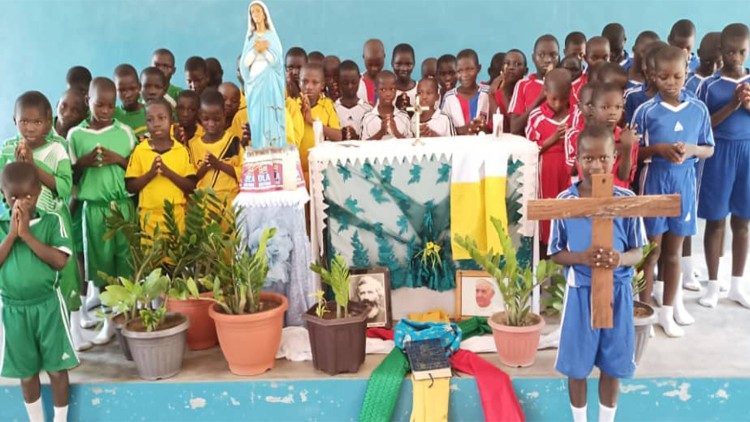
Following the liberation of all the children and staff abducted from St. Mary’s School – Papiri in Nigeria, the Sisters of Our Lady of Apostles (OLA) have expressed deep gratitude for the support received during the trying period. The OLA Sisters are the managing agency of St Mary’s School – Papiri.
Paul Samasumo – Vatican City.
“The Sisters of Our Lady of Apostles joyfully confirm the complete liberation of all the children and staff abducted from St. Mary’s School in Papiri, Niger State, Nigeria. With profound relief and thanksgiving, we celebrate that every child and every staff member has now returned to safety after weeks of fear, uncertainty, and intense prayer,” said Sr. Mary T Barron, Congregation Leader of the OLA Sisters.
She added, “From the first hours of the abduction, the OLA family—together with the local Church in the Diocese of Kontagora, the families of Papiri, and communities across Nigeria—was upheld by a remarkable global solidarity of prayer and advocacy. We extend our deepest and most heartfelt gratitude to all who stood with us during this painful time,” she said.
Solidarity of Muslim communities
The OLA Sisters said they are grateful to religious congregations around the world who organised vigils, rosaries, and days of fasting. They acknowledged dioceses, parishes, and Catholic communities and schools who kept the children and staff at the centre of their Advent prayer. Others to whom the religious women feel indebted include Interfaith partners, especially Muslim leaders and communities, who joined their voices and prayers for peace; human rights organisations, civil society groups, and diplomatic partners who raised awareness and advocated tirelessly on behalf of the children and staff of St. Mary’s. In short, “All people of goodwill who refused to remain silent and who carried this suffering community in their hearts,” said Sr. Barron.
“Your compassion became a lifeline. Your prayers strengthened the captives and their families. Your advocacy ensured that the world did not look away. The OLA Sisters are deeply moved by this outpouring of love and solidarity,” the Congregational leader emphasised.
Greater protection in schools
As the children and staff begin the long process of healing from the trauma they endured, the OLA Sisters have asked everyone to continue holding the liberated children and staff in prayer. The Sisters also renewed their “plea for greater protection of schools and vulnerable communities throughout Nigeria. Every child deserves to learn without fear. Every family deserves to live in safety,” they reiterated.
The Sisters further paid tribute to the Papiri community for its courage and resilience during a very difficult time.
“We give thanks to God for the safe return of the captives. We give thanks for the courage of the Papiri community. And we give thanks for the global family of faith and goodwill who stood with us in hope. We continue to hold in prayer many people who are still held in captivity in Nigeria.”
Thank you for reading our article. You can keep up-to-date by subscribing to our daily newsletter. Just click here
Pope: We must break ‘ideological, economic chains that enslave’ us to war
At the weekly General Audience, Pope Leo XIV calls for an end to the conflicts that seem to “appear increasingly inhuman and devastating” and to the arms race, stressing that “there is no room for resignation, as if violence were inevitable.”
By Kielce Gussie
Continuing to reflect on Chapter 5 of Gaudium et Spes (GS) in his catechesis at the Wednesday General Audience, Pope Leo XIV underlined the call for all humanity—and moreover, all creation—to be brothers and sisters and to create a world of peace.
The peace that comes from Christ’s death on the cross, he said, is “offered as the fruit of redemption to all peoples and to the whole of creation: this peace is both a gift of grace, to be received, and a commitment to freedom.”
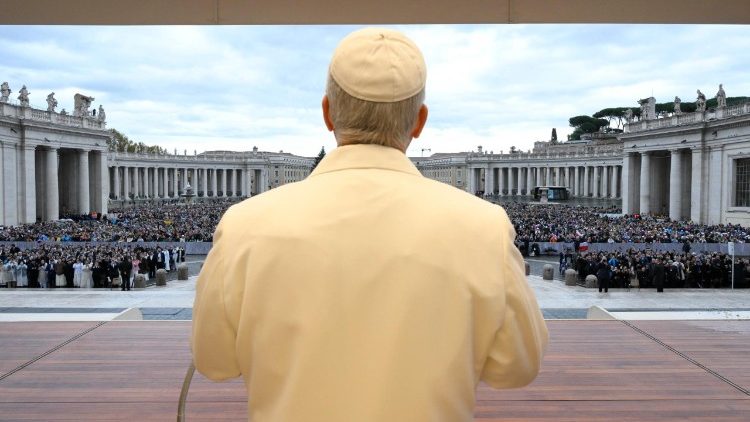
Pope Leo blesses a child in St. Peter's Square before beginning his General Audience (VATICAN MEDIA)
This must be lived out through the Beatitude: “Blessed are the peacemakers, for they shall be called sons of God.”
Violence is not inevitable
While the Pastoral Constitution is hopeful, the Pope stressed it is not “all naïve.” The Fathers of the Second Vatican Council took into account human sin, understanding that peace is built up over time, not once and for all.
For that reason, “there is no room for resignation, as if violence were inevitable,” he argued. Rather, “the nature of modern wars leads the Council Fathers to update the Church’s teaching on the matter: such atrocities, they say, ‘compel us to undertake an evaluation of war with an entirely new attitude’” (GS 80).
The Holy Spirit aids mankind in achieving this “obligation.”
In today’s context, the evolution of technology and the digital revolution have changed the way conflict is carried out—cyberattacks, information manipulation, etc. Technology and devices first created to defend can be put on the offensive.
Conflicts today can seem to grow more and more inhuman and horrific, Pope Leo explained. These foster hatred and injustice between peoples, and they damage the beauty and integrity of creation.
“No-one can ignore the suffering afflicting men and women of all ages,” he urged, reiterating the Second Vatican Council’s call to break the ideological and economic chains which enslave people to war.
“No-one can ignore the suffering afflicting men and women of all ages.”
“In this regard, it must be strongly reiterated that ‘the arms race is an utterly treacherous trap for humanity, and one which ensnares the poor to an intolerable degree,’” the Pope stressed.
A cause for concern lies in the fact that if the arms race continues, it will lead to the very destruction and devastation, for which it is now paving the way.
Here, Pope Leo insisted the Council’s words “resound as an even more urgent warning: indeed, they are the very cry that rises to the world’s powerful from the suffering of peoples, of children killed and maimed, and of destroyed families.”
On the front lines of peace
A requirement from the Second Vatican Council is that all people of good will pave the way for a time when the threat of war will no longer exist. However, the Council also recognized that governments cannot have their right to legitimate defence rejected.
Yet, there is a need “for international bodies capable of intervening effectively to restore justice that has been violated, acting in defence of the oppressed,” the Pope highlighted.
Therefore, the Council encourages a promotion of institutions dedicated to peace, while working to build a world order based on cooperation, dialogue, and a sharing of country’s cultural and material wealth, in order to serve integral human development.
Given these tasks, Christians must be the salt of the earth and light of the world, said the Pope.
“Trusting always in the grace of God, we must not be afraid of working on the front line to build peace and defend human dignity, both through constant prayer, and with consistent social and political choices,” Pope Leo urged.
Spreading the Gospel comes through the formation of consciences, conversion of hearts, the sacramental life, and always having Christ as the guiding principle.
Closing, the Pope encouraged everyone to “never tire of seeking and sharing true peace, which is at once a gift from God and the fruit of tireless human endeavour.”
“May the Spirit of Christ always inspire experiences of fraternity and peace, nurturing sincere dialogue between individuals and between peoples… May the Virgin Mary, Queen of peace, support every effort for good with her powerful intercession, now and always.”
Thank you for reading our article. You can keep up-to-date by subscribing to our daily newsletter. Just click here.
CAFOD decries COP31 failure, calls for people and planet-first policies
CAFOD’s Director of Advocacy reflects on the collapse of the UN climate summit in Türkiye caused by lack of political will and failure to put vulnerable communities first, and he reiterates the precious role played by faith-based groups in advocating for justice.
By Linda Bordoni
The failure of world leaders to reach an overarching agreement at the UN climate summit COP31 in Antalya, Türkiye, represents a “huge political failure”, according to Neil Thorns, Director of Advocacy at the Catholic Agency for Overseas Development (CAFOD) of the Church in England and Wales.
Speaking to Vatican News following the conclusion of the summit on 22 November, Thorns said: “When the world needed it most, the governments of the world didn't step up.”
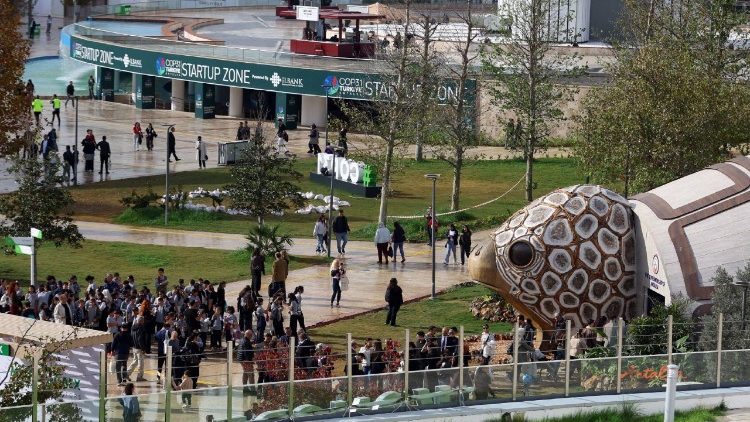
COP31, the 31st Conference of the Parties to the UN Framework Convention on Climate Change, brings together countries to negotiate measures to tackle global warming, reduce greenhouse gas emissions and support communities facing its consequences.
This year's summit ended without agreement on its overarching political declaration, the Antalya Pact, amid disagreements over fossil fuels and climate finance.
Listen to the interview with Neil Thorns
Fossil fuels and climate finance
Thorns said the circumstances surrounding the summit included devastating climate-related disasters such as the catastrophic landslide in Nepal, which resulted in the death of nearly 1,500 persons and left over 5,000 missing. It dramatically illustrated the human consequences of the climate crisis.
Residents of a village in Nepal's Nuwakot District walk past houses lying deluged in mud (AFP or licensors)
Alongside this aspect, he continued, is the renewed dependence on fossil fuels amid conflicts around the world.
These issues, he explained, should have focused governments' attention on those most affected by the crisis yet least responsible for causing it; instead, political interests and the influence of the fossil fuel lobby pushed these concerns aside.
“The fossil fuel lobby, states and people with key interests, they can't be allowed to obstruct and kidnap the process any longer,” Thorns said.
The CAFOD Advocacy Director also criticised the lack of financial commitments, noting that climate action cannot advance without adequate resources.
“If you're going to talk about transitioning away from fossil fuels, if you're going to talk around responding to the impacts of the climate crisis, you need money,” he said. “Again, countries didn't step up and put the finance which is needed on the table.”
Better no deal than staying silent on fossil fuels
Thorns endorsed the position of the CIDSE network, an international network of Catholic social justice organisations of which CAFOD is a member, arguing that it was preferable to leave Antalya without an agreement rather than accept a text promoting false solutions while failing to address the principal causes of climate change.
“Let's deal with the absolute causes of this issue, which is around fossil fuels, our need to get off those fossil fuels, and our need - when we transition - to transition to a better world, a better place for communities,” he said, a just world “where communities are allowed to flourish, and not be dependent on their fossil fuels and all of the things which that entails.”
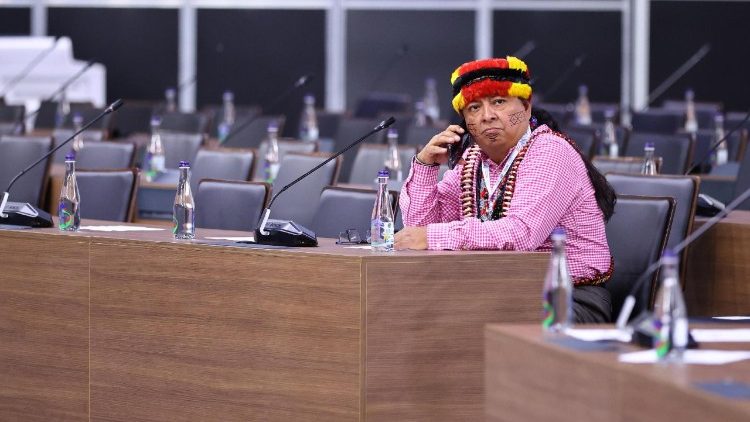
An Indigenous rights advocate at COP23
Building on COP28
Thorns described the outcome of the talks as a step backwards compared with COP28 in Dubai in 2023, when countries agreed for the first time to include an explicit reference to fossil fuels in a COP decision, calling for a transition away from them in energy systems.
He noted that renewable energy has continued to expand around the world, but said this progress has not been adequately reflected in governments' positions at international negotiations.
“It has not translated. It's not recognised by states who are still blocking this process,” he said.
He also pointed to initiatives outside the formal COP process, including the work associated with the Santa Marta discussions and efforts by countries such as Ireland and Tuvalu to advance the transition away from fossil fuels.
These initiatives, he said, demonstrate that countries can make progress even when international negotiations reach an impasse.
The voice of faith communities
Thorns also stressed the importance of ensuring that faith-based organisations have a voice at climate negotiations.
“I think it's really important to have a faith voice there,” he said, noting that religious traditions share a commitment to caring for creation and for people around the world.
Faith organisations, he added, can bring what the Holy See often describes as the human face of the climate crisis to political discussions, reminding governments of their responsibility to look beyond national borders and electoral cycles.
“We need to be thinking about the next generation, and we need to be putting the care for the common good and the care for our common home at the centre of these discussions, not our own self-interests,” he said.
People collect water at a community tap in Afghanistan as they face shortages of clean water (ANSA)
Looking towards COP32
Attention now turns to preparations for COP32, scheduled to take place in Addis Ababa, Ethiopia, in November 2027, and Thorns said he welcomes the prospect of an African COP, which will offer an opportunity to give greater prominence to the needs of countries and communities on the frontline of climate change.
He also highlighted the United Kingdom's forthcoming G20 presidency and its commitment to focus on debt and development.
Developing countries, he argued, should not be pushed further into debt as a consequence of a crisis they have done least to cause. Instead, he continued, “they need to be released from their debt so they can spend more money supporting their communities in the face of those climate issues.”
'As a Catholic agency, we live in hope'
Despite his disappointment with the outcome in Türkiye, Thorns said he remains hopeful. However, he warned, with the world on course to exceed the 1.5°C global warming threshold established by the Paris Agreement, action cannot be delayed.
“We need to take action now,” he said, noting that people living in poverty are the ones most likely to suffer the most severe impacts.
Although the COP process is flawed, for Thorns, it remains important because COP provides a space where countries can meet face to face and seek common solutions to a shared global crisis.
“As a Catholic agency, we live in hope. We believe in hope,” he said, adding that he believes in the value of a culture that brings people together.
“And I hope,” he concluded, that “next year we will renew our efforts and our enthusiasm and hopefully really respond to the crisis which is in front of us.”
COP31: Energy transition dominates talks as countries weigh how to quit fossil fuels
The United Nations climate summit, COP31, has been meeting in Türkiye, with reliance on fossil fuels, the electricity grid, and concerns about misinformation from artificial intelligence on the agenda.
By Nathan Morley
The global energy transition has been one of the main topics at the UN climate summit, COP31, in Türkiye, where countries have been discussing how to move away from fossil fuels and how to overcome the financial and structural obstacles in the way.
The problem looks different depending on the country. Oil and gas producers must prepare for falling revenues and find new sources of income, while fuel-importing nations want alternatives that would leave them less exposed to volatile energy markets. Both face the difficult task of securing the investment, infrastructure and international backing the transition requires.
Türkiye, the summit host, has set its own goal: to raise the share of global energy consumption met by electricity from non-fossil sources from just over 20% today to 35% by 2035.
Listen to Nathan Morley's report
The need for reliable electricity
The electricity grid has been another major theme.
The network of power lines, cables and substations that carries electricity from where it is generated to homes, businesses and industry is struggling to keep pace.
The UN Economic Commission for Europe (UNECE) says about 2,500 gigawatts of power generation and other energy projects worldwide are waiting to be connected.
In sub-Saharan Africa, more than half a billion people still have no electricity. Reliable power, the talks heard, could help support new industries, manufacturing, better public services, and clean transport.
AI and climate change information
Separately, a report published at the summit earlier this week warned that artificial intelligence (AI) platforms can give misleading information about climate change when they are challenged or asked to weigh up different policy ideas.
The UN's scientific, educational and cultural agency, Unesco, found that an AI system may answer correctly at first but change its response if the user disagrees or claims to be an expert. The systems also back down when shown false evidence, which the agency links to AI's tendency to agree with users.
Thank you for reading our article. You can keep up-to-date by subscribing to our daily newsletter. Just click here.
Pope Leo XIV: ‘If technology is not applied ethically, risks for humanity are enormous’
Addressing participants in the International Space Forum 2026, Pope Leo thanks them for their efforts to promote the common good, warning that 'if technologies and their applications are not adequately governed in accordance with the principles of ethics, the risks for humanity are enormous.'
By Deborah Castellano Lubov
Pope Leo XIV welcomed participants in the International Space Forum 2026, which has been reflecting on the theme "The Gate to the Sky: Space for Peace," on Saturday in the Vatican.
The Pope expressed his appreciation for the choice of the Vatican as the venue for this year's Forum, dedicated to the urgent need to safeguard outer space from any kind of use or exploration for non-peaceful purposes.
Need for your voice in political and legislative forums
"I fully share this concern and hope that your voice will receive the attention it deserves in political and legislative forums."
The Pope noted that space research and missions have long brought people from different countries and cultures together in mutual respect and cooperation, "and today, thank God, they continue to do so."
"In this way," he said, "they reveal one of humanity's finest qualities: the ability to share knowledge and experience in order to reach new goals together in the service of the common good."
Goal is the common good
The Pope emphasized a final point, namely that the common good is the goal.
"Indeed, if technologies and their applications are not adequately governed in accordance with the principles of ethics," he warned, "the risks for humanity are enormous."
He noted that contemporary history bears witness to this, adding that the present-day regression in integral ecology on a planetary scale sadly demonstrates the consequences of failing to uphold these principles.
Need for a broader perspective of the world
Pope Leo reflected that those who study space help us to adopt a broader perspective on the world.
"You invite us to look at it as a whole, and to understand that the interests which lead people to wage war and exploit creation reveal a shortsighted outlook, often shaped by the idols of power and wealth."
In this regard, he expressed his gratitude, noting that the Holy See, together with scholars from the Vatican Observatory, continues to contribute to research in the field of astrophysics.
Pope Leo XIV concluded by imparting his Apostolic Blessing and wishing them every success in their work.
A photo of Pope Leo with those present at the audience (VATICAN MEDIA)
Thank you for reading our article. You can keep up-to-date by subscribing to our daily newsletter. Just click here.
Another migrant boat tragedy off Senegal claims many lives
Senegalese authorities are continuing search operations after a boat reportedly carrying about 100 migrants capsized off the coast.
By Linda Bordoni
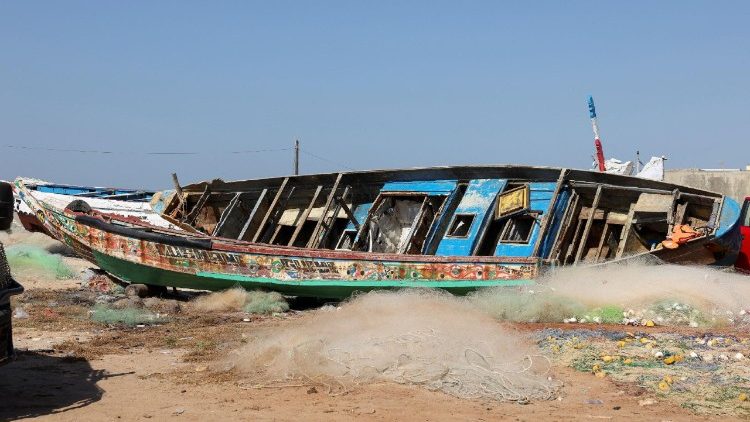
Around one hundred people are missing and feared dead after a boat carrying migrants bound for Europe capsized off the coast of Senegal.
The tragedy occurred overnight from Tuesday to Wednesday off the coast of Yenne, a town south of the capital Dakar, and one death had been confirmed as of Thursday morning. Search and rescue operations are ongoing, but hopes of finding survivors are feeble.
Pope Leo XIV’s words during his visit to the Port of Arguienguin in the Canary Islands in June this year cannot but resonate in the wake of this latest, of a long string of migrant boat sinkings, on the so-called West African route in the Atlantic Ocean.
On that occasion, he condemned deaths at sea and called for safe, legal pathways, rescue operations, and long-term social integration so newcomers are not left isolated or vulnerable after arrival.
Meanwhile, speaking to Reuters on Thursday, the president of Action for Human Rights and Friendship said a survivor spoke of scores of people aboard the rickety vessel bound for Europe.
Earlier this month, more than 40 people drowned in a similar sinking north of Dakar near the town of Kebemer.
The UN refugee agency said nearly 600 people have died trying to reach the Spanish Canary Islands from West Africa so far this year. They are men, women and children fleeing conflict, persecution, the climate crisis and poverty. Many are also victims of human trafficking.
UNHCR said more than 8,000 people arrived at the Canary Islands in the first 12 days of November, tripling the number of arrivals recorded in all of November last year and hitting the highest monthly level since October 2023.
(Source: Reuters and other agencies)
Thank you for reading our article. You can keep up-to-date by subscribing to our daily newsletter. Just click here.
Cardinal Parolin urges COP31 to keep human dignity at heart of climate action
Addressing the COP31 UN climate conference in Antalya, Türkiye, Cardinal Secretary of State Pietro Parolin calls for greater solidarity among nations and education that brings lasting change.
Vatican News
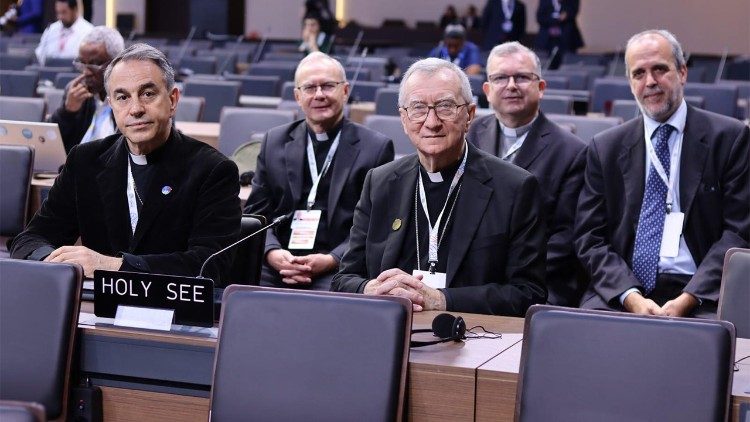
Cardinal Secretary of State Pietro Parolin has urged delegates at COP31 in Antalya to keep the people most affected by climate change at the center of their deliberations.
Speaking on behalf of Pope Leo XIV, the Vatican Secretary of State recalled the Pope’s appeal at last year’s conference to “bear in mind the human face of the climate crisis.”
The decisions before delegates, he said, concern people’s lives, their God-given dignity, and the future of humanity.
COP31, the 31st United Nations climate conference, brings countries together in Antalya, Türkiye, to negotiate how to curb greenhouse gas emissions, adapt to climate change, and finance those efforts.
The Cardinal said scientific analyses increasingly indicate that the 1.5°C threshold is likely to be exceeded. He noted that the Paris Agreement gave countries a common framework for action and said substantial gaps remain in political commitments, concrete action, and investment.
The poorest and future generations, he added, bear a disproportionate share of the consequences despite having contributed least to the crisis.
A matter of justice
“It is a matter of justice – social, economic and human,” Cardinal Parolin said, quoting Pope Leo.
For believers, the Pope added, care for creation is also a duty born of faith, "since the universe reflects the face of Jesus Christ, in whom all things were created and redeemed."
The Cardinal called for greater efforts to cut emissions and adapt to climate change, alongside deeper changes in behavior, economic and social systems, and governance.
He warned that geopolitical tensions driven by narrow self-interest are overshadowing the crisis and called for countries to work together on economic development, climate resilience, and lasting peace.
Cardinal Parolin also urged delegates to consider what drives the crisis, citing Pope Leo’s warning about “the loss of a sense of limits, the desire for domination, the pursuit of immediate profit, and the inability to recognize the God-given dignity of each human person.”
As technology increases humanity’s power to change the world, he said, greater care is needed for those who will bear the consequences of those choices.
"Human beings are not allowed to treat creation despotically or irresponsibly," he said. "We have been entrusted with the responsibility of caring for creation, thereby benefiting our own personal and communal fulfillment."
Cardinal Parolin (center right) with the Holy See delegation at the COP31
Education for lasting change
Cardinal Parolin called for an educational pact that puts human dignity and the common good at the center of the climate agenda.
Quoting Pope Leo, he said education should “combine social justice and environmental justice” and involve “the mind, the heart and the hands.”
"While political, technical and economic measures are indispensable, they need to be accompanied by cultural and educational processes capable of supporting lasting change," he said.
Cardinal Parolin closed his address by urging COP31 participants to care for the creation entrusted to them by God and, in doing so, help build a peaceful world.
Thank you for reading our article. You can keep up-to-date by subscribing to our daily newsletter. Just click here.
Kenyan Catholic Bishops call for responsible leadership ahead of 2027 elections
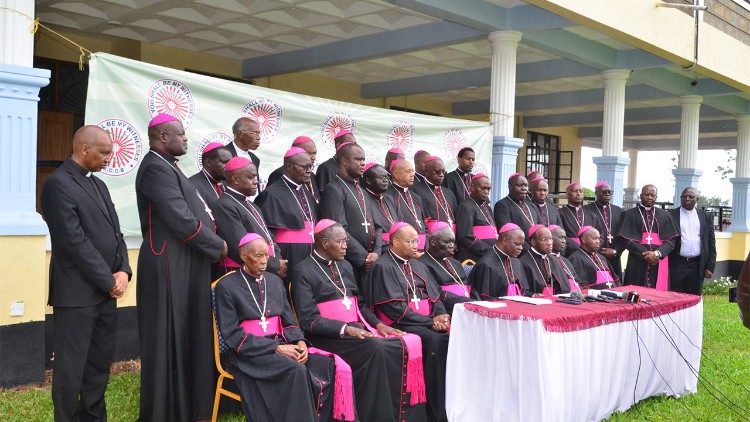
The Catholic Bishops of Kenya have called on political leaders, young people and citizens to safeguard peace, uphold human dignity and promote responsible leadership as the country prepares for the 2027 General Elections.
Rose Achiego Ande - Nairobi
In a statement titled “A Call for a Just, Peaceful and United Kenya,” issued at the conclusion of their Plenary Assembly held at John Cardinal Njue Pastoral Centre in Embu, the bishops expressed concern over growing political tensions, violations of human rights, divisive political rhetoric and attempts to undermine public confidence in electoral institutions.
Drawing inspiration from the biblical exhortation in Micah 6:8, which calls believers to act justly, love mercy and walk humbly with God, the bishops reaffirmed the Church's responsibility to speak on matters affecting society, particularly where human dignity, justice and the common good are at stake.
Quoting Pope Leo XIV's apostolic exhortation Magnifica Humanitas, they said the Church must make her voice heard whenever human dignity is violated or political and economic systems fail to serve the people, not to dominate society but to promote communion.
Young people urged to reject violence
Recognising the growing civic engagement of young people, the bishops commended their energy, creativity and concern for the country's future. They particularly encouraged young Kenyans to obtain national identity cards and register as voters to participate meaningfully in the 2027 elections.
However, they warned young people against being manipulated by politicians seeking to recruit them into acts of violence and political malpractice.
“Resist the lure of money to cause violence,” the bishops urged, reminding the youth that their lives must not be sacrificed for political interests.
They encouraged young people to use their creativity and social media skills to promote justice, peace and responsible civic participation rather than spreading hostility and division.
Leaders challenged to promote civility
The bishops also expressed concern over increasingly hostile political discourse, warning that inflammatory language, personal attacks and hate speech could undermine the peace the country has enjoyed.
They called on political aspirants and their supporters to exercise restraint in public communication, noting that the use of indecent and offensive language sets a poor example for younger generations and risks fuelling hatred.
The bishops particularly invited presidential candidates to make a public commitment to peaceful campaigns and political decency.
Churches must remain places of prayer, not political campaigns
In a firm pastoral directive, the bishops reiterated that Catholic churches must not be used as platforms for political campaigns.
They observed that places of worship bring together people from different political backgrounds who come seeking spiritual nourishment, peace and communion.
Priests and other pastoral agents were consequently urged to protect the sacred character of churches and ensure that all worshippers are welcomed without political discrimination.
“ There shall not be any political address given in any of our Catholic Churches, in any part of the country,” the bishops declared, instructing priests to implement the directive with the seriousness it deserves.
A renewed appeal for national unity
As Kenya approaches the festive season, the bishops appealed to citizens to exercise discipline and observe road safety measures to reduce road accidents and loss of lives.
They thanked the clergy, religious men and women, civil society organisations and other religious leaders for their continued contribution to peacebuilding and pastoral service.
Concluding their message, the bishops called on Kenyans to place human dignity, peace, justice, truth and the common good above ethnic, political and personal interests.
Thank you for reading our article. You can keep up-to-date by subscribing to our daily newsletter. Just click here.
10 Palestinians arrested in West Bank raids as tensions remain high
The Israeli army arrested at least 10 Palestinians on Saturday during raids across the occupied West Bank amid tightening restrictions on Palestinians.
By Nathan Morley
Israeli forces arrested at least 10 Palestinians, including a woman, during raids across the occupied West Bank on Saturday, according to news reports, as Israel continues to tighten restrictions on Palestinians in the territory.
The arrests took place in and around the northern West Bank city of Nablus, amid a broader surge in military operations and settler violence since the outbreak of the Gaza war in October 2023.
Israeli military raids, arrests, home demolitions and the destruction of agricultural land have intensified across the West Bank during the conflict.
The unrest has coincided with continued expansion of Israeli settlements and the displacement of Palestinian residents.
Violence in Gaza
Violence has also continued in Gaza.
Earlier this week, Egypt condemned an Israeli airstrike on Nasser Medical Complex in Khan Younis in the southern Gaza Strip that killed at least six Palestinians and wounded more than 20 others, including children and medical staff.
In a statement, Egypt's Foreign Ministry described the strike as a flagrant violation of international humanitarian law and said it threatened efforts to maintain a ceasefire and improve humanitarian conditions in Gaza.
Egypt called for an immediate halt to what it described as Israeli ceasefire violations and urged the international community to support the truce, prevent further attacks and help advance efforts to restore stability in the enclave.
Earlier this month, the U.N. human rights office warned that concerns about ethnic cleansing remain as Israeli forces continue to push Palestinians into an ever-smaller area of Gaza.
The office said Palestinians face repeated displacement while Israeli military operations continue to destroy what remains of civilian infrastructure across the territory.
Listen to the report by Nathan Morley
Thank you for reading our article. You can keep up-to-date by subscribing to our daily newsletter. Just click here.
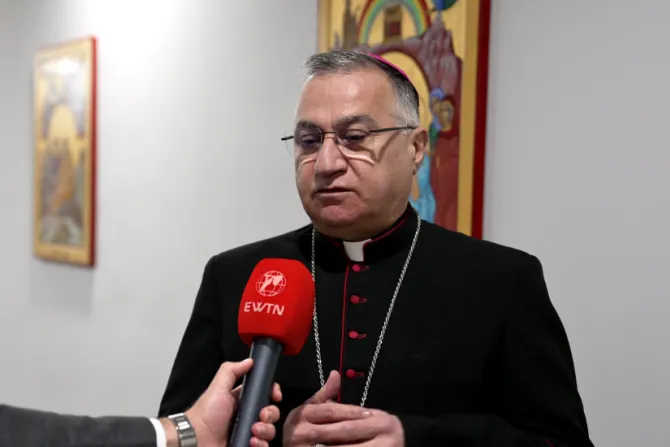
Voor de christenen in Irak zegt aartsbisschop Warda dat langdurige stabiliteit banen vereist voor jongeren
Disclaimer: Samenvatting en vertaling gemaakt met AI. Kan onregelmatigheden bevatten. Klik hier voor het originele bericht.
Volgens Chaldees-katholiek aartsbisschop Bashar Warda van Erbil hangt het voortbestaan van de Christelijke gemeenschap in Irak niet alleen van de veiligheid af, maar ook van de kansen die jongere generaties hebben op het gebied van werk en een stabiel leven. Onderwijs en professionele vorming zijn cruciaal om de Christelijke gemeenschappen te versterken, vooral gezien de economische druk die jongeren ondervinden. De werkloosheid in Irak bedraagt 15,5% en de arbeidsdeelname is ongeveer 38%. De afhankelijkheid van olie beïnvloedt de werkgelegenheid, waardoor er onvoldoende duurzame banen zijn. Warda benadrukt dat onderwijs niet alleen gericht moet zijn op diploma's, maar ook op praktische vaardigheden. Hij pleit voor grotere investeringen in beroepsvorming en projecten die de particuliere sector kunnen versterken, om jonge Irakezen alternatieven te bieden voor afhankelijkheid van overheidsbanen. De aartsdiocesane instellingen van Erbil bieden momenteel werk aan ongeveer 950 mensen, maar er is meer nodig om de economische uitdagingen aan te pakken en een levendige Christelijke aanwezigheid te waarborgen. De hulp moet gericht zijn op het creëren van mogelijkheden voor economische onafhankelijkheid in plaats van tijdelijke bijstand.
(foto credit: ACI MENA)
Illinois bishop announces first-ever parish to be named after Blessed Fulton Sheen
Bishop Louis Tylka of the Diocese of Peoria, Illinois, announced at the end of a Mass celebrated on Saturday the first-ever parish named for Blessed Fulton Sheen.
The combined parish of St. Mary in El Paso, Illinois — where Sheen was baptized — and St. John in Benson, Illinois, will be the first parish in the world to be named after the new blessed. While the buildings themselves will retain their original names, the new parish name will take effect on Dec. 9, Sheen’s feast day, Tylka said.
“This has been a remarkable week of firsts for the Diocese of Peoria and the universal Catholic Church,” Tylka said in a statement released later on Sept. 26. “We have celebrated Archbishop Fulton Sheen becoming the first American-born bishop to be declared Blessed. For the first time, we have heard his name invoked as a Blessed in the Eucharistic Prayer. For the first time, we have prayed the Collect given to the Church for his feast. And today, I have the great joy of announcing another first: the establishment of the first parish in the world named Blessed Fulton Sheen Parish.”
The Sept. 26 Mass — celebrated by Bishop John Barres of the Diocese of Rockville Centre, New York, who was baptized as a baby by Sheen — was one of many celebrated in thanksgiving for the beatification of Sheen, who was declared “blessed” on Sept. 24 in St. Louis.
“There is something profoundly fitting about this new parish carrying his name,” Tylka continued in the statement. “It was at St. Mary Church in El Paso that Fulton John Sheen was baptized. There, his life in Christ began. From those waters of Baptism flowed a remarkable life of faith, priesthood, preaching, teaching, missionary discipleship and evangelization that eventually touched millions of people around the world.”
A person must be proclaimed “blessed” by the Church before a parish can be named after him or her, Tylka explained to EWTN News’ Mark Irons on Saturday outside of St. Mary’s Church. Tylka said he signed the decree to name the parish after Sheen on Friday morning, less than 24 hours after Sheen’s beatification.
“It’s great,” Tylka said when asked by Irons what he thought about having the parish named after Sheen. “This is where he was baptized, this parish church — which will still be St. Mary’s Church, but it is St. Mary’s Church of Blessed Fulton Sheen Parish — to know that connection, that we’re continuing on that faith that God has given to us that he witnessed so well, just immense pride and certainly for the folks here … to be able to know that theirs is the first parish to ever honor the blessed.”
Sheen, despite his humble origins in small-town Illinois, aspired to great things as an academic and as a communicator of the Catholic faith. On Thursday, before a crowd of more than 50,000 at The Dome at America’s Center in St. Louis, the farm-boy-turned-mass-media star was declared “blessed” after the reading of a decree signed by Pope Leo XIV, a fellow Midwesterner.
Via his decree, Pope Leo announced Blessed Sheen’s feast day will be on Dec. 9, the anniversary of his death. His feast day is expected to be on the calendar of the Catholic Church in the United States.
Sheen was born in Illinois in 1895 and ordained a priest of the Diocese of Peoria in 1919. He later became an auxiliary bishop for the Archdiocese of New York and then bishop of Rochester, New York.
His international fame was largely due to his ability to use the new forms of media of his time to proclaim the Catholic faith.
Through his television program “Life Is Worth Living,” broadcast during the 1950s, Sheen brought reflections on faith, morality, and the meaning of life into millions of homes, becoming one of the most recognizable Catholic figures on American television.
Mark Irons and Jonah McKeown contributed to this report.
This story was updated at 4:02 p.m. ET on Sept. 26, 2026, with the statement from the Diocese of Peoria/Bishop Tylka and comments to Mark Irons.