Pope Leo XIV calls for respect for Venezuelan sovereignty after U.S. capture of Maduro
Catholic News Agency |
4 January 2026
Pope Leo XIV addresses pilgrims gathered in St. Peter’s Square for the recitation of the Angelus on January 4, 2026. In his message after the prayer, the pope called for respecting Venezuela’s sovereignty and constitution following the capture by U.S. forces of the country’s President Nicolás Maduro. / Vatican Media
Vatican City, Jan 4, 2026 / 06:51 am (CNA).
Pope Leo XIV expressed deep concern over the situation in Venezuela and called for the country’s national sovereignty to be fully respected, one day after a U.S. operation ended with the capture and arrest of President Nicolás Maduro and his wife, Cilia Flores.
“With a heart full of concern I follow the evolution of the situation in Venezuela,” the pope said, underscoring that “the good of the beloved Venezuelan people must prevail above any other consideration.”
At the end of the Angelus, Pope Leo XIV spoke about the situation in Venezuela, following the capture of Nicolás Maduro by the United States under President Donald Trump. “With a heart full of concern I follow the developments… the good of the beloved Venezuelan people must… pic.twitter.com/81BlY0Sv4A
Speaking to pilgrims gathered in St. Peter’s Square for the recitation of the Angelus, Leo XIV insisted on the need to “overcome violence” and called for “embarking on paths of justice and peace, guaranteeing the country’s sovereignty.”
The Holy Father also pointed to the importance of “ensuring the rule of law enshrined in the Constitution” and of “respecting the human and civil rights of each and every person.”
He further urged working together to “build a serene future of collaboration, stability, and concordia.”
The pontiff emphasized that this effort must be carried out “with special attention to the poorest, who suffer because of the difficult economic situation.”
Finally, the pope invited Catholics to unite in prayer for Venezuela, entrusting this intention “to the intercession of Our Lady of Coromoto and of Saints José Gregorio Hernández and Sister Carmen Rendiles,” canonized last year.
The pope’s remarks come at a moment of maximum political and international tension for Venezuela following the capture of President Maduro and his wife, and Maduro’s imminent prosecution on U.S. soil on drug trafficking charges.
Hours earlier, U.S. President Donald Trump said a second wave of attacks was planned if forces in the country offered resistance. “We are going to govern Venezuela until there is a safe transition,” he said at a press conference.
Meanwhile, Venezuela’s Supreme Tribunal of Justice has ordered that Vice President Delcy Rodríguez assume the presidency due to Maduro’s “forced absence.”
This story was first published by ACI Prensa, CNA’s Spanish-language news partner. It has been translated and adapted by CNA.
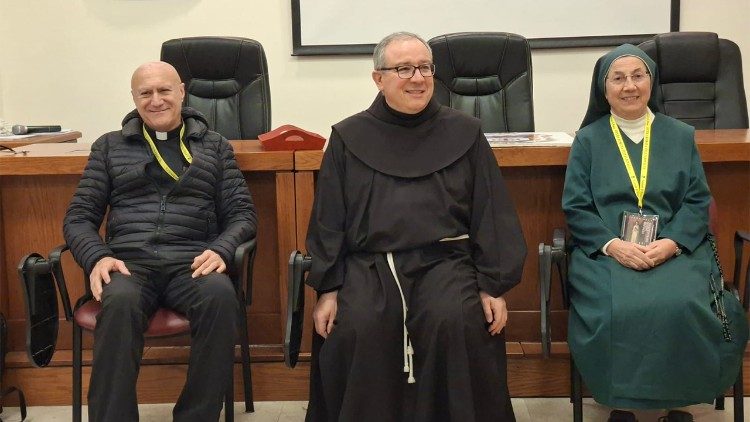
Custos of the Holy Land: “Return as pilgrims to the Holy Land”
Father Francesco Ielpo, Custos of the Holy Land invites the faithful to resume pilgrimages to the Holy Land, as they are a source of economic support and of hope to the local communities.
By Michele Raviart in Jerusalem
“Fear is not overcome with words; it is overcome with witness. Seeing Christians from all over the world come to the Holy Land to visit the holy places generates hope and strengthens the reason for coming here—not to see a museum, but to encounter a living Church,” said Father Francesco Ielpo, Custos of the Holy Land, on January 7, the day after the end of the Jubilee year dedicated to theme of hope.
He was speaking to a group of pilgrims from Rome at the Franciscan headquarters in the Old City of Jerusalem. Nearly thirty priests, diocesan officials, jouranlists and communicators, led by the Opera Romana Pellegrinaggi (an office of the Vicariate of Rome), came to the holy city to describe how pilgrimages have changed since October 7, 2023, and why it is more necessary than ever to visit the Holy Land
Halting the exodus of Christians
“What can we do to help this land and these peoples?” is the question most frequently addressed to Father Ielpo in the last months. After prayer, says the Custos of the Holy Land, the most helpful thing would be to “return as pilgrims to this land.”
Pilgrimages, in fact, are “one of the principal sources of economic support, primarily—but not only—for the local Christian community,” he explained. Christians number about 50 thousand people in Israel and Palestine, around 6000 of whom live in Jerusalem. Without this economic lifeline, the concrete risk is the progressive depopulation of the Holy Land.
“We are witnessing a migratory flow of entire families, not only Christian but also Jewish,” Father Ielpo stressed. Pilgrimages, moreover, can be a source of hope and give rise to positive initiatives.
Entrance to the Franciscan monastery of Saint Saviour in the Old City of Jerusalem
Positive trends
Pilgrims generate hope, Father Ielpo reiterated, and at the end of the Jubilee this means “above all coming to see that, despite everything, we have not been abandoned.”
“There has always been a Church that has remembered us, in different ways and forms,” he continued. “Pilgrims of hope mean that there is always a point from which one can start again, even in these dark times.”
Some tentative signs of recovery were visible in December. All hotels in Bethlehem were fully booked during the Christmas period and occupancy rates remained at around 70% until a few days ago. In addition, the Israeli authorities granted 25,000 40-day permits to Palestinians to visit Israel, and for many of them it was their first time in Jerusalem.
The Franciscan monastery of Saint Saviour in Jerusalem, headquarters of the Custody of the Holy Land
We cannot accept the growth of antisemitism
“After October 7, 2023,” however, “nothing is as it was before. We cannot imagine a return to the way things were, nor would it be right. This land has changed, and this will also change pilgrimages and the type of pilgrim who comes,” said Father Ielpo. “Those who come arrive with many questions and are motivated by faith.”
In this sense, those who accompany groups must be able to help pilgrims “not to take sides” - which does not mean indifference - “but not to polarize in a way that fails to build trust among peoples and instead increases distance. It is one thing to denounce an injustice; it is another to equate an entire population with that injustice,” he explained.
“We cannot accept the growth of antisemitism as a result of political choices,” the Custos of the Holy Land underlined, recounting how, the day after the Hamas attack, many Muslim students at the Custody of the Holy Land’s multi-religious choir school refused to attend lessons with their Jewish teacher.
“I am not the government of this nation; I only want to build the best choir in Jerusalem,” the teacher told them, after a long period of mediation that then allowed the courses to continue.
Recognizing the seeds of good and of the future
Examples like these form the basis of what pilgrimages must become from now on: more focused on helping pilgrims recognize the seeds of goodness and of the future that are already present in the Holy Land.
“In the past, entire pilgrimages took place without any encounter with the local Christian community,” Father Ielpo said. “Perhaps now one can see a little less and meet a little more, not only by visiting the holy places, but by being invited to get to know those realities that already today are bringing people closer together.”
Thank you for reading our article. You can keep up-to-date by subscribing to our daily newsletter. Just click here
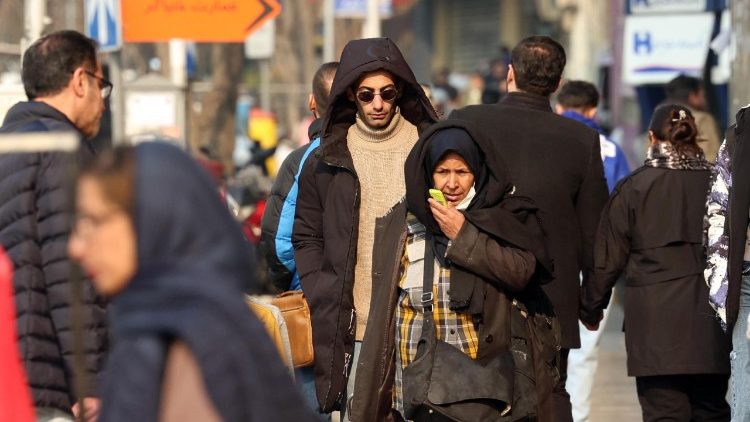
Iranian security forces fire tear gas at protesters
Protests spread throughout Iran in response to the country's economic crisis.
By Nathan Morley
Iranian security forces used tear gas to disperse crowds on the twelfth day of nationwide demonstrations that began over the country’s worsening economic crisis and have since broadened into protests against the government.
According to Iran Human Rights (IHR) - an NGO - security forces opened fire, used tear gas, and assaulted civilians in the southeastern city of Kerman.
The group reported Tuesday that at least 27 protesters, including five minors, had been killed.
The U.S.-based Human Rights Activists News Agency (HRANA) said the unrest has spread to 111 cities and towns across all 31 provinces.
It reported at least 34 protesters and four security personnel killed, and said authorities have arrested about 2,200 people.
Economic concerns sparked protests
The protests began on Dec. 28, when shopkeepers in Tehran took to the streets after another sharp drop in the value of the rial against the U.S. dollar.
University students soon joined, and demonstrations spread to other cities, with crowds chanting slogans against Supreme Leader Ayatollah Ali Khamenei.
The current wave of unrest is the most extensive since the 2022 uprising sparked by the death of Mahsa Amini, a young Kurdish woman who died in custody after being detained by morality police for allegedly violating hijab rules.
More than 550 people were killed and 20,000 arrested during that crackdown, according to human rights groups.
Listen to Nathan Morley's report
Thank you for reading our article. You can keep up-to-date by subscribing to our daily newsletter. Just click here
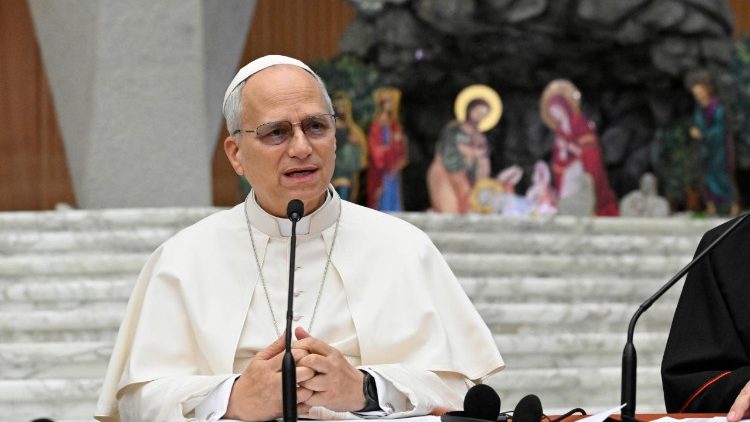
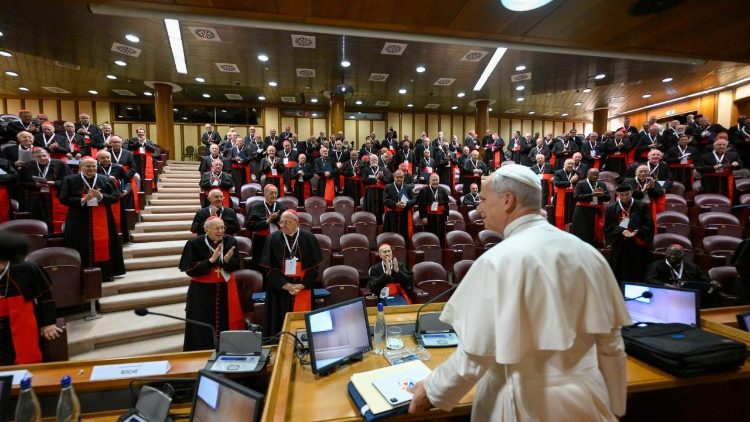
Pope Leo XIV concluded the first session of the meeting with the cardinals yesterday with an off-the-cuff address, following work in linguistic groups in the Paul VI Hall. He thanked them for choosing two themes—synodality and mission in the light of Evangelii gaudium—from among four proposals, saying: “Thank you for this choice; the other themes are not lost. There are very concrete, specific issues that we still need to address.”
By Salvatore Cernuzio
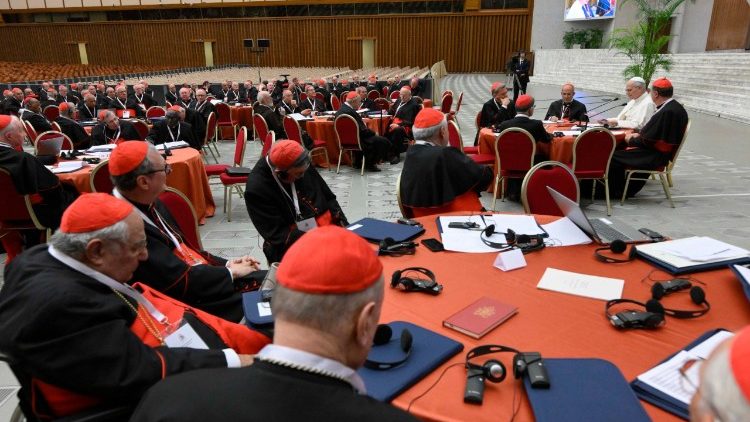
“I feel the need to be able to count on you: it is you who have called this servant to this mission. Therefore, I believe it is important that we work together, that we discern together, that we seek what the Spirit is asking of us.” At the conclusion of the first day of the Extraordinary Consistory he convened in the Vatican, Leo XIV once again asked the 170 cardinals present for their support and assistance.
Synodality and mission in the light of Evangelii gaudium were chosen “by a clear majority,” from a list that also included the liturgy and the Apostolic Constitution Praedicate Evangelium.
Pope Leo did not take part directly in the group discussions, but participated in the plenary session in which the nine secretaries of the tables—composed of cardinals from outside the Roman Curia—presented their work and explained, within a maximum of three minutes, the reasons for choosing the two themes. As Pope Leo explained, members of the Roman Curia are easier to consult.
“One theme cannot be separated from the other”
At the conclusion of the session, the Pontiff—after listening and taking notes—spoke again to thank the cardinals “for all the work already carried out in this first session” and for the choice made by all the tables, “by a large majority.” He stressed that “one theme cannot be separated from the other.”
“There is much that we can examine together,” Pope Leo said, “but we want to be a Church that does not look only at itself, that is missionary, that looks further ahead, toward others.”
The Church’s “reason for being,” the Pope affirmed, “is not for cardinals, nor for bishops, nor for the clergy,” but rather “to proclaim the Gospel.” For this reason, he expressed gratitude for the choice of the two themes.
The Synod and synodality, he said, express the search for how to be a missionary Church in today’s world, while Evangelii gaudium calls the Church to “proclaim the kerygma, the Gospel, with Christ at the center.” “This is our mission,” the Pope said.
“The other themes are not lost,” he added. “There are very concrete, specific issues that we still need to address.” He also expressed the hope that each cardinal would “truly feel free” to communicate with him or with others as part of an ongoing “process of dialogue and discernment.”
The journey is as important as the result
In his brief greeting, the Pope cited the words of one of the secretaries, who observed that “the journey was just as important as the conclusion of the work at the table.” This experience of collegiality, Pope Leo said, is what he hopes will be a fruit of the Consistory.
It is an experience that “offers the Church and the world a witness” to the desire to be together and to recognize the value of making the sacrifice of travel—“for some of you, a very long one”—in order to seek together what the Holy Spirit wants for the Church today and tomorrow.
The time of the meeting is “very brief,” Leo acknowledged, but it is “a very important time also for me.” Once again, he reiterated the importance of working together, discerning together, and seeking what the Spirit is asking of the Church.
“Is there life in our Church?”
In his concluding address, the Pope returned to passages from his homily the previous day during the Mass for the Solemnity of the Epiphany in St. Peter’s Basilica, following the closing of the Holy Door. In particular, he repeated the question: “Let us ask ourselves: is there life in our Church?”
“I am convinced that there is,” the Bishop of Rome said. “These months—if I had not experienced it before—I have had countless beautiful experiences of the life of the Church. And yet the question remains: is there life in our Church? Is there space for what is being born? Do we love and proclaim a God who sets us back on the journey?”
There is indeed a journey still to be made, the Pope said, and one cannot take refuge in the idea that “everything is already done, finished—do as we have always done.” The Consistory therefore serves to help the Church walk together.
Recalling another passage from his homily, and citing King Herod, Leo said that “fear blinds,” while the Gospel “sets us free,” making us “prudent,” but also “bold, attentive, and creative,” and opening “paths different from those already taken.”
For Pope Leo XIV, the Consistory is thus “one of the many expressions through which we can truly experience the Church’s newness.” “The Holy Spirit is alive and present also among us,” he said. “How beautiful it is to find ourselves together in the boat!”
Thank you for reading our article. You can keep up-to-date by subscribing to our daily newsletter. Just click here
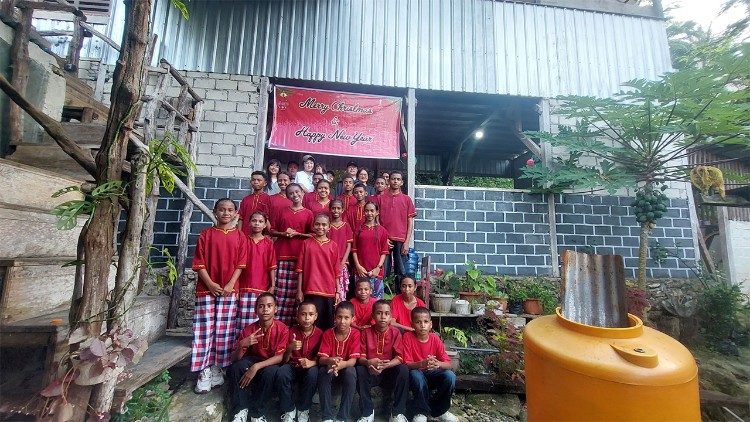
St. Brigitta Learning Centre empowering young people in Indonesia
The Church-run St. Brigitta Learning Centre is working to empower the young people on Indonesia’s remote Kei Besar Island in Southeast Maluku, combining medicine and pastoral care.
By Mathias Hariyadi, LiCAS News
On Indonesia’s remote Kei Besar Island in Southeast Maluku, a Church-run learning centre grew out of an unexpected meeting of vocations shaped by medicine and pastoral work.
Two different life stories converged on the island and led to the establishment of an initiative focused on youth development.
One is Dr. Angelina Vanessa, a general medical practitioner from Jakarta who spent 12 years serving as a program officer with DoctorShare on Kei Besar Island, one of Indonesia’s most remote regions in Southeast Maluku Regency.
DoctorShare, founded by Germany-trained surgeon Dr. Lie Dharmawan, is widely known for its Kapal Apung (Floating Hospital) program, which has sailed across the Indonesian archipelago to bring professional medical services to underserved and isolated communities, often in places without hospitals or surgical facilities.
The other is Father Patrisius Jeujanan, MSC, a native priest from Bombay village on Kei Besar Island. During the COVID-19 pandemic, he remained on the island for almost seven months due to government travel restrictions aimed at curbing the virus’s spread.
The emergence of St. Brigitta Learning Centre
While working and living on the same island, Dr. Vanessa and Father Patrisius engaged in many discussions about the future of local children and youth.
Eventually, they shared the same concern: young people on Kei Besar needed opportunities beyond formal schooling, spaces where they could develop practical skills, discipline, confidence, and faith.
From that shared vision emerged the St. Brigitta Learning Centre, an initiative designed to empower local children and teenagers to become more productive and confident individuals.
The program focuses on music, self-discipline, English proficiency, public speaking, and the enrichment of Christian faith, especially meaningful in a community where the majority of residents are Catholic.
The learning centre is located on higher ground and features a newly built multifunction hall that serves as classrooms and, when needed, a temporary dining area for visitors. Several furnished rooms on the upper level provide simple accommodations for guests and volunteers.
Born with music and song
Indonesians widely acknowledge that certain ethnic communities are blessed with a natural talent for music and singing, and Kei Besar and Kei Kecil islands are no exception. Moluccans are widely regarded as gifted in music and song.
When a small group of doctors, educators, and young volunteers from Jakarta arrived on the island on December 22 to carry out charity work, they were warmly welcomed by students of St. Brigitta Learning Centre.
Standing along the stone steps leading to the facility, the young people played guitars and sang popular local songs in a joyful fanfare.
That was only the beginning.
Throughout the visit, the students confidently led storytelling sessions, engaged in lively discussions, and performed traditional dances.
The activities reflected years of nonformal education guided by dedicated teachers and local volunteers, helping the youth grow in public speaking and self-expression.
Although Dr. Vanessa and Father Patrisius currently work and reside in Jakarta, the daily operations of St. Brigitta Learning Centre are managed by Tien Jeujanan, a professional educator who previously taught in Manado, North Sulawesi, and Papua.
Mrs. Tien is also a gifted musician, skilled in playing various instruments and singing. Whenever the Sacred Heart of Jesus Parish Church in Bombay needs an organist, she is ready to serve.
Supporting her are two dedicated volunteers.
Magdalena “Lena” Jeujanan, a former religious sister with formation experience in the Philippines and eight years of service in Italy, teaches English and choir and also assists as a guide for foreign visitors. During festive liturgies, she often leads the choir with vibrant energy.
Another volunteer, Maria Lisa Desi Talubun, is a university student who serves as a parish choir conductor while also teaching children and youth at the learning centre.
Dr. Vanessa and Father Patrisius have no intention of stopping there.
In recent months, they have initiated the establishment of St. Carlo Acutis Kindergarten School, an effort strongly supported by the parish priest, Father Anselmus Amo, MSC.
Together, the priests have also encouraged the local community to develop a retreat facility at Bukit Doa (Prayer Hill), about eight kilometers from the learning centre, as well as plans for a mini soccer field.
“We are morally obliged to provide public sports facilities on Kei Besar Island,” Father Patrisius said.
“Young people need healthy spaces to channel their physical energy through activities like mini football. We do not want them to spend their afternoons glued to mobile gadgets, wasting money on data packages and falling into scrolling addiction,” the priest added.
On this remote island, the St. Brigitta Learning Centre reflects the convergence of medical service, pastoral care, and local commitment in supporting the formation of local children and youth.
This article was originally published on https://www.licas.news/. All rights reserved. Unauthorized republication by third parties is not permitted.
Thank you for reading our article. You can keep up-to-date by subscribing to our daily newsletter. Just click here
Pope at Mass: Consistory a time for Cardinals to reflect on Church’s path
Pope Leo XIV celebrates Mass with the Cardinals gathered for his first Extraordinary Consistory, and invites them to share their burden of pastoral care with each other as they seek to help the Pope guide the Church.
By Devin Watkins
At the start of the second day of the Extraordinary Consistory of Cardinals, Pope Leo XIV presided at Mass with the Cardinals who have come from across the globe to consult with him.
They began their discussion on Wednesday, January 7, taking up the themes of “Synod and synodality” and “Evangelization and mission in the Church in the light of Evangelii gaudium.”
In his homily, the Pope began with the theme of fraternal love, saying the Consistory represents a moment of grace that expresses their unity in service to the Church.
He noted that the word Consistory comes from the Latin root word meaning “to stop,” saying the Cardinals have stopped their usual work to be with him in Rome.
“We have set aside our activities for a time and renounced even important commitments, so as to come together to discern what the Lord asks of us for the good of His people,” he said.
Calling it a “prophetic gesture” for our frenetic world, Pope Leo said the act of pausing to pray and listen together helps bring us into focus on our goal, so that we never flail in blind action.
Rather than promoting any personal or collective agendas, the Cardinals are invited to discern in light of the Eucharist, so that Christ may return their plans purified, enlightened, and transformed.
“Our College, though rich in many skills and notable gifts,” he said, “is not called, first of all, to be a team of experts, but a community of faith, in which the gifts that each one brings—offered to the Lord and returned by Him—produce, according to His Providence, the greatest fruit.”
The Pope invited the Cardinals to embrace the Trinitarian Love of God and to turn their moment of “stopping” into a “great act of love—toward God, the Church, and all men and women of the world.”
In prayer and silence, they are called to look each other in the face, listen to one another, and become a voice for all those whom the Lord has entrusted to their pastoral concern.
The Consistory, he said, is thus “an act to be lived with a humble and generous heart, in the awareness that it is by grace that we are here, and that there is nothing of what we carry that we have not received, as a gift and a talent not to be wasted, but to be invested with prudence and courage.”
The Pope recalled Pope St. Leo the Great’s exhortation for Christians to cooperate in the same Spirit so that the hungry are fed, the naked are clothed, and no one seeks their own interests over those of others.
Pope Leo XIV went on to recall the “multifaceted beauty” of the Church, to which the Consistory bears witness in its “unity of grace and faith.”
He urged the Cardinals to heed Jesus’ call for them to respond to the desire for peace of the “great crowd” of humanity which struggles for survival amid misery and “desperate existential emptiness.”
The Cardinals’ purpose for meeting together, said Pope Leo, is to help each other and the Pope receive and distribute the “five loaves and two fishes that Providence never fails to provide where His children ask for help.”
“What you offer to the Church in your service, at every level, is something great and extremely personal and profound, unique to each and precious to all,” he said. “And the responsibility you share with the Successor of Peter is grave and burdensome.”
In conclusion, the Pope thanked the Cardinals for their service, and entrusted their work together to the Lord.
Thank you for reading our article. You can keep up-to-date by subscribing to our daily newsletter. Just click here
Consistory: Cardinals choose synodality and mission as themes for reflection
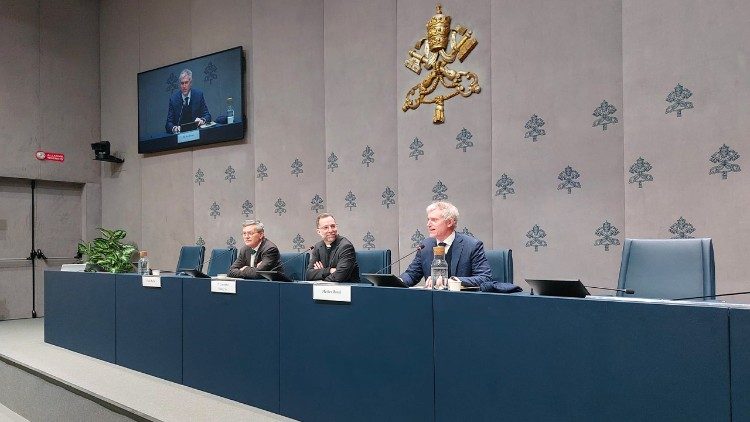
At the end of the first day of the Extraordinary Consistory, the Director of the Holy See Press Office tells reporters that the roughly 170 Cardinals participating voted to reflect on the themes of synodality and mission, noting that Pope Leo XIV told the Cardinals that he needs “to be able to count on you.”
By Salvatore Cernuzio
By a “clear majority,” the roughly 170 cardinals gathered for the Extraordinary Consistory convened by Pope Leo XIV—the first of his pontificate—voted for “Synod and synodality” and “Evangelization and mission in the Church in the light of Evangelii gaudium” as the themes on which to reflect during these two days of work.
Due to time constraints, they chose these two themes from the list of four topics, which also included the liturgy and the apostolic constitution Praedicate Evangelium on the Roman Curia and its service to the local Churches.
“One theme does not exclude another,” explained the Director of the Holy See Press Office, Matteo Bruni, in an evening briefing with journalists. “The Pope received indications of an urgency, or the perceived need, for certain themes. A way will be found to address them within the others.”
Synodal methodology
The Cardinals are both reflecting on synodality and employing the Synod’s methodology of dialogue and listening, with the Cardinals seated at round tables and divided into 20 language-based groups. Each intervention is around three minutes each.
“Synodality is the path God expects of the Church in the third millennium,” the Pope told the Cardinals, adding at the end of the day: “I feel the need to be able to count on you.”
Group work
The first part of the Consistory took place in the Synod Hall, presided over by Cardinal Ángel Fernández Artime, Pro-Prefect of the Dicastery for Institutes of Consecrated Life.
The Cardinals sang the Veni Creator, read a passage from Chapter 6 of the Gospel of Mark, and listened to a brief greeting from Cardinal Giovanni Battista Re, Dean of the College of Cardinals, and a meditation by Dominican Cardinal Timothy Radcliffe.
They then moved to the Paul VI Hall for the group work, at the end of which Pope Leo listened to the final reports.
Only the secretaries of the first nine groups—composed of Cardinals from the local Churches—presented the work carried out and the reasons that led to the choice of two of the four themes. The secretaries of the other 11 tables provided only the titles of the themes chosen.
On Thursday, discussions and reflection will continue, preceded by Mass at the Altar of the Chair in St. Peter’s, concelebrated by the Pope with the Cardinals.
As the Pope said in his address, no final text is expected, since the goal is to learn and exercise a collegial and synodal style—one of “working together” and “creating something new.”
Pope Leo XIV’s concluding words
“The journey is as important as the conclusion,” Pope Leo XIV reiterated in his closing remarks in the Paul VI Hall, once again underscoring the importance of the “experience of collegiality” in order to seek together to understand what the Holy Spirit wants for the Church today and tomorrow.
“Time is very short,” but it is important, he said. “I feel the need to be able to count on you. You have called this servant to this mission; it is important that we discern together.”
Cardinal Radcliffe’s meditation
In his meditation, Cardinal Radcliffe began with a question: “We are gathered in this Consistory to offer our help to the Holy Father in the exercise of his ministry in service of the universal Church. But in what way can we do so?”
Love and peace, answered the Cardinal, paraphrasing the Gospel of John. “If Peter’s boat were full of disciples who quarrel among themselves, we would be of no use to the Holy Father. If instead we live among ourselves in peace and love, even when differences emerge, God will truly be present, even when he seems absent.”
He spoke of times of “terrible storms,” marked by “growing violence, from armed crime to war,” by the rich–poor divide that “widens more and more,” by the progressive crumbling of the global order born after the Second World War, and by Artificial Intelligence, whose effects we do not know.
“If we are not already uneasy, we should be,” he said. In the face of all this, we can feel “alone, worn down, exhausted,” but “we must not be afraid,” Cardinal Radcliffe reassured. “Jesus watches over us and will draw nearer to us than ever.”
The same holds for the Church, also “shaken” by the “storms” of “sexual abuse and ideological divisions,” he said. “The Lord calls us to sail through these storms and to face them with truth and courage, without timidly waiting on the shore. If we do this in this Consistory, we will see him coming toward us. If, on the other hand, we remain hidden on the shore, we will not meet him.”
Thank you for reading our article. You can keep up-to-date by subscribing to our daily newsletter. Just click here
Pope at Consistory: It’s not the Church that attracts but Christ
Pope Leo XIV opens the Extraordinary Consistory of Cardinals and recalls that Christ draws us to follow Him, warning that division in the Church scatters the faithful.
By Deborah Castellano Lubov
“I am here to listen,” Pope Leo XIV said in his opening address of the Extraordinary Consistory of Cardinals taking place in the Vatican, on 7-8 January.
The Pope began by expressing his joy at welcoming the Cardinals to Rome on the day after Epiphany, praying that the Holy Spirit may guide them during these two intense but important days of reflection and dialogue.
The Pope said their day-and-a-half together “will point the way for our path ahead."
“We must not arrive at a text," he said, "but continue a conversation that will help me in serving the mission of the entire Church.”
The Holy Father acknowledged that the College of Cardinals is a very diverse group, “enriched by a wide range of backgrounds, cultures, ecclesial and social traditions, formative and academic paths, pastoral experiences, not to mention personal characteristics and traits.”
"We are called to get to know one another and to dialogue, so that we may work together in serving the Church," he said. "I hope that we can grow in communion and thus offer a model of collegiality.”
In his remarks, the Holy Father had reminded the participants of the significance of the Second Vatican Council, and reflected on his predecessor Popes.
"I invite us to pay close attention to what Pope Benedict signaled as the “power” that drives this movement of attraction," he said. "Indeed, this power is Charis, it is Agape, it is the love of God that became incarnate in Jesus Christ and that, in the Holy Spirit, is given to the Church, sanctifying all her actions."
"Furthermore," Pope Leo underscored, "it is not the Church that attracts, but Christ; and if a Christian or an ecclesial community attracts, it is because through that 'channel' flows the lifeblood of Charity that cascades from the Heart of the Savior."
"While unity attracts, division scatters," he warned.
The Holy Father recognized that the Cardinals would reflect on two themes, choosing from among: Evangelii Gaudium, that is, the mission of the Church in today’s world; Praedicate Evangelium, namely the service of the Holy See, especially to the particular Churches; the Synod and synodality as both an instrument and a style of cooperation; and the liturgy, the source and summit of the Christian life.
Yet, "due to time constraints, and in order to encourage a genuinely in-depth analysis," he said, only two of them will be discussed specifically, being guided by this question: “Looking at the path of the next one or two years, what considerations and priorities could guide the action of the Holy Father and of the Curia regarding each theme?”
This, he said, would be the Cardinals' way of proceeding, as they seek to be "attentive to the heart, mind and spirit of each, listening to one another and expressing only the main point and in a succinct manner, so that all can speak."
"In the future," the Holy Father said, "this way of listening to each other, seeking the guidance of the Holy Spirit, and walking together will continue to be a great help for the Petrine ministry entrusted to me."
"Even the way in which we learn to work together, with fraternity and sincere friendship," he said, "can give rise to something new, something that brings both the present and the future into focus."
Pope Leo XIV concluded by praying that the Holy Spirit may guide the Cardinals in their reflections, under the gaze of the Blessed Virgin Mary, Mother of the Church.
Pope Leo XIV address Cardinals gathered at Consistory (@Vatican Media)
Thank you for reading our article. You can keep up-to-date by subscribing to our daily newsletter. Just click here
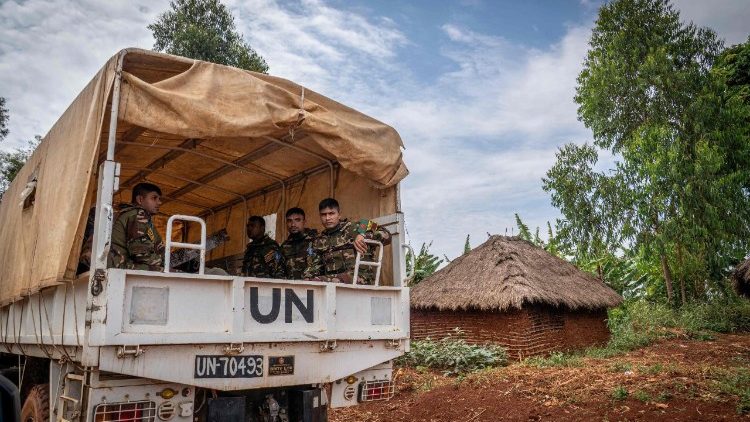
Thousands flee renewed violence in eastern DR Congo as crisis spills into Burundi
Tens of thousands of Congolese have fled renewed fighting in eastern DR Congo, with more than 80,000 people crossing into Burundi in recent weeks.
By Nathan Morley
Tens of thousands of Congolese have fled renewed fighting in eastern DR Congo, with more than 80,000 people crossing into Burundi in recent weeks. Violence in South Kivu province has displaced at least half a million people, and the humanitarian situation continues to deteriorate.
Since the clashes began, health facilities in South Kivu have been looted, medicines have run out, and schools remain closed. Communities are now without safe water, medical care or reliable livelihoods.
Education has been severely disrupted, with more than 391,000 children out of school, according to the World Food Programme. Around 8,000 refugees are currently sheltering at the Cishemere transit camp in Burundi.
Families describe repeated displacement, the loss of relatives and long journeys made in search of safety. Conditions in the camp are worsening, with shortages of water, medicine and decent sanitation compounded by the rainy season.
A peace deal between DR Congo and Rwanda has failed to halt fighting in South and North Kivu, and aid agencies warn that resources are stretched thin as Burundi now hosts nearly 200,000 refugees. The nearly 90,000 people who fled to Burundi in mid‑December face especially dire conditions, with limited access to food and water.
The UN refugee agency says children and women — including pregnant women — are among the most vulnerable. Many are living in makeshift shelters that offer little protection from the weather, sleeping on bare ground without blankets and receiving insufficient food. Severe overcrowding has heightened the risk of cholera, measles and malaria.
Thank you for reading our article. You can keep up-to-date by subscribing to our daily newsletter. Just click here
“Pray with the Pope”: a real network of communion in a divided world
“Pray with the Pope” is a new initiative of the Dicastery for Communication and the Pope’s Worldwide Prayer Network that invites people around the world to share in a real communion of prayer with Pope Leo XIV, offering prayer as a path to unity in a divided world.
By Benedetta Capelli and Francesca Merlo
From the Chapel of Saint Peregrine in the Vatican to the wider world, Pray with the Pope invites the faithful to share in a common moment of prayer with the Pope. The initiative was presented on Wednesday, 7 January, shortly before the release of the first video message in which Pope Leo XIV shares his prayer intention for January 2026. The video, recorded in English, Italian, and Spanish, marks the official launch of the project.
Prayer as a source of hope
In his January prayer intention - For prayer with the Word of God - Pope Leo XIV calls on the faithful to rediscover prayer as a source of hope. The Pope inaugurates the initiative not with a speech, but with a moment of prayer, emphasising a quieter, more contemplative way of communicating in an age marked by noise and distraction.
The slow time of prayer
According to Paolo Ruffini, Prefect of the Dicastery for Communication, the initiative offers “the intimate and universal prayer of the Pope in a new, sober, and powerful form,” serving as a visible sign of unity and communion. It becomes a meeting place for millions of people, present both in digital spaces and in the concrete realities of daily life, beginning with the heart of each person.
This proposal, Ruffini explained, challenges the pace of modern life by creating “a protected space, a slow time, for prayer”. It is a reminder that genuine encounter remains possible even in a world marked by division, war, and violence. Prayer, he stressed, has the power to restore unity where it has been fractured.
Monthly intentions, global concerns
Each month throughout 2026, Pope Leo XIV will invite the Church to pray for a specific intention, touching on both global challenges—such as peace and disarmament—and issues within the life of the Church, including evangelisation. The initiative continues the legacy of The Pope’s Video, launched ten years ago by Pope Francis and viewed over 260 million times worldwide.
Building a different kind of network
Ruffini recalled the Pope’s invitation to “mend the nets” in the digital age—not through ambition or conquest, but by rediscovering what truly matters. In a culture accustomed to networks driven by monetisation, a network of prayer may seem countercultural. Yet, he noted, to pray together is itself a way of building communion, responding to a deep spiritual longing present even in secular societies.
An open door to shared prayer
Father Cristóbal Fones, Director of the Pope's Worldwide Prayer Network, described Pray with the Pope as an open invitation for anyone, anywhere, to join the Pope’s monthly prayer intentions from a synodal perspective. This global dimension is reflected in video testimonies from Indonesia and Côte d’Ivoire, highlighting prayer as a bridge between cultures and peoples.
Finally, responding to journalists, Ruffini noted that the Pope has personally supported the initiative and has already recorded videos for the coming months. Through a short message on social media, Pope Leo XIV encouraged people to step away from endless scrolling and make space for prayer—a pause that allows the Word of God to breathe new life into hearts grown weary of constant distraction.
Thank you for reading our article. You can keep up-to-date by subscribing to our daily newsletter. Just click here
We are not politicians and cannot afford to be partisan, say Cameroon’s Bishops
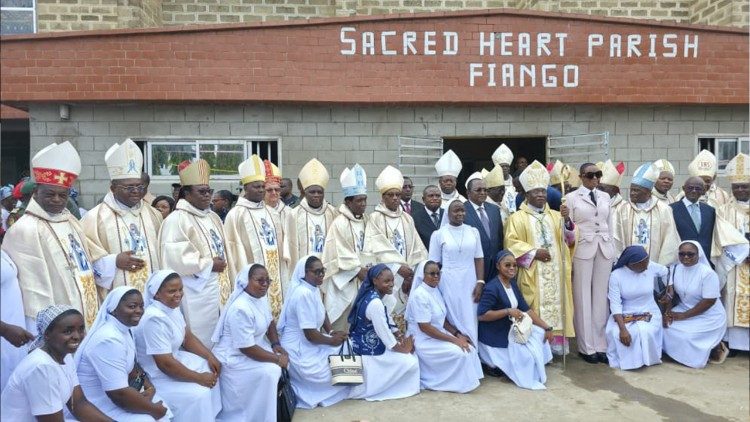
The Catholic Bishops of Cameroon are holding their 49th annual seminar in Kumba, in the Southwest Region, from 3 January to 10 January 2026. Under the theme “Communion and Collegiality,” this gathering brings together the entire Cameroonian episcopate for spiritual and pastoral exchanges in a context marked by socio-economic challenges in the country and the Crisis in the Anglophone regions.
Paul-Valérie Mendogo - Douala
The faithful in Kumba warmly welcomed the Bishops to this city located in the Anglophone part of Cameroon, in the Southwest Region. The Bishops were met by the faithful who lined the streets leading to the meeting place, a heavy downpour notwithstanding.
Among Cameroonians, expectations are high: “to see the Bishops heal the wounds of the people, strengthen dialogue, promote unity, revive faith, and reaffirm the Church’s commitment to the common good.”
Some of the faithful
We are shepherds for all
Presiding over the solemn Epiphany Mass at the Sacré-Cœur Cathedral of Fiango, in the presence of administrative and traditional authorities, Kumba Diocese Bishop Agapitus Nfon reiterated the essential mission of Bishops: “to bring the people of God closer.”
Asked about the impact of the seminar in the national sociopolitical context, especially after the upheavals related to the last presidential election, the Bishop of Kumba emphasised that the Catholic Church in Cameroon has never been silent. Through their prophetic words, the Bishops continue to light the way toward peace, prosperity, and holistic development.
“We are not politicians. We, Bishops, speak as shepherds and prophets. No Bishop will tell you who to vote for. During election periods, we provide criteria and guidance to help people choose the right leader. We call attention to consciences so that citizens can make the right choice. Therefore, we cannot afford to be partisan, because as shepherds, we have faithful who belong to different political parties. We are here to guide them all, and that’s it!”
A troubled region
The Diocese of Kumba was established under Pope Francis’ pontificate on 15 March 2016 by carving out parts of the Diocese of Buea. This year, it celebrates its 10th anniversary.
For many residents interviewed, the presence of the Bishops in the city already symbolises a message of hope and closeness, in a context marked by challenges of peace, unity, and development.
Thank you for reading our article. You can keep up-to-date by subscribing to our daily newsletter. Just click here