Check out the latest Catholic news here. This news keeps you updated on what’s happening within the Church and the world from a Catholic perspective. Stay informed and discover how faith is moving – both locally and globally.
Pope Leo: ‘I follow with concern the alarming situation in Ceuta’
After leading the recitation of the midday Angelus prayer on Sunday in the Vatican, Pope Leo XIV expresses concern over the serious migration crisis unfolding in the Spanish autonomous city of Ceuta. He prays for an end to wars across the globe and recalls the spiritual gift of the Pardon of Assisi that can be obtained this weekend.
By Deborah Castellano Lubov
“I follow with concern the alarming situation in Ceuta, asking God, through the intercession of Our Lady of Africa, that solutions of peace, stability, and justice may be found.”
Pope Leo XIV made this appeal in Spanish following the recitation of the Angelus prayer on Sunday in the Vatican.
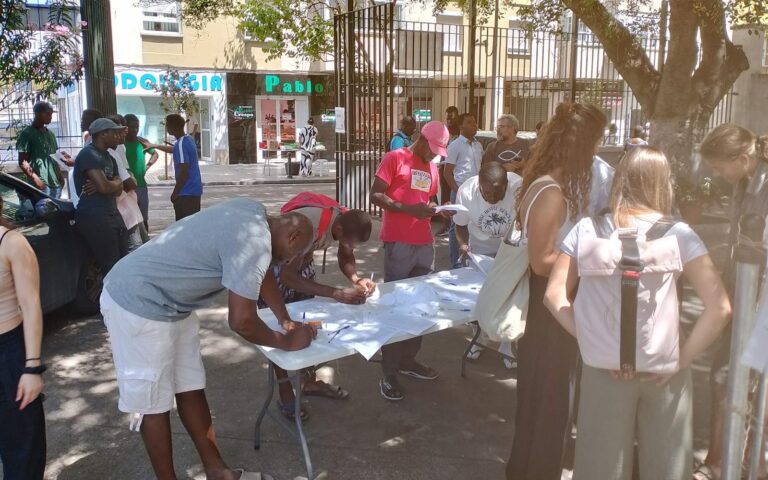
The Spanish autonomous city of Ceuta, located on the northern coast of Africa and bordering Morocco, is facing a major migration emergency.
In recent days, tens of thousands of people have attempted to enter the territory from Morocco, overwhelming reception facilities and prompting Spain to deploy additional security forces.
Amid the crisis and the dangerous attempts to cross by sea at least 67 lives have been lost. According to Reuters, most of the victims drowned at sea or were killed in crushes during the chaotic crossings.
A prayer for wars to cease
The Pope then turned his thoughts to all those suffering because of war.
“Let us continue to pray for peace, that wars may cease throughout the world and that diplomatic solutions to conflicts may be found,” he said.
In a special way, he remembered victims of hostilities, especially “the weakest and most defenseless,” as he prayed for children, the elderly, and the sick.
Pope Leo prayed that the Lord would “comfort those who suffer and bless the work of all those who bring help and consolation.”
The Pardon of Assisi
Finally, the Pope also recalled celebration this weekend of the Pardon of Assisi, inviting the faithful to give thanks for this great spiritual gift and to cherish it.
The Pardon of Assisi is a plenary indulgence traditionally associated with St. Francis of Assisi that may be obtained by partaking of the Sacraments of Reconciliation and the Eucharist and visiting a parish or Franciscan church, reciting the Creed, the Lord’s prayer and praying for the Pope and his intentions.
The “Pardon of Assisi” dates back to 1216, when Jesus Christ, the Virgin Mary, and angels appeared before St. Francis, in the tiny Porziuncula, the chapel Francis had built in the Italian town of Assisi.
When Jesus asked him what he desired for the salvation of souls, St. Francis asked for God to grant a plenary indulgence for all those who enter the chapel.
Later, the indulgence was extended to anyone who visits a parish or Franciscan church on August 1st or 2nd.
Thank you for reading our article. You can keep up-to-date by subscribing to our daily newsletter. Just click here.
Pope at Angelus: Christ truly satisfies humanity’s hunger
During his Sunday Angelus, Pope Leo XIV reflects on the miracle of the loaves and the fishes and reminds the faithful that encountering Christ is a nourishing experience.
By Deborah Castellano Lubov
Christ truly satisfies humanity’s hunger, Pope Leo XIV told the faithful during his midday Angelus address on Sunday.
Reflecting on the day's Gospel according to St. Matthew on the miracle of the loaves and the fishes, the Pope noted that Jesus not only restores the senses of those who lack them, but also nourishes humanity with His abundant gifts.
In the Gospel passage, St. Matthew tells how Jesus, moved with compassion for the crowd, miraculously feeds more than five thousand people with five loaves and two fishes.
The Pope recalled that Jesus performed signs, acts that reveal His special love for us and the salvation He brings to the world, including restoring sight to the blind and hearing to the deaf.
In doing so, Christ, the Pope observed, is doing more than merely performing miraculous deeds, but proclaiming to all that the Kingdom of God is near.
Encounter with the Lord is a 'nourishing' experience
The Pope reminded the faithful that the account of the multiplication of the loaves not only shows Jesus feeding those who are hungry, but reveals that an encounter with the Lord is itself a nourishing experience.
As he spoke on the episode in which all ate their fill and there were even twelve baskets left over, the Holy Father stressed that with Christ our needs are abundantly met.
Insisting that the Lord's providential care for us never fails, he reiterated that "Christ truly satisfies humanity's hunger, our hunger for truth and life."
The 'spiritual sickness' of greed
Pope Leo also warned against the evil of greed, often manifested in hoarding and waste.
"This spiritual sickness," he lamented, "numbs the senses, which become intoxicated with wealth, to the point of making people forget those who weep from hunger and cry out from thirst."
"Faced with the deserts of war and arrogance," the Pope urged, "let us consider with what kindness the Lord looked up to heaven, blessed, broke the loaves, and gave them to His disciples, so that they might distribute them to the crowd."
Growing in charity with the grace of the Eucharist
In this miracle of charity, the Pope said, we recognize the characteristic actions of Jesus, which reach their culmination in the Last Supper, when the Lord gave us His very life as our brother.
Thus, Pope Leo invited the faithful, when they savor the grace of the Eucharist, to bear witness to its beauty through their daily actions, beginning with blessing meals shared with family and friends.
In Jesus' company, he suggested, even vacations can become occasions of fraternal serenity if we reach out to neighbors in need.
Finally, Pope Leo concluded by imploring the Virgin Mary, our loving Mother, to help us grow in charity so that no one may lack their "daily bread."
Thank you for reading our article. You can keep up-to-date by subscribing to our daily newsletter. Just click here.
Pope encourages youth in Medjugorje to rediscover beauty of encountering the Lord
In a message signed by Cardinal Secretary of State Pietro Parolin for the opening of the Youth Festival (Mladifest), held at the shrine in Bosnia and Herzegovina, Pope Leo XIV urges young people not to be seduced by the illusions of "fleeting happiness." By following Jesus, even the deepest questions and anxieties of the heart can become "an opportunity for discernment and growth in faith."
By Edoardo Giribaldi
The promises of easy and immediate happiness are attractive, but they often fade away without leaving a lasting mark. What remains are the deeper questions, the anxieties that dwell in the human heart, and the longing for a joy that endures. It is precisely from these vulnerabilities that an authentic journey of faith can begin through an encounter with God, "who quenches every heart and gives the strength to always begin anew."
This is the heart of the message that Pope Leo XIV, through a message signed by Cardinal Secretary of State Pietro Parolin, addressed to the young people from 73 countries gathered in Medjugorje for the opening of Mladifest, the international youth festival. Starting in 1989, the festival takes place annually. The Eucharistic celebration takes place at the outdoor altar of Saint James Parish.
Encountering the Lord who quenches every heart
The message was read by Archbishop Aldo Cavalli, the Apostolic Visitor with a special assignment for the Parish of Medjugorje, shortly before the Mass celebrated by Archbishop Francis Assisi Chullikatt, Apostolic Nuncio to Bosnia and Herzegovina and Montenegro.
In his message, the Pope encouraged young people to return ad fontem—to Christ, the source of new life and authentic joy. Through prayer, listening to the Word of God, and the sacraments, he invites them to rediscover "the beauty of a personal encounter with the Lord, who quenches every heart and gives the strength to always begin anew."
A moment during one of the previous Mladifest international youth festivals
Seeking the truth that sets us free
The Pope also encourages young people to seek sincerely "the truth that sets them free," without allowing themselves to be deceived by "the illusions of a passing happiness." In following Jesus, he said, everyone can embrace even the most difficult questions and the anxieties of the heart as opportunities for discernment and growth in faith.
Trusting in the Holy Spirit and Mary
The message concludes with an exhortation to allow themselves to be "led by the Holy Spirit" and to entrust themselves to the intercession of Mary, so that they may become "shining witnesses of the Gospel, promoters of fraternity, and builders of peace in society."
Thank you for reading our article. You can keep up-to-date by subscribing to our daily newsletter. Just click here.
March for Life president steps down to become ‘full-time mom’
March for Life president steps down to focus on family
Jennie Bradley Lichter, the president of the March for Life, is stepping down to devote more time to her family as a “full-time mom,” the leader said this week.
“I have been humbled and inspired by the stories — so many stories, everywhere I go — of how the March for Life has changed people’s minds and hearts, how for so many Marchers it has sparked a lifetime of action and advocacy on behalf of the unborn, and in some cases, how it has changed the entire trajectory of their lives,” Bradley Lichter wrote in a farewell statement.
She and her husband “are raising two tweens and a rising kindergartner, and it has become very clear that my family needs more of my time and my active presence than I’m able to give while leading the March for Life,” she said in the statement
“My most important titles of all are not ‘President’ — but ‘wife’ and ‘Mom,’” she said.
Bradley Lichter said that her role has been “the highlight of my professional life.”
The resignation is effective July 31. The March for Life Board is actively searching for a new president.
The annual demonstration draws tens of thousands to the nation’s capital yearly to advocate for the rights of unborn babies.
Abortion drug present in municipal water, study finds
A study published on July 20 in the Journal of the Alliance for Hippocratic Medicine highlighted the need for “significant additional investigation into the levels of various hormones and [endocrine-disrupting chemicals], including mifepristone, in water sources,” with researchers finding high levels of the abortion drug in municipal water supplies.
Mifepristone is used in chemical abortions, as well as in treatment for miscarriages, and works by blocking progesterone, a hormone necessary for pregnancy.
The investigation found “significant levels of mifepristone (up to 0.041 μgram/l) in the water of all but one of the nine sampling classes,” the study read.
Water samples “were collected from sites upstream and downstream of water treatment facilities, and from municipal tap water,” from multiple American cities.
“Because of the plethora of effects of progesterone, this contaminant could affect the physiology of aquatic animals; and human health, including fertility, pregnancy and fetal development,” the researchers said.
Justice Department settles with pro-life father after FBI raid
The U.S. Department of Justice reached a seven-figure settlement with pro-life father Paul Vaughn after his home was raided by the FBI in connection with his pro-life work.
The settlement affirmed that under the Biden administration, the government’s actions “were an abuse of government power,” according to a July 28 press release by the Thomas More Society, the legal nonprofit that defended Vaughn.
Vaughn, a Catholic father of 11, was arrested at gunpoint after the FBI raided his house in connection with his protest at an abortion clinic. He is one of several pro-life advocates prosecuted under the Freedom of Access to Clinic Entrances Act during the Biden administration.
“My family has been through a traumatic ordeal that never should have happened. But today brings an end to this portion of the story,” Vaughn said in a statement.
“This chapter is finally closed, and our family looks forward with gratitude and hope, as we continue to serve God, advocating for the most vulnerable among us without fear.”
Catholic bishops of Massachusetts speak out against late-term abortion bill
The Catholic bishops of Massachusetts spoke out this week against a bill that will legalize late-term abortion in the state.
“As Catholic bishops we have a moral responsibility to present and uphold Catholic teaching and the sacred God-given dignity of every human life from conception to the natural death,” the bishops said in July 29 statement signed by Bishop William Byrne of Springfield, Archbishop Richard Henning of Boston, Bishop Robert McManus of Worcester, and Bishop Edgar da Cunha of Fall River.
The state legislature passed the bill in July, with the Massachusetts Senate voting in favor of it on July 31. The measure, if signed into law, will remove the stateʼs 24-week limit on abortion.
“The proposed elimination of any legal restraint on late-term abortion is, in our judgement, a radical measure which is gravely immoral,” the bishops’ statement read.
The advocacy group Susan B. Anthony Pro-Life America is also strongly opposing the bill; the group’s president Marjorie Dannenfelser called for nationwide protections for unborn children.
“If Gov. [Maura] Healey signs this bill into law, Massachusetts will join 10 states and Washington, D.C. with an all-trimester abortion policy where babies are killed after the point they can survive outside of the womb,” Dannenfelser told EWTN News.
“These extreme laws that only 10% of Americans support are enabled by the ‘states-only’ philosophy on abortion,” she said.
Massachusetts lawmakers pass bill removing all restrictions from abortion throughout pregnancy
The Massachusetts government this week moved to strip all restrictions from abortion and allow the procedure up until birth so long as a doctor approves of it.
The state Senate passed Bill H.5595 on July 31, a little over a week after the state House passed the same measure. The bill now awaits Democratic Gov. Maura Healey’s signature.
The legislation removes all of the state’s current restrictions on abortion after 24 weeks, instead dictating that a late-term abortion may be done based upon “the professional judgment of the physician” performing it.
Current state law, which H.5595 would change, only allows late-term abortions if they are necessary to preserve the life or “physical or mental health” of the mother, or if the baby has been diagnosed with a fatal condition.
Abortions are also allowed to be performed in the state if a baby would require “extraordinary medical interventions” to survive after birth.
If signed into law, the bill would make Massachusetts the 11th state to impose no limits whatsoever on abortion. Healey, who has served as the state’s governor since 2023, is an outspoken supporter of abortion.
The passage of the bill drew rebuke from SBA Pro-Life America President Marjorie Dannenfelser, who said in a July 31 statement that the state’s already-generous abortion policy “isn’t enough for Democrats whose party holds the position of no limits on abortion whatsoever.”
“These extreme laws that only 10% of Americans support are enabled by the ‘states-only’ philosophy on abortion,” she argued.
“The GOP must abandon the failed ‘leave it to the states’ position and move the country toward a national protection for unborn children across this nation,” she said.
Ahead of the July 31 vote, the state’s Catholic bishops had also criticized the measure.
“The proposed elimination of any legal restraint on late-term abortion is, in our judgement, a radical measure which is gravely immoral,” the bishops’ July 29 statement read.
The bishops urged Catholics “to pray for a renewal of reverence for all human life.”
Catholic Charities leader says Texas nun has felt ‘overwhelmed with fear’ after detention by ICE
The brief detention by immigration officials of a Catholic religious sister in south Texas continues to reverberate through immigrant Catholic communities, with Sister Norma Pimentel saying the experience left lasting emotional scars and heightened fears about immigration enforcement.
Speaking in an interview with “EWTN News In Depth” host Catherine Hadro on July 31, Pimentel — a Missionary of Jesus and the executive director of Catholic Charities of the Rio Grande Valley who has served as a long-time migrant advocate — recounted her reaction after learning that Sister Leticia “Letty” Ugboaja had been detained by Immigration and Customs Enforcement (ICE) officials while walking to church in June.
Ugboaja, a Nigerian-born member of the Daughters of Mary Mother of Mercy and a nurse, has served in the Diocese of Brownsville for nearly two decades. She has ministered in Catholic schools, parishes, and hospitals throughout south Texas and has become well known for her work with immigrant and low-income families.
In 2019, a judge denied Ugboaja’s asylum application but did grant her protection from removal to Nigeria under the United Nations Convention Against Torture because she is likely to face torture in her native country.
She is still at risk of third-country removal, however. Her attorney, Carlos Garcia, says she is legally permitted to work in the U.S. and has complied with every immigration requirement.
Sister Norma beside Sister Lettyʼs lawyer, Carlos M. Garcia, speaking to the media outside the ICE field office in Harlingen, Texas, after Ugboaja’s July 28, 2026, immigration check-in. | Credit: Amira Abuzeid/EWTN News
“My most immediate concern was that she needed somebody by her side,” Pimentel recalled in the interview with “EWTN News in Depth.”
She said she learned from a priest that Ugboaja was “very frightened,” crying after being taken into custody. Pimentel immediately contacted an ICE official she knew to determine what had happened and whether she could accompany the nun during the process.
“Knowing her, sheʼs such a beautiful person,” Pimentel said. “She was walking to church, and the last thing in her mind was that somebody was just going to take her and change her life this way.”
Although Ugboaja has resumed serving her community, including attending daily Mass, Pimentel said the experience continues to affect her.
“I think sheʼs a strong woman that is trying her best to put this behind her,” she said. “But I noticed that even the day of the press conference, she became overwhelmed with fear.”
Concerns over access to the sacraments
During the interview, Hadro replayed remarks Ugboaja made at a recent press conference where the religious sister described being prevented from attending Sunday Mass or receiving Holy Communion while in detention.
“It was very, very heartbreaking for me,” Letty said. “Can I go to Mass? Can I just attend Mass? Can I receive Communion? And the answer was no.”
Asked whether immigration enforcement has affected Catholics' ability to practice their faith, Pimentel said priests throughout the Diocese of Brownsville have reported growing anxiety among immigrant families.
“What I hear from local priests that call me … is, ‘Norma, please help me. One of our families, one of their mothers … theyʼre all frightened,’” Pimentel said in the interview.
While Pimentel said she is not aware of people being detained while attending Mass, she said many families have become fearful after seeing immigration officials in their communities, including near schools.
“Itʼs so sad to hear that, the fact that people are afraid to go to church,” she said.
Sister Norma Pimentel hugs Sister Leticia Ugboaja outside the ICE field office in Harlingen, Texas, before Ugboajaʼs July 28, 2026 immigration check in. | Credit: Amira Abuzeid/EWTN News
A call for legal pathways
Hadro also asked Pimentel how Catholics should balance respect for the rule of law with the Churchʼs teaching on the dignity of every human person.
Pimentel said border security and human dignity “go hand in hand,” arguing that nations have the right to maintain an orderly immigration system while also providing legal avenues for migrants who qualify to remain in the country.
“We must be able to distinguish the difference,” she said, calling for “safe legal procedures” that allow immigrants who contribute to their communities to pursue legal status.
Pimentel expressed hope that legal pathways for asylum seekers who do not pose a threat to public safety would continue to be available.
“I think those legal pathways need to be established,” she said, “for certain individuals that present themselves as something that contributes good to our country.”
Catholic advocate warns of safety risks as New York assisted suicide law looms
Ahead of New York’s assisted suicide law taking effect, Jamie Towey, president of Aging with Dignity, said the initial legislation “was easily the most dangerous bill ever written on assisted suicide.”
Aging with Dignity, a nonprofit organization, defends the rights of all people as they approach the end of life.
On Aug. 5, New York will become the 13th state in the country, along with the District of Columbia, to allow doctors to prescribe lethal doses of medication to terminally ill patients. Democratic New York Gov. Kathy Hochul signed the legislation (S.138/A.136) into law on Feb. 6, 2025.
“We shouldnʼt be offering the false solution of suicide. Suicide is not a real medical treatment. It is not a solution to suffering,” Towey said in an interview with Catherine Hadro of “EWTN News In Depth.”
When New York’s state Legislature passed its assisted suicide bill, “it didnʼt include any waiting periods out of the gate,” which are intended “to protect against rash decision-making,” he said.
There also “wasnʼt a residential requirement,” he said. So people “could come from any state in the country and get assisted suicide in New York without any waiting period.”
“Now, the law, as it was signed by Gov. Hochul, included certain stipulations for those. But I can promise you that this is just the beginning because theyʼre going to come back. They always do,” he said.
Aging with Dignity
Founded in 1996 by Jim Towey, legal counsel and close adviser to St. Teresa of Calcutta, also known as Mother Teresa, the Aging with Dignity organization “was informed almost entirely by his experiences working with Mother Teresa of Calcutta for the last 12 years of her life,” said Jamie Towey, son of Jim Towey.
For Mother Teresa, “dying was more than a medical moment. It was an emotional and a spiritual moment where people werenʼt just there to have their pain managed or their checklist of symptoms addressed … They needed to be accompanied,” he said.
“They needed, in Motherʼs words, to love and to be loved. And so when dad founded Aging with Dignity, he wanted to take Motherʼs example and bring that to the United States and give people the right to have that opportunity to age with dignity,” he said.
Mother Teresa during a visit to the White House and meeting with President Ronald Reagan on June 13, 1986. | Credit: Mark Reinstein/Shutterstock
Today, the organization continues its mission through numerous programs including its Assisted Suicide Watch. The program tracks the data and researches the consequences that follow when physician-assisted suicide becomes law.
Its research has found that the situation is “a mess,” Jamie Towey said. “We were promised that this would be transparent,” but "in reality we have very poor insights into whatʼs happening with the data.”
New Mexico and Montana have “never submitted an annual report on assisted suicide data,” he said. “Our nationʼs capital of Washington, D.C., hasnʼt submitted one in years.”
There are also “tremendously conflicting reporting standards across the states,” because “one state will report who died from the drugs, one state will report just how many people were prescribed the drugs,” he said.
“But for the data that we do have, you see some very concerning things,” he said.
Even though “every law has a requirement for psychiatric evaluations, “only one out of the 13 where this is legal tracks psychiatric evaluations, and thatʼs Oregon,” he said. “Last year, between four and 500 people were prescribed these drugs in Oregon. Two were referred for psychiatric evaluations.”
Some studies show “as high as 20% of people with a terminal cancer diagnosis suffer from severe depression,” he said. “One of the symptoms of severe depression is suicidal ideation. So this is a population that is very exposed to suicide. And Oregon is doing nothing to screen for that.”
Increase in assisted suicide led by ‘culture of death’
“To take a step back and put yourself in the shoes of someone who has a terminal diagnosis or whoʼs just living in a nursing home … and is aging alone,” Towey said. “Maybe they donʼt have good access to pain control” or “they donʼt have good access to care.”
“If you put yourself in those shoes, you can understand the impulse of wanting to just escape somehow,” he said.
“Now, those desires are playing out in a culture of death. And we have organizations like Compassion and Choices, which are $20 million a year organizations, tens of millions in assets, that have been behind this push in every single state where itʼs been legalized. And so theyʼre moving in on the vulnerable,” he said.
To people who feel this way, Towey’s message is to remember that “your life has meaning, and itʼs hard, and that suffering is real and that you deserve accompaniment.”
“You deserve to be shepherded through this. You deserve a real person. You deserve access to care. And if youʼre not getting those, thatʼs an indictment on our healthcare system, and thatʼs what we ought to fix,” he said.
You deserve to be shepherded through this. You deserve a real person. You deserve access to care. And if you’re not getting those, that’s an indictment on our healthcare system, and that’s what we ought to fix.”
Jamie Towie
President, Aging with Dignity
To combat the culture of death, the organization offers its Five Wishes legal document, which is an advanced care planning program so people can establish their wishes for care ahead of a serious illness.
“Every patient has the right to determine the kind of care that he or she wants. Thatʼs guaranteed in federal law,” he said.
Five Wishes “has been used by 44 million Americans” and “40,000 organizations,” he said. “We are just trying to empower patients to make decisions about the kind of care that they want, and to name the people that can speak for them.”
“I think for Catholics in particular, every Catholic wants to finish life faithfully. They want to be in a position where they can have that hopeful vision at the end of life and really live out those moments with their loved ones,” he said.
Scottish bishop excommunicates rector of Redemptorists after illicit ordination
Bishop Hugh Gilbert of Aberdeen, Scotland, has pronounced Father Michael Mary Sim, rector of the Congregation of the Sons of the Most Holy Redeemer, to be excommunicated from the Catholic Church.
“Regrettably, I find Father Michael Mary guilty of the charges brought against him, most notably that of schism. He is therefore declared to be excommunicated, dismissed from ecclesiastical office, and prohibited from the celebration of Mass or the other sacraments,” Gilbert said in a statement released July 25.
Gilbert’s statement came after Sim’s participation in an illicit ordination, which the bishop described as “a clear break with the Church.”
Gilbert added that Sim and his congregation “have removed themselves from the communion of the Catholic Church, and the faithful of the diocese should have no dealings with them.”
Augustinian nuns evacuate monastery amid wildfires in Spain
A community of Augustinian nuns at the Monasterio de la Conversión in Avila, Spain, is “waiting for a grace that will allow us to return home” after being evacuated amid wildfires.
The sisters said in a statement on Monday that they have been staying with another community of Augustinian sisters at the convent of Saint Ildefonso in Talavera, about 26 miles from their community.
“We are here sharing as sisters and waiting for a grace that will allow us to return home,” the sisters said. “We especially ask for prayers for all the volunteers and security forces who are trying to extinguish the fires without rest. We ask the Virgin of Remedies to protect us all.”
Priest calls for prayers as fuel crisis brings Gaza to standstill
Father Gabriel Romanelli of Holy Family Parish in Gaza called for prayers as the humanitarian crisis in Gaza is being compounded by a worsening fuel shortage, crippling transportation across the territory, ACI MENA, the Arabic-language sister service of EWTN News, reported July 28.
Romanelli said residents are struggling to reach hospitals, workplaces, and even loved ones, while soaring prices have made alternative means of transport almost impossible to afford.
The parish has not been spared. Most of its vehicles are now out of service because of damaged engines and a lack of spare parts, yet it continues caring for displaced families and organizing summer activities for children, asking the faithful to keep Gaza and its people in their prayers.
Antilles bishops issue pastoral guidance on sexual and gender identity
The bishops of the Antilles Episcopal Conference have distributed guidance to Catholics in the Caribbean on the Church’s theological teachings about human biology amid rising “tides of ideologies that seek to redefine the human person, love, and sexuality.”
“In a context where language has been redefined and ideologies are presented as compassion, we must proclaim a truth that liberates rather than constrains,” the bishops said in the document published on Sunday titled “Pastoral Letter on Sexual and Gender Identity.”
The bishops further called on the faithful to “resist narratives that suggest the human person is a self-made project, detached from biological reality or moral order.”
Christians in Syria call for lasting security
Another security incident has renewed fears in the predominantly Christian city of Al-Suqaylabiyah in western Syria, where residents say recurring outbreaks of armed violence can no longer be addressed with temporary measures alone, ACI MENA reported.
Following the latest unrest, demonstrators gathered to demand tighter control over illegal weapons and greater protection for the city. In a separate statement, the Melkite Greek Catholic Patriarchate confirmed that a break-in at its Damascus headquarters was an isolated criminal act with no religious or political motive, while urging the public to avoid speculation and rumors.
French bishops urge Catholics to foster solidarity in response to wildfires
The presidency of the Bishops’ Conference of France is calling on Catholics to “take a generous part in the momentum of solidarity that is being put in place” in the aftermath of recent wildfires.
“We encourage parishes to leave their churches open, when possible: Many offer a refuge of freshness in the heart of the summer heat,” the conferenceʼs leadership said in a statement signed this week by Cardinal Jean-Marc Aveline, archbishop of Marseille and president of the conference; Bishop Vincent Jordy, archbishop of Tours and vice president; and Bishop Benoît Bertrand, bishop of Pontoise and vice president.
“We know that the heat wave will continue and that these extreme weather events may be repeated,” the bishops said. “That is why, at this time when many take a few days of rest, we also call on the Christian communities not to forget the sick, elderly, or isolated people but to redouble their attention to them and to organize themselves, in parish, to show them a fraternal and faithful presence.”
Summer becomes time of faith for thousands in United Arab Emirates
Nearly 2,000 children are spending part of their summer in Catholic parishes across the United Arab Emirates, where faith formation is being combined with games, workshops, music, and community life.
Each parish has adopted its own spiritual theme, ranging from sacred Scripture to the jubilee and the spirituality of St. Francis of Assisi, ACI MENA reported.
Apostolic Vicar Bishop Paolo Martinelli, OFMCap, described the gatherings as a hopeful sign for the Church, thanking the many young volunteers who are helping children grow in faith while discovering that Christian life is also a call to service.
2 Irish dioceses consolidated under one bishop
Bishop Gerard Nash of the Diocese of Ferns in Ireland will now also serve as the bishop of Ossory, the Vatican announced on July 29, uniting the two dioceses “in persona Episcopi.”
“I am deeply honored to have been asked by Pope Leo to become bishop of Ossory in addition to my existing pastoral role in the Diocese of Ferns,” Nash said in a statement following the announcement.
“The challenge of being one bishop for two dioceses is a mirror of the experience of many priests in modern Ireland as they take on responsibility for more than one parish,” he said, noting that one area the two dioceses could work together on would be fostering vocations to the priesthood and religious life.
Patriarch Nona makes Lebanon his first overseas visit
Lebanon has become the first stop abroad for Chaldean Patriarch Mar Paul III Nona since his election in April, reflecting the close ties between the Chaldean and Maronite Churches.
During the visit, he met President Joseph Aoun, visited fellow Eastern patriarchs, and joined celebrations surrounding the beatification of Patriarch Elias Hoyek, ACI MENA reported.
The patriarch also highlighted Lebanonʼs importance for Christians across the Middle East, describing the country as a strategic pillar for the regionʼs Christian presence while expressing support for Iraqi refugees living there.
Bishop Zaidan expresses solidarity with bishops, faithful of South Sudan
Bishop Elias Zaidan expressed his “solidarity and fraternal unity” with the Catholic Church in South Sudan amid ongoing instability in the region.
“On behalf of the United States Conference of Catholic Bishops’ Committee on International Justice and Peace, I write to express our continued solidarity and fraternal unity with the bishops and faithful of South Sudan,” Zaidan, who currently serves as chairman of the USCCB’s Committee on International Justice and Peace, said in a letter on Tuesday addressed to Bishop Eduardo Hiiboro Kussala of Tombura-Yambio.
“Be assured of our steadfast prayers for the South Sudanese people at this time of severe economic hardship, deadly violence, environmental and food insecurity, and contestation surrounding the country’s Transitional Constitution framework.”
Pope to Cardinal Simoni: No prison can separate a person from God’s love
Pope Leo XIV sent a message to 97-year-old Cardinal Ernest Simoni, who yesterday morning, Friday 31 July, presided over the Mass at the former prison camp of Spaç, Albania, in memory of those who suffered or lost their lives there. During the communist regime, the Cardinal spent most of his 18-year sentence of forced labour in the camp, where he celebrated Mass in secret.
By Fabrizio Peloni
“No chain is strong enough to imprison a conscience enlightened by the Gospel; no night is so long that it can prevent the dawn the Lord prepares for His children; and no prison is deep enough to separate a person from the love of God.”
With these words, echoing Saint Paul’s Letter to the Romans (8:35–39), Pope Leo XIV addressed a message to Albanian Cardinal Ernest Simoni and to all those who took part in the Mass the Cardinal presided over on Friday morning, 31 July, at the former prison camp of Spaç, in remembrance of those who suffered or died there.
A site where many bore the cross of injustice
“That place, deeply engraved in the memory of the Albanian people, remains one of the most painful chapters in the nation’s history. Spaç was a place where many carried the heavy cross of injustice,” the Pope wrote in the message, which was read at the conclusion of Mass.
The Holy Father recalled that “the blood of those who suffered and died among those mountains has watered that land, making it a silent witness to fidelity, courage and hope.”
A witness to persecution under the communist regime
Cardinal Simoni, now 97, returned to the camp where he spent most of his 18 years in prison “to celebrate the Sacrifice of Christ, which transformed the Cross from a sign of death into the promise of life,” Pope Leo wrote.
The Albanian Cardinal experienced first-hand the persecution of the communist regime. Initially sentenced to death as an enemy of the people, his sentence was later commuted to imprisonment in various labour camps, where he endured years of forced labour.
“I risked my life every time I celebrated Mass”
Cardinal Simoni recalled that during his imprisonment, he celebrated Mass from memory in Latin, noting, "I risked my life each time." He also said he heard confessions and distributed Holy Communion in secret.
Explaining that he baked the bread using flour cooked over makeshift stoves and used juice squeezed from grapes for the Eucharistic celebration, he recognized, “If they had found me, they would have hanged me immediately."
In fact, during Friday’s Mass, the Cardinal showed those present the miner’s helmet he wore as a young priest when he was sent to work underground in the mines.
The Pope’s prayer for those buried in unmarked graves
Reflecting on those years of persecution, Pope Leo wrote, “Who knows how many prayers rose to Heaven from that place? How many supplications were whispered in silence? How many faces, marked by hardship and deprivation, entrusted their final hope to the Lord?”
The Pope joined in prayer for each of those men and women, many of whom were buried in unmarked graves, where no one was able to mourn them or lay a flower in their memory.
He prayed that “their memory may remain alive and serve as a constant reminder to new generations of the inviolable dignity of every human person, the value of freedom, and the commitment to peace.”
Thank you for reading our article. You can keep up-to-date by subscribing to our daily newsletter. Just click here.
Seoul to host first Christian–Confucian colloquium
The Dicastery for Interreligious Dialogue is bringing together Christian and Confucian leaders and scholars to explore how the two traditions can help build a more just, peaceful and humane world.
Vatican News
Christian and Confucian religious leaders, scholars, and representatives are set to gather at Sogang University in Seoul on August 4-5 for the first Christian–Confucian Colloquium.
The event is organized by the Dicastery for Interreligious Dialogue in collaboration with the Catholic Bishops’ Conference of Korea, Sogang University, and the Korean Confucian Academy.
The colloquium will be held under the theme: “New Heaven, New Earth and Datong (Great Harmony, Great Unity): Christian–Confucian Dialogue for Building an Ideal Society.”
According to a communique released on Saturday, participants will explore how Christianity and Confucianism can jointly inspire responses to some of the most urgent challenges facing society today.
The press release noted that the two traditions are rooted in distinct theological and philosophical foundations.
However, it added, the two religious traditions share a concern for human dignity, moral integrity, responsible leadership, and the common good.
Discussions will focus particularly on social fragmentation, moral uncertainty, environmental degradation, and threats to peace.
The press release said the colloquium is expected to wrap up with a call for continued Christian–Confucian cooperation in the fields of education, ethical formation, and peacebuilding.
Organizers hope the meeting will mark the beginning of a lasting tradition of dialogue between followers of Christianity and Confucianism.
Thank you for reading our article. You can keep up-to-date by subscribing to our daily newsletter. Just click here.
Harmonics of Wisdom: Music as a catalyst for listening with the heart
In the Thai coastal retreat of Hua Hin, a glass harp rang in front of 70 high school students who have gathered over the weekend to transform their bold visions into tangible social actions.
By Chainarong Monthienvichienchai
Weerapong Taweesak, dancing his fingers over wine glasses filled with water, created delicate melodies as the children listened intently. The glass harpist then recounted a memory of playing inside a Bangkok prison, sharing how art and quiet listening can penetrate even the most guarded human hearts.
Co-organized by the Catholic Education Council of Thailand and LiCAS News, the three-day initiative at the Salesian Retreat House and the Hua Hin Vittayalai School provided a space for inspiration, collaborative problem-solving and shared hope under the overarching synodal theme, “Together We Make a Better World Possible.”
At the end of the three days, 12 teams from Catholic schools across Thailand will pitch for seed funding to make their dream solutions a reality.
A Synodal Spirit Across Traditions
Although rooted in Catholic tradition, the hackathon drew a diverse group of participants, the majority of whom are Buddhists.
Despite their different religious backgrounds, the young delegates embraced the spirit of synodality – a concept championed by the late Pope Francis that calls for a Church and a human family that listens deeply, walks together and acts in hope.
Modulating mindsets
The opening day on July 25 focused on grounding the students in purpose. Social innovators, acting as mentors to the young “hackers”, shared personal stories of life challenges, resilience and finding hope, offering guidance as the teams began refining their project concepts.
One mentor shared her experience of confronting cancer three times, emphasizing how an unflappable positive attitude can transform seemingly unbearable suffering into strength.
Another mentor recalled engaging directly with protesters outside Government House, demonstrating the transformative power of standing alongside people and listening deeply to the injustices they endure.
Among the day’s highlights was Taweesak’s performance on his glass harp and reflection.
“Getting the attention of prisoners is one thing, but getting their trust that you are there for them is very difficult,” shared Taweeskak. “But when I play the glass harp in front of them, they can feel that I am really there for them, and it is then when we are ready to listen to each other.”
The young participants at the youth social hackathon felt the same.
“Music got our full attention and helped us listen deeply to what he said,” said Korn, a Grade 11 student from St. Peter’s School in Thonburi. “It taught us to use genuine wisdom in our hacking – not just technical intelligence.”
Korn’s classmate, Noppanant, echoed the sentiment, saying the unconventional medium of the glass harp opened their eyes to creative ways of touching lives through social projects.
Youths taking inspiration from mentors at MISSION POSSIBLE Thailand Season 3, July 25, 2026. (Photo by Catholic Social Communications of Thailand)
From Ideas to Action: The Path Ahead
As the intensive “hacking” sessions reached full stride on July 26, professional speaking coaches worked side by side with the youth teams, guiding them from initial brainstorming toward structured and implementable solutions.
New friendships formed across school boundaries and regional divides, turning individual insights into collective momentum.
As the hackathon moved toward its final showcase on July 27, the young participants began moving beyond theory and taking steps toward active citizenship.
Addressing the young participants, the organizers offered advice as the teams prepared to pitch their projects:
“I truly believe that when you pitch your idea and secure the funding to actually implement it, you can change your life, lives of others and the wider society. But receiving funding is not a reward, it is a burden and responsibility, a mission to make a better world a reality.”
By combining creative technology with humanistic empathy – championing the magnificence of humanity – the young participants of MISSION POSSIBLE are demonstrating how deep listening can guide innovation toward a more just and harmonious world.
Fr. Thomas Nattawut Kitsawad, Vice Rector, Hua Hin Vitthayalai School, welcomes the participants of MISSION POSSIBLE Thailand Season 3, July 25, 2026. (Photo by Catholic Social Communications of Thailand)
This article was originally published on https://www.licas.news/. All rights reserved. Unauthorized republication by third parties is not permitted.
Thank you for reading our article. You can keep up-to-date by subscribing to our daily newsletter. Just click here.
Youth Social Hackathon concludes with proposals mental health, ecology
Armed with digital blueprints, pitch decks, and a shared urgency for social change, 70 high school students from 12 Catholic schools across Thailand concluded the third season of the MISSION POSSIBLE Youth Social Hackathon.
By Chainarong Monthienvichienchai & June Nattha Nuchsuwan
Choosing tailor-made digital platforms as their primary tool for social change, the young changemakers presented innovative non-profit solutions addressing some of the country’s most persistent social, ecological, and human challenges.
Building on its 2024 and 2025 editions, the youth social hackathon concluded with five-minute “mic-off” pitches from each participating team. Competing for critical seed funding, the students “hackers” pitched projects intended to serve the common good rather than generate commercial profit.
Faith in action and the synodal calling
The final day opened with a Liturgy of the Word presided over by retired Bishop Joseph Prathan Sridarunsil of Surat Thani and former chairman of Thailand’s Social Communication Commission.
In his homily, the prelate urged the students to embody the Gospel imperative of being the “salt of the earth and the light of the world” by preserving goodness in society and developing pathbreaking solutions.
Reminding the delegates that human effort finds its ultimate strength in divine grace, Bishop Prathan assured them that, “with God by your side, even an impossible mission becomes “Mission Possible”.
Bishop Emeritus Joseph Prathan Sridarunsil of the Diocese of Surat Thani presides over the opening Liturgy of the Word on the final day of MISSION POSSIBLE Thailand Season 3, July 27, 2026. (Photo by Catholic Social Communications of Thailand)
Throughout the gathering, organizers repeatedly challenged the teams to ensure that their technical models fostered synodality or the practice of deep listening, walking together, and including people on the margins of society.
Although the students came from diverse religious traditions, the predominantly Buddhist group embraced the pastoral vision.
“This was not just about fostering technical innovation. It was a living experience of a Church that listens, trusts, and empowers the young, generating actionable insights with authentic, real-world impact,” one event mentor observed.
Award-winning solutions for mental health and ecological dignity
An all-female team from Assumption Convent School (run by the Sisters of St. Paul de Chartres) in Bangkok was given the “burden and responsibility” of the top seed grant of 110,000 Thai Baht or approximately US$3,200.
The team’s pitch addresses the growing mental health crisis among Thai teenagers, a problem exacerbated by academic pressures, digital connectivity, economic anxiety, and other personal difficulties.
Pranchalee Chitvimolrat, an 11th-grade student at Assumption Convent, explained that her team spent more than two months holding weekly deliberations before narrowing its focus.
“Even though our school prioritizes mental health and even provides direct counseling from psychiatrists, the crisis of depression in children persists,” Pranchalee said with a bright smile after securing the grant.
“We realized that small but important feelings were being ignored until they escalated into severe stress or self-harm. We wanted to catch the root cause early,” she added.
Using the seed funding, the team plans to design a custom mobile application offering accessible, early-stage emotional tracking leveraging the digital tool to provide crucial human connection through peer-support.
12 teams from Catholic schools across Thailand gather on the final day of season 3 of MISSION POSSIBLE Thailand Youth Social Hackathon at Hua Hin Vittayalai School, Thailand, July 27, 2026 (Photo by Catholic Social Communications of Thailand)
While the students will work with professional developers to code the application, Pranchalee emphasized that the conceptual vision and user experience design would remain entirely in the hands of their team.
The team from Theppamit Suksa School in Surat Thani, from southern Thailand, received the next seed funding of 75,000 Thai Baht or approximately US$2,200. Its members traveled seven hours from southern Thailand to participate in the event.
Their project applies the principles of synodality to waste management and the informal labor economy.
“At first, we were pulled in many directions with different ideas,” 11th-grade team member Kritapob Kaewhitnui said.
“But after listening carefully to everyone on our team—including perspectives from those on the fringe of society—we decided to tackle the ‘garbage’ problem,” Kaewhitnui added.
The team proposed a lightweight, customized mobile application designed to connect local informal waste collectors with household sellers.
The digital platform would streamline collection routes, reduce disposal costs for families, and provide fairer, more predictable incomes for informal sanitation workers whose labor is frequently overlooked.
Youth “hackers” pitch their solutions to chronic social issues in their local communities on the final day of MISSION POSSIBLE Thailand Season 3, July 27, 2026. (Photo by Catholic Social Communications of Thailand)
Seed funding of 40,000 Thai Baht or approximately US$1,200 was also given to Don Bosco Technical School – the only vocational school in this season. Their defiance pitch was rooted in the frustration experienced by many vocational students in Thailand where they are perceived by the wider society as being less educated and less well behaved.
They put their hope to change such mindset in a digital platform to connect those who cannot afford to maintain their cars and other machineries to volunteer students from first their school, but then scale up later to vocational schools around the country.
Sister Nina Benedikta Krapić, MVZ, Deputy Director of the Holy See Press Office, praised the students for viewing innovation through the lens of human care. (Photo by Catholic Social Commmunications of Thailand)
Encouragement from Rome and the diplomatic corps
The participants also received messages of support from Church leaders who addressed the assembly during the event’s opening sessions.
In a video message from the Vatican, Sister Nina Benedikta Krapić, MVZ, deputy director of the Holy See Press Office, praised the students for viewing innovation through the lens of human care.
Sister Krapić, who attended the first two seasons in person, noted that the relational growth among the students far outweighed the technological output.
“Listening to your ideas and observing your creativity gives me great hope for the future,” Sister Krapić told the assembly.
“Very often, you are even more courageous than adults when it comes to standing firm in defense of human dignity,” said Sister Krapić, who is a communication expert.
Anchoring her address in Catholic social teaching, Sister Krapić cited Pope Leo XIV’s encyclical Magnifica Humanitas, reminding the students that “the quality of a civilization is measured not by the power of its means, but by the care it is able to offer.”
Father François-Xavier Collin of the Apostolic Nunciature in Thailand addresses the participants of MISSION POSSIBLE Thailand Season 3, July 27, 2026. (Photo by Catholic Social Communications of Thailand)
Father François-Xavier Collin of the Apostolic Nunciature in Thailand also reminded the delegates that the hackathon was more than an academic or technical competition.
Calling on the students to cultivate “attitudes of the heart,” Father Collin urged them to practice honesty when identifying societal wounds and to listen deeply and attentively to one another.
“If you speak the truth with honesty and from the heart, God can speak through you to us and to the whole world,” Father Collin emphasized.
MISSION POSSIBLE is a flagship youth engagement program of LiCAS News, organized in collaboration with Catholic academic institutions and youth-oriented organizations. (Photo by Catholic Social Communications of Thailand)
As the 2026 MISSION POSSIBLE Youth Social Hackathon concluded, the 70 participants left the coastal resort with awards, technical prototypes, and structured action plans to implement in their respective communities.
Their pitches of hope reflected the event’s emphasis on pairing technology with empathetic listening, inclusion, and service to vulnerable communities.
The first MISSION POSSIBLE Youth Social Hackathon was held in Thailand in 2024. The initiative launched its Philippines edition in 2025, and organizers plan to bring the program to other Southeast Asian countries.
MISSION POSSIBLE is a flagship youth engagement program of LiCAS News, organized in collaboration with Catholic academic institutions and youth-oriented organizations. (Photo by Catholic Social Communications of Thailand)
This article was originally published on https://www.licas.news/. All rights reserved. Unauthorized republication by third parties is not permitted.
Thank you for reading our article. You can keep up-to-date by subscribing to our daily newsletter. Just click here.
Mexican youth urged to embrace missionary vocation with courage
As over 6,000 young Mexican Catholics attend the 15th National Missionary Youth Congress, Archbishop Fortunatus Nwachukwu, Secretary of the Dicastery for Evangelization, reminds young people that they are called to sail the open sea, not to be locked in an aquarium.
By Sr. Christine Masivo, CPS
Mexico's Archdiocese of San Luis Potosì hosted the 15th National Missionary Youth Congress (CONAJUM) on July 23-26, organized by the Pontifical Mission Societies (PMS) of Mexico in collaboration with the Archdiocese.
The congress gathered over 6,000 young people from dioceses across the country under the theme: "With Mary, Virgin of Expectation, Young People Bearers of Hope Through Mission!”
Mission beyond comfort
The four-day conference strengthened the young people through prayer, formation, missionary experience, and a renewed commitment to evangelization, including the growing mission in the digital world.
Archbishop Fortunatus Nwanchuku, Secretary of the Dicastery for Evangelization (Section for First Evangelization and New Particular Churches), challenged the young people to respond wholeheartedly to Christ’s missionary mandate.
He drew this inspiration from the Gospel command, “Go in to all the world and proclaim the gospel to every creature,” reminding them that all Christians are called to proclaim the Good News to all in person and even in the digital space.
Called to cast nets into the deep
The Archbishop encouraged the young people to move beyond familiar surroundings like the disciples on the Sea of Galilee.
"You are not sent into an aquarium, a small, safe, predictable, and controlled space, but into the open sea, which is vast, deep, and, at times, stormy," he said, stressing that every human heart is created for the vast horizons of God's mission.
He reminded them that their missionary vocation began at Baptism and that they were already sent and were entrusted with a mission: to make Christ known, to love Him, and to follow Him."
His message called them to trust God and courageously proclaim the Gospel wherever they are.
A missionary heart
Archbishop Nwanchuku encouraged young people to embrace the three essential qualities of a missionary that they should cultivate.
The first is detachment: the willingness to leave behind whatever prevents a deeper commitment to Christ.
The second is encounter, recognizing that authentic evangelization begins with genuine relationships rather than merely communicating ideas.
Finally, the Archbishop spoke about the acceptance of the Cross, acknowledging that missionary work often demands sacrifice, perseverance, and fidelity even when immediate results are not visible.
Concluding his address, he urged the youths not to fear the challenges of mission. "The sea of humanity is vast. The world needs missionaries. The Church needs you. And Christ is calling you."
He ended with a personal challenge: "Are you willing to sacrifice something of your life to bring the face of Christ to others?"
Being a missionary disciple for today
The congress celebrated the continuity of the Church's missionary work while looking confidently to the future. The gathering took place during the centenary of World Mission Sunday and the 75th anniversary of the Mexican Youth Missionary League.
The 15th National Missionary Youth Congress reaffirmed the Church's commitment to forming young missionary disciples.
Antonio de Jesus Mascorro Tristán, MG, National Director of the Mexican Pontifical Mission Societies, noted that these events have been shaping missionary formation since 1982 through a rich program of conferences, testimonies, Eucharistic celebrations, prayer, and fellowship.
A key highlight of this year's congress was its focus on digital evangelization, where Catholic content creators shared how social media can become a space for proclaiming the Gospel.
The event concluded with a missionary march and a closing Eucharist led by Archbishop Joseph Spiteri, Apostolic Nuncio to Mexico, who conveyed Pope Leo XIV's blessing.
Participants departed not simply having attended a congress but with a renewed commitment to return to their communities as missionary disciples, sharing the hope and joy of the Gospel.
Thank you for reading our article. You can keep up-to-date by subscribing to our daily newsletter. Just click here.
Inspired by Duolingo, Catholic missionary launches Creedo faith app
One day, while doing his daily Duolingo lesson, Catholic campus missionary Caleb Burbach had a realization: “Why can’t learning the Catholic faith feel this approachable?”
The epiphany inspired Burbach to eventually launch Creedo, an app that utilizes the format of the beloved language-learning platform Duolingo to gamify lessons about Catholic teaching.
Creedo’s platform includes digestible lessons about the sacraments, Mary, the Trinity, angels, demonology, social teaching, and more. According to Burbach, the app avoids reinterpretation and draws its content from Scripture, the Catechism of the Catholic Church, and other classic Catholic works.
Screenshot of Creedo App Section 13, “Justification: Faith, Grace, and Works in Harmony,” July 30, 2026. | Credit: Photo courtesy of Caleb Burbach
“I wanted to build a platform that made it easier to engage consistently with Scripture and the Churchʼs rich tradition in small, manageable steps,” he told EWTN News. “Today, Creedo helps individuals grow in their faith while also giving parishes a unified platform to manage formation programs like OCIA [Order of Christian Initiation of Adults], sacramental preparation, Bible studies, and more.”
Burbach shared more about his vision for the app and how he hopes it will serve the Church in an interview with EWTN News.
EWTN News: What gap does Creedo fill in Catholic catechesis, and what sets it apart from other Catholic apps?
Burbach: One of the things that makes Creedo different is that it transforms the Churchʼs incredible treasury of teaching into a daily habit. The Church has never lacked great content. What itʼs often lacked is a format that people genuinely look forward to engaging with every day.
Creedo doesnʼt just put the Churchʼs teaching in your pocket. It gives you an app you actually want to take out of your pocket. Delightful animations, rewarding progression, and even a wingman character accompany users throughout their formation. Weʼve been amazed to see users of all ages come back day after day because learning the faith has become something they genuinely enjoy.
Creedo App promotional image, July 30, 2026. | Credit: Photo courtesy of Caleb Burbach
That same philosophy also shaped our parish platform. We wanted to make it just as enjoyable for parish leaders to accompany people through the faith. Instead of juggling paper forms, PDFs, spreadsheets, and multiple software tools, parishes can manage OCIA, Bible studies, sacramental preparation, and other formation programs in one place while members complete lessons, documents, and questionnaires in the same app.
What has been the response to Creedo among users?
The most rewarding part has been watching people build consistent habits around Scripture and the Churchʼs teaching. Users have completed tens of thousands of lessons on Scripture, Augustineʼs “Confessions,” the “Summa Theologica,” “Story of a Soul” [by St. Thérèse of Lisieux], and many other works in numbers I honestly never expected.
For thousands of people, Creedo has become part of their morning routine: a few minutes spent in Scripture, a daily meditation, or even a Catholic word puzzle before the rest of the day begins.
Itʼs also been exciting to see parishes embrace our parish platform for programs like OCIA. In one parish, participants completed more than 2,000 lessons on Scripture and Catholic teaching before a single lesson had even been assigned for an OCIA session. That kind of enthusiasm is incredibly humbling to witness.
How does Creedo embody Pope Leo XIVʼs call in Magnifica Humanitas to use technology for human flourishing?
I believe technology is at its best when it helps people encounter Christ, and thatʼs what Creedo is built to do. We spend so much of our lives building habits around our phones. The important question isnʼt simply whether we have habits but what those habits are forming us to become.
Creedo is designed to be a simple five-minute daily habit. During those five minutes, youʼre reading Scripture, engaging with the Churchʼs teaching, and exploring the writings of the saints and other classic Catholic works. Rather than competing with the Churchʼs traditional resources, our goal is to help people return to them consistently. The technology isnʼt the point. Itʼs simply the vehicle that helps make those encounters a regular part of everyday life.
If Creedo helps someone discover the beauty of Scripture or the wisdom of the saints for the first time, then weʼve accomplished exactly what we set out to do.
Syria: Serving God and people among war and hardship
In Damascus, she is known as the sister who runs the “French Hospital.” For the past four years, Sr. Judita has been serving in Syria, where she and her community manage a Catholic hospital. She speaks about the fears of Christians, the exodus of young people, and the hope they strive to bring to patients every day.
By Sr. Jana Pavla Halčinová, DC
For 33 years, Sr. Judita Cáková has been a member of the Company of the Daughters of Charity of Saint Vincent de Paul. A trained nurse, she has served in many parts of the world, including refugee camps and conflict zones before arriving in Damascus.
She recalls one encounter that has remained with her. When people asked, "Who is the woman helping us?" an interpreter simply replied, "She is a woman who loves God and people." Those words have stayed with her ever since.
Her decision to volunteer in humanitarian missions was inspired by an article that deeply moved her. "I was touched by the extreme poverty of people who had fled war and violence with nothing and were in need of even the most basic assistance," she says.
Today, her mission has taken on a different form. "My responsibility is to manage the hospital in a way that keeps it financially sustainable while remaining faithful to our charism of serving the poor."
The hospital, widely known in Damascus as the French Hospital, belongs to the Daughters of Charity of Saint Vincent de Paul. While the sisters oversee its administration, most of its employees are lay professionals from different religious backgrounds.
Sister Judita assisting during a neurosurgical operation
A challenging beginning
When Sr. Judita first arrived in Syria, she did not speak Arabic and had to adapt to an entirely different healthcare system. "I knew some French and English," she recalls with a smile, "but all the languages became mixed up in my head."
Gradually, she found ways to communicate and settled into her work in the operating theatre. "I especially enjoyed assisting with Caesarean sections because the procedure was exactly the same."
Two doctors who had studied in Russia became invaluable mentors. "It was a great help because I could ask questions and they patiently explained everything to me."
Today, the hospital operates under demanding circumstances. It has 108 beds, around 250 employees, and works with approximately 130 doctors. "My responsibility is to ensure that staff receive their salaries regularly and that they have good working conditions."
Maintaining financial stability is a constant challenge while remaining faithful to the hospital's mission. "We cannot serve only the poor because we have no organisation that can finance all of their care. For that reason, we also welcome patients who can afford treatment, allowing us to provide care for those who cannot."
The hospital cooperates closely with Caritas and several charitable organisations in Syria supported by international donors. In previous years, it also received significant assistance through the Vatican's Open Hospital initiative, led by Apostolic Nuncio, Cardinal Mario Zenari. "Thanks to this support, many people were able to receive life-saving operations, even in emergency situations."
The hospital's staff team
Growing uncertainty
According to Sr. Judita, Syrian society has changed dramatically since the outbreak of war in 2011. "Many people work two jobs simply to survive. There has also been a large exodus of educated people—especially Christians and members of minority communities—to Europe, America, and Australia."
Those who remain, she says, are often people who have no possibility of leaving. Regional tensions have added yet another layer of uncertainty: explosions and rocket attacks have become part of daily life.
One attack remains particularly vivid in her memory. Following a bombing at an Orthodox church that claimed several lives, most of the injured were brought to the French Hospital. "We treated about eighty percent of them." Many of the victims were young people. "When we asked them after surgery how we could help them, almost all of them gave the same answer: they wanted to leave the country."
A visit to the youngest patients in the neonatal ward. Source: Sister's archive
A Place of Peace and Welcome
Despite the violence surrounding it, the hospital strives to remain a place of hope. "Our structure has a Christian atmosphere—one of respect, cooperation, and a genuine desire to serve others." Staff members are encouraged to see Christ in every person and to treat each patient with dignity and compassion. "It is one of the reasons people feel safe here."
In a country where most healthcare facilities are state-run, the French Hospital has become a symbol of trust for many families. The structure also continues to grow. Recently, it opened a new cardiology department offering cardiac catheterisation and open-heart surgery. "It is important that everyone, including Christians, has access to high-quality medical care."
Its mission often extends beyond healthcare. During periods of crisis, the hospital provided accommodation for healthcare workers who had suddenly lost both their homes and their jobs. It also organised transportation for employees because travelling through Damascus after dark had become increasingly dangerous. "There is no electricity. The city is dark, and people are afraid."
Hope that endures
Sr. Judita acknowledges that the hospital depends greatly on international support. "Every form of assistance is welcome—whether financial or material. We urgently need a new ambulance, and we also need help covering the cost of operations for poor patients."
Yet amid war, hardship, and uncertainty, it is the lives transformed that continue to sustain her hope. She recalls one baby girl who was born prematurely at only six months of pregnancy.
"She was born on the feast of Saint Michael, so we suggested the name Miša." Today, that little girl is a healthy two-year-old. "Moments like these bring us immense joy," Sr. Judita says. "They remind us why we continue."
Thank you for reading our article. You can keep up-to-date by subscribing to our daily newsletter. Just click here.
Pope Leo to Peruvian young people: Be Christ’s ‘salt and light’
In a video message to the young people taking part in Peru's National Youth Day (JNJ) 2026, taking place from 30 July to 2 August in the city of Chulucanas, Pope Leo XIV insists that many people today need "the joyful and contagious witness that a young person in love with Christ can offer."
By Renato Martinez
"Do not be afraid to be God's instruments for rekindling hope in the many, many hearts that are suffering."
With these words, Pope Leo XIV addressed the participants in Peru's National Youth Day (JNJ) 2026, taking place from 30 July to 2 August in the city of Chulucanas, in the Piura region.
The event seeks to strengthen participants' personal relationship with Jesus Christ and to promote a Church that is united in communion, synodal, and missionary.
An event that renews and strengthens the life of the Church
In his video message, the Holy Father thanked the more than 4,000 participants—including young people, Bishops, priests, and men and women religious from across Peru who have prepared with great enthusiasm over recent months for the event.
"I thank you wholeheartedly for responding to this initiative," the Pope said, describing it as one "that renews and strengthens the life of the Church."
Be courageous and bear witness
Reflecting on the theme of this National Youth Day, organized by the Episcopal Commission for Youth and Laity together with the Diocese of Chulucanas, the Pope encouraged young people to bear witness that it is possible to live united in Christ, recalling the event's motto: "Be courageous, Christ is alive."
"The certainty of the Lord's living presence in our midst is the inner fire that urges us to be courageous," Pope Leo said.
He encouraged the young people to step beyond "the comfort of individualism," to become part of "a community of brothers and sisters in the faith," to forge "genuine bonds of friendship," and to bear witness "that it is possible to live united in Christ."
Be God's instruments for rekindling hope
Pope Leo XIV also invited the young people to open their hearts to receive the gifts the Lord wishes to pour out upon them during these days.
"Do not be afraid to be God's instruments for rekindling hope in the many, many hearts that are suffering," he said.
He also urged them not to keep the experience of the gathering to themselves.
"Do not let it remain only in the photos on your phones or in videos shared on social media," he said.
Instead, he encouraged them to share it through the witness of their lives, insisting that many people today need "the joyful and contagious witness that a young person in love with Christ can offer."
Be Christ's salt and light in Peru
Before imparting his Apostolic Blessing, the Holy Father entrusted all those taking part in the National Youth Day to the maternal intercession of Our Lady of Evangelization.
"May she intercede for you," the Pope prayed, "so that you may be Christ's 'salt and light' in this beloved land of Peru. May God bless you!"
Thank you for reading our article. You can keep up-to-date by subscribing to our daily newsletter. Just click here.
Lord’s Day Reflection: ‘Who shall separate us from the love of Christ?’
As the Church celebrates the Eighteenth Sunday in Ordinary Time, Fr. Edmund Power reflects on the theme: “Who shall separate us from the love of Christ?”
By Fr Edmund Power, OSB
The multiplication of the loaves is recounted by all four evangelists, and twice by Matthew and Mark. Today we have the first of Matthew’s two accounts, the feeding of the five thousand. The text opens with the declaration he saw a great throng; and he had compassion on them. It is that compassion or love that I want to reflect upon, in the light of the first and second readings.
The conclusion of chapter 8 of Romans is one of the most sublime passages of the New Testament and well merits a close meditation. It opens and closes with a verb that is laden with ambiguity: separate. Clearly, it has a neutral, literal meaning, but when we apply it to inter-personal situations, we realise how much pain it can convey: it lies at the heart of any kind of grief occasioned by loss. At the same time, it can also provide a relief: separation is sometimes necessary, but it is usually a compromise in the face of real reconciliation.
Paul creates an “inclusion” based on this verb. The rhetorical question, Who shall separate us from the love of Christ? is answered at the end, (nothing) will be able to separate us from the love of God in Christ Jesus our Lord. Between the first and second use of the verb, we have two chains of negativity, things that might be able to separate us: in the first, Paul lists seven possibilities, tribulation, distress, etc; in the second, he recites no less than ten circumstances, starting with death and life. The answer to the first chain is the resounding No of verse 37. The negation of the second chain is even more striking: each of the ten items is individually negated with the neither followed nine times by nor.
Between the two chains we have the pivotal declaration: through him who loved us. The love of Christ, the compassion of which the gospel speaks, negates any separation. This is conveyed even by the grammatical structure of the text: the two uses of the verb separate, are separated by the negation of separation by way of eleven explicit words.
I apologise for what may seem a rather pedantic reflection on this text. Its message is clear, however. Our union with Christ, our non-separation from him, is the work of the divine love, mentioned three times in the short reading. The “agape” of God manifested in Christ is what drives the compassion of today’s gospel, a compassion that results not in esoteric feelings, but in the concrete act of putting bread on the table for the hungry. The sheer gratuity or disinterest of this is proclaimed in the Isaiah reading: come, buy wine and milk without money and without price.
The sad and cynical saw, “there’s no such thing as a free meal”, is negated by all three readings on this eighteenth Sunday of Ordinary Time in the year of Matthew.
Thank you for reading our article. You can keep up-to-date by subscribing to our daily newsletter. Just click here.
3 Catholic churches desecrated in a single French archdiocese
The Archdiocese of Tours in France reported that three Catholic churches within its jurisdiction have been desecrated and announced that Masses of reparation will be held at the affected churches.
“In recent days, three churches in our diocese in Chambray-lès-Tours, Luynes, and Tours (St.Joan of Arc Church) have been targeted by malicious individuals,” the archdiocese said in a July 28 statement.
The text specifies that “offering boxes were looted and damaged, doors forced open, sacred vessels damaged, a tabernacle forced open, and the Blessed Sacrament desecrated.”
“These painful and hurtful events for the Catholic community unfortunately reveal the extent to which our society is permeated by disturbing forms of violence, a lack of culture, and a lack of civility,” the statement laments.
Finally, the text notes without specifying dates that “Masses of reparation will be celebrated in the desecrated churches.”
Michel Lamy, the mayor of Chambray-lès-Tours, condemned the desecration of the church in his town, stating: “These acts fill me with deep indignation and are simply unacceptable.”
“Nothing can justify an attack on a place of worship, our heritage, and what it represents for many residents of Chambray,” the mayor stated on his Facebook page.
The mayor posted photos of the desecration, showing Communion hosts scattered on the ground and excrement on the floor.
“I condemn this desecration in the strongest possible terms and offer my full support to the parish community, Father François Xavier Olayemy Oniossou, and all those deeply shocked by these events,” the mayor added.
“In Chambray-lès-Tours, as elsewhere, respect for places of worship, regardless of one’s convictions, is a fundamental value,” he stated.
In November 2024, similar acts of desecration occurred at four churches in the Archdiocese of Tours. Archbishop Vincent Jordy stated at the time that “there may be people who wish to express at times hatred toward the Church, or toward what she represents.”
“There is this type of phenomenon that unfortunately exists — we say it in the communique — and which manifests a lack of culture and a form of contempt for peopleʼs [way of] life and faith,” the prelate lamented at the time.
This story was first published by ACI Prensa, the Spanish-language sister service of EWTN News. It has been translated and adapted by EWTN News English.
More than 2,000 Catholic Scouts gather for Mass at Scouting America National Jamboree
More than 2,000 Catholic Scouts and leaders gathered for Mass during the Scouting America National Jamboree at the Summit Bechtel Reserve in West Virginia from July 26–30.
With 70% of Scouting units in the United States chartered by religious organizations, “faith is integral to who we are as an organization,” Michael Ramsey, chief marketing officer for Scouting America, told EWTN News.
“Our Scout Oath, that every Scout knows, starts off with, ‘On my honor, I will do my duty to God and my country.’”
“Faith is not just the motion that we go to. Faith is who we are as an organization,” he said.
As part of its National Boy Scouts Jamboree, Scouting America brought together thousands of Catholic Scouts for a Mass celebrated by Bishop Evelio Menjivar-Ayala of Wheeling-Charleston, West Virginia, and Bishop Michael Fisher of Buffalo, New York.
Bishop Evelio Menjivar-Ayala of Wheeling-Charleston, West Virginia, elevates the host during Mass at the Scouting America National Jamboree at the Summit Bechtel Reserve in West Virginia on July 26, 2026. | Credit: Photo courtesy of Scouting America
The jamboree, which wrapped up on July 30, is a 10-day-long event that takes place every four years. It brings together more than 15,000 Scouts to camp and learn outdoor, conservation, and survival skills while meeting peers from across the nation.
The event, which was first held in 1937 around the Washington Monument in Washington, D.C., is now held at the Summit Bechtel Reserve.
“We actually took over a coal mine that had been abandoned in the ‘70s. And we reclaimed something that was an ugly scar on the earth … and turned it into heaven for Scouting,” Ramsey said.
At the camp are zip lines, rock climbing, skateboarding, and also a Sunday morning of worship.
Scouting America offers multiple worship services at the jamboree, the Catholic Mass being the largest.
At the recent Mass it “was absolutely stunning to see that many young people,” Ramsey reflected. “Theyʼre at camp, but they chose to be there. Almost 9,000 Scouts that were here, 2,000 of them came to Mass on Sunday morning. “
“Itʼs really a powerful testimony to faith in Scouting,” he said. “I donʼt know who else is running a Mass for 2,000 youth on Sunday morning. We like to think it was the biggest one in the country at that time, but itʼs such an important part of who we are.”
Bishop Michael Fisher of Buffalo, New York, with Scouts at a Mass held at the Scouting America National Jamboree at the Summit Bechtel Reserve in West Virginia on July 26, 2026. | Credit: Photo courtesy of Scouting America
The jamboree also offers a number of other attractions.
“Weʼve got the second-largest zip line in the country at our property in West Virginia,” Ramsey said. “We have a skate park thatʼs the size of an aircraft carrier and some of the largest shooting ranges in the country.”
At the jamboree, there are also concerts, food trucks, booths, adventure activities, and opportunities for Scouts to earn merit badges.
“And youʼre with a bunch of scouts who are all living the ideals of the Scout Oath and Scout Law — to be trustworthy, helpful, friendly, courteous, kind, obedient, cheerful, thrifty, brave, clean, and reverent,” he said.
The event brings “together scouts from all across the country,” Ramsey said. “They come in contingents from 228 of our local councils across the country.”
National Catholic Committee on Scouting
“Right now across the country, there are almost 131,000 Catholic Scouts across the country, which is a phenomenal number for us representing just shy of 200 dioceses, which we are very proud of.”
“The Catholic Church is the largest chartering organization that we work with in the whole country — by a fair amount. It is absolutely critical for us,” Ramsey said. “We actually have the National Catholic Committee on Scouting.”
The organization was recently renamed to Catholic Scouting America but has the same goal — to provide guidance and structure for the integration of Catholic teaching into Scouting America programs.
An organization officially related to the United States Conference of Catholic Bishops, Catholic Scouting America is “made up of Catholic leaders that helped promote Scouting in the Catholic Church but also serve as a liaison with the leadership of the Catholic Church,” Ramsey said.
The MOU reported it reaffirms the organizations' “shared values and outlines collaborative efforts to provide enriching and character-building opportunities for Catholic youth through Scouting.”
The MOU noted that the ties between the Catholic faith and Scouting in the United States are as old as the movement itself.
In 1910, the same year Scouting America was founded, one of the earliest known Catholic-chartered troops was established in St. Paul, Minnesota. It was quickly followed by the founding of a troop at St. Patrick’s Cathedral in New York in 1912.
“It was one of the earliest religious organizations to adopt Scouting in the U.S. Itʼs a long, proud history that we have with the Church,” Ramsey said. “We want to make sure that we reach every young person in the Catholic Church who wants to be involved in Scouting.”
Florida attorney general confronts Catholic schools over vaccine mandate
Florida Attorney General James Uthmeier has sent a letter to the Florida Conference of Catholic Bishops urging compliance with state law requiring religious exemptions for vaccine mandates.
In a July 31 letter addressed to Michael Sheedy, the conference’s executive director, Uthmeier, a Catholic, expressed concern that “at least one diocese” appears to have adopted a policy articulated by theNational Catholic Bioethics Center in 2011 that states Catholic institutions “cannot grant an exemption from vaccination on religious grounds.” Under Florida law, the attorney general pointed out, both public and private schools are required to provide religious exemptions for vaccinations.
Citing Church teaching on respect for human life from conception to natural death, Uthmeier noted that “the Catholic Church has historically encouraged the faithful to abstain from the use of vaccines produced from aborted fetal tissue, while at the same time recognizing the moral permissibility of using such vaccines in certain circumstances.”
“But even if abortion-derived vaccines may be permissible to take, Church teaching also recognizes that no one should be forced to take a vaccine ‘if it would violate the sanctity of his or her conscience,’” he said. “Having no legitimate religious reason to refuse granting religious exemptions to the taking of abortion-derived vaccines, Catholic schools in Florida should comply with Florida law.”
Institute for Ethics and Common Good grants boost ethics and spirituality research on AI
The University of Notre Dame announced that its Institute for Ethics and the Common Good has awarded more than $800,000 in rapid-response grants for research on “the ethical and spiritual implications” of AI.
“The grants, provided through the institute’s DELTA Partner Program and selected from a competitive pool of over 160 applicants, offer seed funding for organizations to convene strategic gatherings, provide training, and create high-impact, practical tools and resources for educators, students, policymakers, and pastoral leaders as they lead in the midst of the rapidly changing technological landscape,” the university said in a July 29 press release.
Grants were distributed to 12 organizations, including Catholic tech companies, schools, and public policy nonprofits.
“We were thrilled to see such a wide range of organizations and individuals who were interested in immersing themselves in the DELTA framework and adapting it for their own unique contexts,” Meghan Sullivan, director of the Ethics Initiative, said in the release. “We know that those working to develop this new technology are moving rapidly, and so there’s a real need for Christian leaders across a wide variety of fields to also work quickly to help navigate questions of what it means to lead a good human life, to serve the common good, and to build what Pope Leo calls the ‘civilization of love’ in this new context.”
“Each of these partners brings a unique perspective to bear on the question of what it means to be human in this current moment,” Adam Kronk, director of DELTA, said in the release. “We are excited to have them as part of our growing community of leaders who are looking for tools to protect the dignity of learning and form people’s hearts and minds.”
Franciscan University launches ‘Be Light’ faculty appreciation fellowship
Franciscan University of Steubenville, Ohio, has announced a faculty fellowship program aimed at recognizing professors who have made an exceptional impact on students and the university’s Catholic mission.
“The highly competitive Be Light Faculty Fellows Program was established in 2026 to recognize and retain professors whose consistent exceptional performance strengthens academic programs, creates new opportunities, inspires students, and advances the university,” Franciscan said in a July 28 press release.
The university named seven faculty members to the fellowship, which includes “a monetary award that can be utilized for research costs, course reduction, or salary.”
“Recipients were selected following a nomination process and an extensive review of their performance in teaching, scholarship, and service over the previous three years, along with assessments of their broader institutional impact by their deans and department chairs,” the university said.
The program comes as part of the university’s Be Light Strategic Plan aimed at improving recruitment and retention of “mission-dedicated faculty and staff.”
John Paul the Great Catholic University announces degree in narrative arts
John Paul the Great Catholic University will launch a bachelor of narrative arts degree in screenwriting and fiction in fall 2026.
“The degree creates new pathways for students pursuing careers in storytelling across multiple media, while retaining the previous pathways,” the university said in a July 1 press release. Students who apply to the program before Sept. 1 will receive a $1,000 scholarship that may be stacked with other need- and merit-based aid.
Screenwriting students will be able to choose from a bachelor of science in communications media with an emphasis in screenwriting, a bachelor of arts in humanities with an emphasis in screenwriting, or a bachelor of narrative arts with an emphasis in screenwriting. Creative writing students will be able to choose from a bachelor of arts in humanities with an emphasis in creative writing or a bachelor of narrative arts with an emphasis in fiction.
“Alongside the launch of the Bachelor of Narrative Arts, JPCatholic is also introducing a renewed emphasis in Catholic Education & Evangelization within its Bachelor of Arts in Humanities,” the release said. “Led by Professor Justin Panlasigui, chair of Humanities, the revised emphasis builds upon the universityʼs former New Evangelization emphasis while providing students with stronger preparation for careers in Catholic education, ministry, catechesis, and evangelization.”
“Our new Catholic Education & Evangelization emphasis will help students develop an important skill set for todayʼs intra- and extra-ecclesial landscape,” Panlasigui said.
University of Dallas, DeSales University launch graduate partnership
The University of Dallas and DeSales University have announced an academic partnership to expand graduate-level business school offerings.
“Through a Memorandum of Understanding, enrolled graduate students at each university will be able to pursue select online concentration courses offered by the partner institution while remaining matriculated at their home university,” the University of Dallas said in a July 15 press release. Courses will be available online with flexible synchronous and asynchronous options, the release said.
“We are excited to partner with DeSales University in a collaboration that expands academic opportunities for students at both institutions while preserving our shared commitment to rigorous, applied graduate business education,” said J. Lee Whittington, dean of the Gupta College of Business at the University of Dallas.
Under the agreement, University of Dallas students will be able to enroll in DeSales’ courses in healthcare management and operations and supply chain management, while DeSales students will have access to University of Dallas classes in accounting, finance, and financial planning.
“We view this partnership as more than an academic agreement — it is a strategic collaboration between two institutions committed to student success,” said Chris Cocozza, dean of the Waterbury Reilly School of Business at DeSales.
California bishops slam state for targeting abortion pill reversal: ‘Everyone should oppose this’
Two Catholic bishops are criticizing the California government’s targeting of abortion pill reversal ministries and urging support for the right of women to choose life, a cause the bishops argue people on all sides of the aisle should support.
Abortion pill reversal gives a mother the option to save the life of her child after she has taken the first chemical abortion pill. If she changes her mind, she can take the hormone progesterone to potentially save the child.
California’s attorney general is asking the Alameda County Superior Court to stop nonprofits Heartbeat International and RealOptions from offering this reversal, demanding up to $20 million in fines for alleged false advertising, with the government calling the measure “an unproven and largely experimental procedure.”
The state government is targeting those ministries for “telling women who regret swallowing the abortion pill that there is a medical treatment that can sometimes save their babies,” San Francisco Archbishop Salvatore Cordileone and Oakland Bishop Michael Barber wrote in a July 30 op-ed for the Wall Street Journal.
Cordileone and Barber said that as priests they hear from many women who regret their abortions. Reading those depositions is “painful,” the bishops said.
They cited the case of Elizabeth Barrett, a woman who turned to abortion pill reversal through Heartbeat International and who ultimately gave birth to a healthy baby girl. Barrett testified in the case that she had originally felt pressured by Planned Parenthood staff to abort the baby.
Archbishop Salvatore Cordileone, left, at the California Walk for Life; Bishop Michael Barber of Oakland at his appointment as bishop. | Credit: Jim Graves; photo courtesy of the Catholic Voice
“To be a Catholic priest these days, as we both are, is to have heard many similar stories of women who felt pressured to have an abortion they didn’t want,” they said. “Everyone should oppose this.”
The bishops argued that the California government aims to take away choices from women. The legal dispute “is a rare case that should bring together both sides of the abortion debate,” the bishops wrote.
“In particular, it tests the souls of those who claim the platform of ‘pro-choice.’ What kind of people see a pregnant woman who wants to reverse the effects of an abortion pill and think, ‘Let’s punish the nonprofits that informed her she has a choice’?” they said.
This is not the only case targeting abortion pill reversal, the bishops pointed out. New York state’s attorney general has filed a similar lawsuit against Heartbeat International.
People of faith have a particular call to support women in these scenarios, the bishops said.
“[T]hese women especially need support from the religious — those who hold that creation in God’s image means life is endowed with a dignity that can’t be trampled by a government determined to punish those who oppose unquestioned abortion,” they said.
Church in Spain grapples with sudden illegal arrival of 50,000 migrants
The Catholic Church is responding to the illegal arrival within the span of just a few hours of nearly 50,000 migrants in the Spanish city of Ceuta, located on the North African coast, by mobilizing resources for the diocesan migrant ministry.
The Diocese of Cádiz and Ceuta, led by Apostolic Administrator Ramón Valdivia (auxiliary bishop of Seville), expressed in a statement its “deep concern regarding the gravity of the events and the particular vulnerability of so many people affected by this situation.”
The diocese reiterated its readiness “to collaborate with civil institutions and competent bodies” to address “any needs that may arise.”
In support of this commitment, the diocese has directed that the entirety of the collections taken up this weekend in Ceutaʼs parishes be allocated to the diocesan migrant ministry in order to channel aid through the San Antonio Migrant Care Center.
“We thank the faithful and all people of goodwill in advance for their generosity, and we invite Christian communities to pray earnestly for those who are suffering, for those responsible for managing this situation, and for all who work to build paths of peace, justice, and hope,” the statement concludes.
On social media the bishops’ Commission for Social Pastoral Care and Human Promotion of the Spanish Bishops’ Conference called for “measures addressing this situation to be taken within the framework of current law, with respect for human dignity, and avoiding manipulation for partisan ends.”
Court ruling that precipitated the surge
Migrants are entering Spanish territory by swimming around the Tarajal breakwater, a border structure that extends into the sea located south of the autonomous city of Ceuta continuing the border fence that separates the Spanish town from Moroccan territory on land. The crossing, which can sometimes last for hours, is fraught with danger; Spanish authorities have already reported the recovery of more than 40 bodies.
On June 29, Spain’s Supreme Court issued a ruling rejecting the practice of “hot returns” (summary expulsions) applied to migrants intercepted at sea who attempt to swim into the Spanish territories of Ceuta and Melilla in Africa.
The high court determined that this method of illegal entry into the country takes place without getting over any border barrier as occurs when scaling a border fence and therefore the Law on Immigration’s Tenth Additional Provision cannot be applied.
The referenced section of the regulation stipulates that foreign nationals detected at the border line of demarcation of the territory of Ceuta or Melilla while attempting to get over a border barrier in order to enter illegally “may be turned back to prevent their illegal entry into Spain."
The Supreme Court ruling further stated that “nothing would prevent” the application of this provision for automatic return “were containment measures to be established at sea to protect the border line.”
Calls to exclude Spain from Europeʼs Schengen Area
The president of the autonomous city of Ceuta, Juan Jesús Vivas, requested that the central government on the Spanish mainland declare a national emergency so that Prime Minister Pedro Sánchez could assume unified command of the situation and adopt “decisive” measures.
However, the request was rejected, even though the current situation involves a volume of arrivals many times greater than the last migratory wave the city experienced in 2021 when a group of around 12,000 people arrived, a figure nearly four times smaller.
The vulnerability of the borders of Spain’s African territories has led Italy and Finland to back a proposal to exclude Spain from the Schengen Area, the zone of free movement for people that comprises 29 European countries.
This story was first published by ACI Prensa, the Spanish-language sister service of EWTN News. It has been translated and adapted by EWTN News English.
Archbishop Cordileone discusses future of Latin Mass restrictions, calling for ‘easier access’
Archbishop Salvatore Cordileone of San Francisco called for “easier access” to the Traditional Latin Mass (TLM) as the future of the restrictions on the traditional rite remain uncertain.
“I think with some precautions, we can allow a greater access to the Mass and maintain unity within the Church,” Cordileone said in a July 30 interview on “The World Over with Raymond Arroyo.”
The SSPX consecrations manifest “a growing lack of trust that has been simmering for a very long time,” Cordileone wrote in a post to X.
“Let us pray that an ardent effort toward sincere and honest dialogue will soon start up, and that easier access to the traditional form of the Mass will be available to our people, so they will not feel as if they are constrained to seek spiritual nourishment outside of the family in union with Rome,” he said in the July 10 statement.
While Cordileone and other leaders have called for less restrictions on the TLM, Cardinal Arthur Roche, head of the Vatican’s Dicastery for Divine Worship and the Discipline of the Sacraments, said in an interview with The Tablet that Pope Leo has no intention of changing Pope Francis’ restrictions on the traditional liturgy.
Cordileone told Raymond Arroyo in response to Roche’s comments: “I donʼt know how well he knows the mind of the Holy Father. But I think one thing thatʼs clear to everyone is the Holy Father wants to bring everyone together. Heʼs all about unity.”
Cordileone said he is concerned that if the restrictions remain in place, people who want a traditional form of worship will feel they “have no choice” other than “to go outside of officially approved institutions and communities.”
“They will do that. So I think thereʼs concern for unity on both sides. One, if the restrictions are in place, people will then go to these other groups that are not in full communion with the See of Rome,” he said.
“But if theyʼre allowed generously, we have to make sure that the people who access the Mass are in full communion in terms of their belief and their acceptance of the teachings of the Second Vatican Council,” he said.
In the U.S. and other nations, Cordileone said that has, for “the most part,” been the case.
“So I think with some precautions, we can allow a greater access to the Mass and maintain unity within the Church,” he said.
Reconciliation of TLM restrictions not ‘realistic’
While Cordileone said he believes more access to the TLM is possible, he said he does not think itʼs “realistic” to reconcile the TLM restrictions following Pope Leoʼs message to the French bishops to be more inclusive of those who want to celebrate the traditional rite.
In March, Pope Leo XIV called for “concrete solutions” to heal divisions over the Mass in a message to the French bishops.
The Holy Father called for renewed unity in the Church’s liturgical life, urging French bishops to seek “concrete solutions” to include Catholics attached to the Traditional Latin Mass while preserving communion.
“We look at the younger generation — they all love the tradition,” Cordileone said. “They love the more classical way that the Church worships, the traditional Mass, what we call the traditional Mass, the form of the Mass before it was changed after the Second Vatican Council.”
“But even the order of the Mass as we have now done in a more traditional way with the priest ad orientem, and the sacred music, and great solemnity, and reverence. Theyʼre desiring this deep tradition. It takes them to a very deep place,” he said.
“This is unstoppable. Itʼs whatʼs drawing young people in and will continue to do so,” he said.
New York says Catholic sisters will not be required to participate in assisted suicide
A coalition of religious sisters in New York state won a major victory in federal court this week when the state agreed to not force the sisters to participate in New York’s looming assisted suicide regime.
The lawsuit had been brought earlier in July by four communities of religious sisters in the state. U.S. District Judge Anne Nardacci on July 30 issued the consent order holding that the government is “barred from requiring that [the sisters]” participate in the assisted suicide process in any way while their lawsuit proceeds.
The suicide law itself is scheduled to go into effect on Aug. 5.
The decision was announced by the Becket Fund for Religious Liberty, which is representing the sisters in the suit along with Rockville Centre Bishop John Barres.
Mother Mary Rose Heery, OCarm, the prioress general of the Carmelite Sisters for the Aged and Infirm, said in the legal group’s press release that families “entrust their loved ones to us” and that the sisters were “grateful that we can continue honoring that trust and remain beside every resident until the very end.”
“[The state’s] decision not to enforce this law against us means that we can continue our loving service to Christ’s poor,” Mother Marie Edward, OP, the superior general of the Dominican Sisters of Hawthorne, said in the announcement.
Barres, meanwhile, called the consent order an “important first step toward protecting religious freedom” in the state.
“New York cannot force the Church to answer suffering with suicide or abandon the sick and dying when they need care most,” the bishop said.
“Until our legal fight is resolved, this temporary agreement keeps our ministries free to serve every patient according to the Gospel,” he said.
New York’s assisted suicide law has drawn pushback from Catholic advocates. In December 2025 the state’s Catholic bishops described assisted suicide as a “grave moral evil” and said the law signals the state government’s “abandonment of its most vulnerable citizens.”
New York cannot force the Church to answer suffering with suicide.”
Bishop John Barres
Diocese of Rockville Centre
The suicide law “[tells] people who are sick or disabled that suicide in their case is not only acceptable but is encouraged by our elected leaders,” the bishops argued.
In addition to the Catholic legal filing, disability advocates filed suit against the New York law earlier this year, arguing that it threatens the lives of people with disabilities there.
The suit, filed in federal court in June alongside a similar suit against a new assisted suicide regime in the state of Illinois, argued that the New York law does not require medical officials to “consider a patient’s psychiatric or psychological condition or how that may affect their suicidality” when they ask for help in dying, potentially leading to the euthanasia of patients who are not suffering from terminal conditions. A federal judge dismissed that suit on July 30.
When it legalized assisted suicide in February, New York became the 13th state in the U.S. to allow doctors to help kill patients.














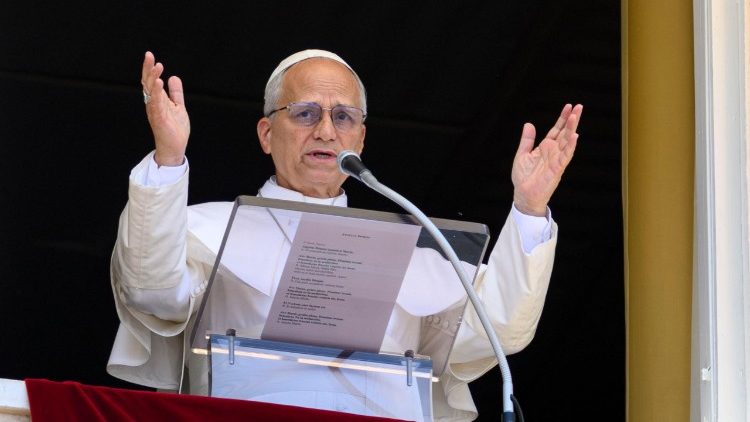
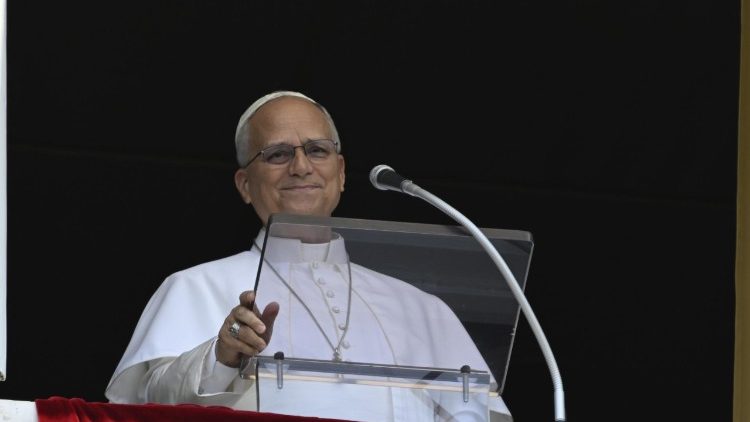
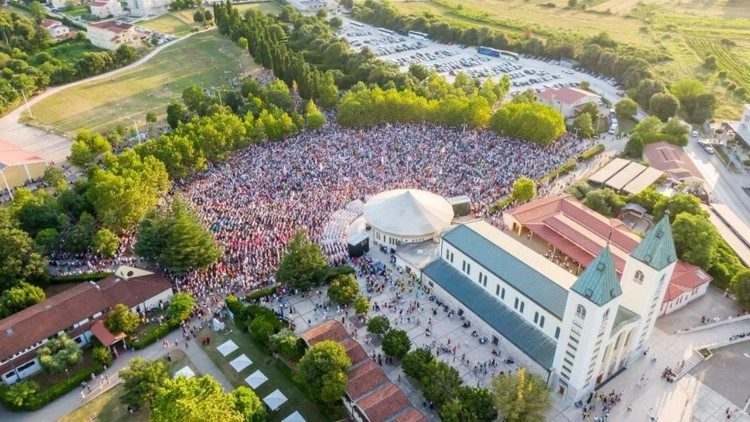

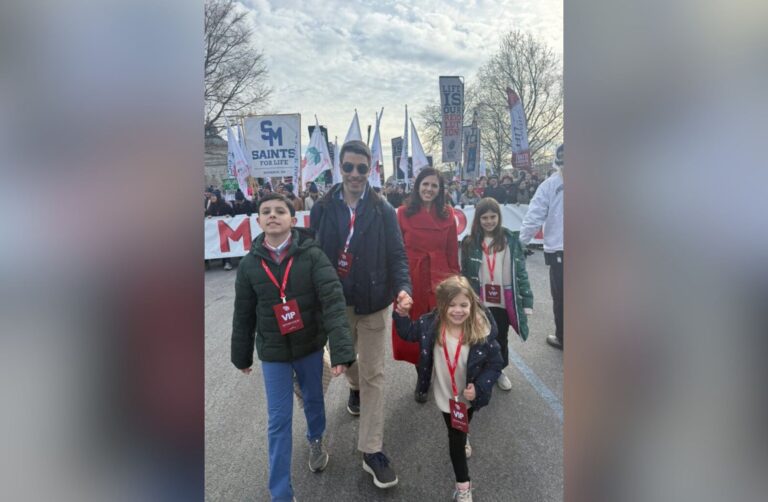

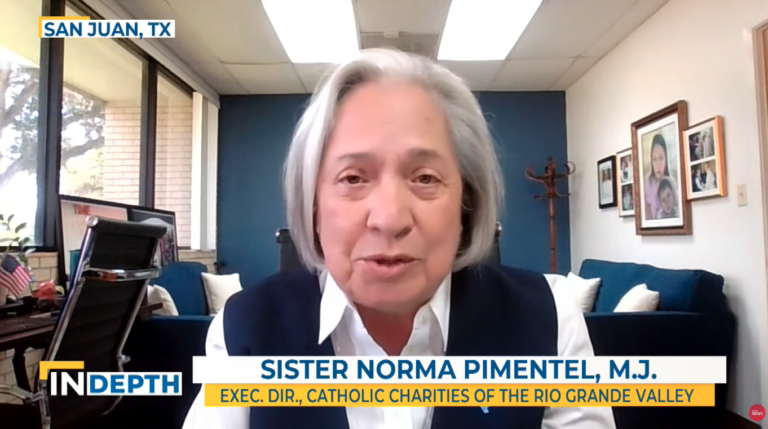
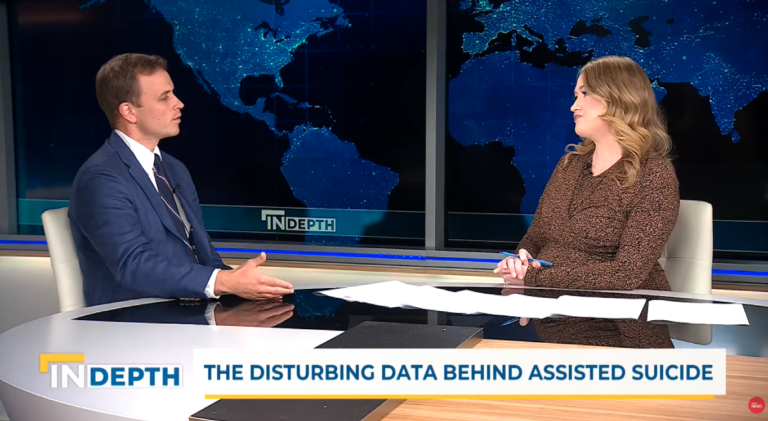
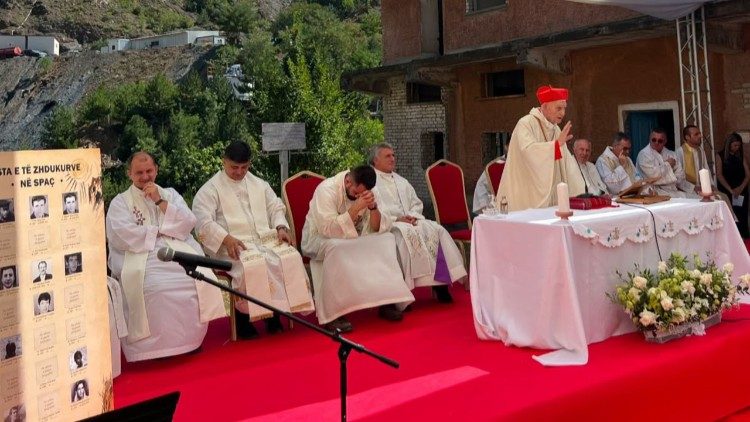
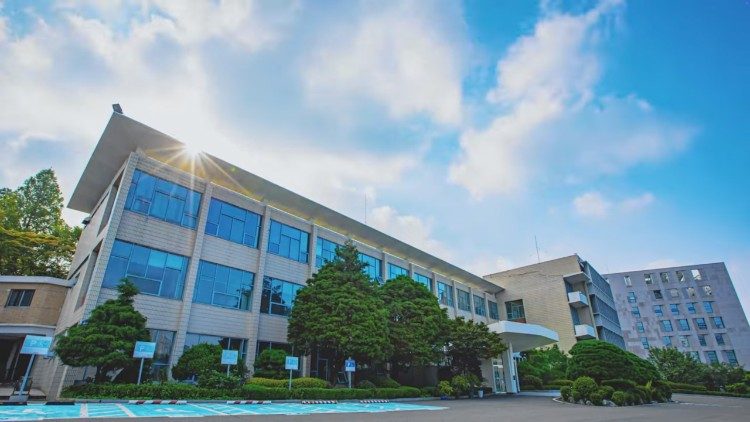
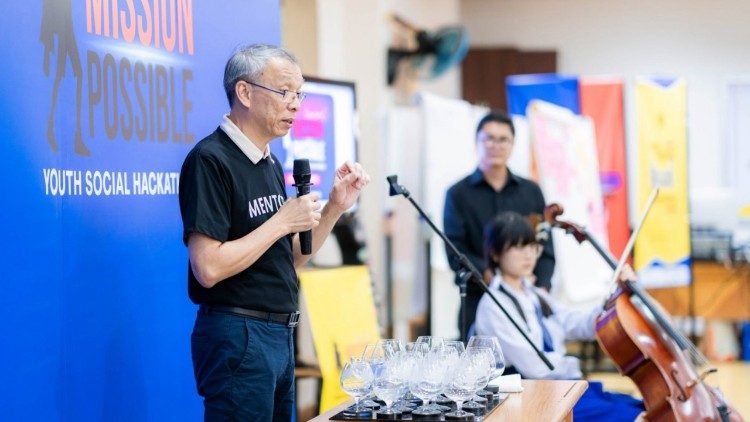


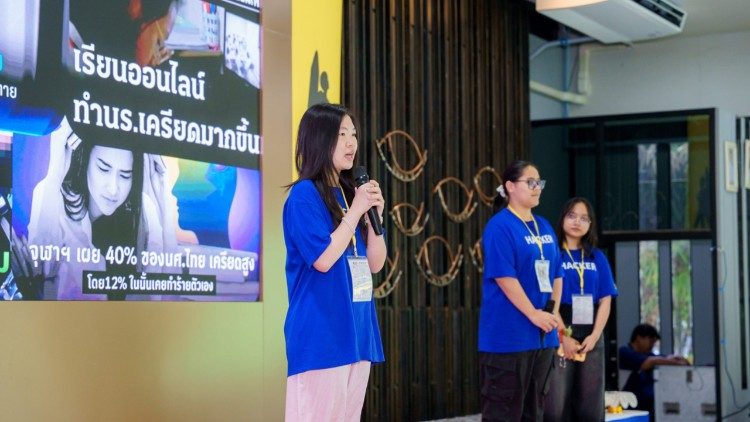


 While the students will work with professional developers to code the application, Pranchalee emphasized that the conceptual vision and user experience design would remain entirely in the hands of their team.


 As the 2026 MISSION POSSIBLE Youth Social Hackathon concluded, the 70 participants left the coastal resort with awards, technical prototypes, and structured action plans to implement in their respective communities.