












Check out the latest Catholic news here. This news keeps you updated on what’s happening within the Church and the world from a Catholic perspective. Stay informed and discover how faith is moving – both locally and globally.
Pope Leo welcomes the President of the Slovak Republic
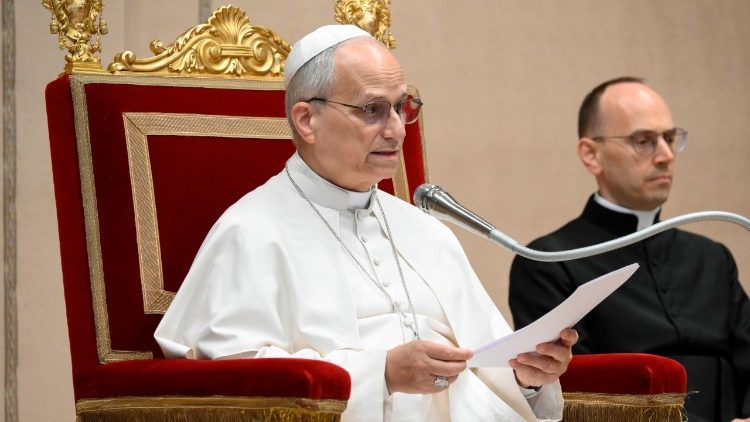
Pope Leo XIV welcomes the President of the Slovak Republic Peter Pellegrini at the Vatican Apostolic Palace. With the Secretary of State, talks included mutual appreciation for the strong bilateral relations and the international context, with a focus on the war in Ukraine and its repercussions for European security.
Holy See Press Office
Today, His Holiness Pope Leo XIV received in audience His Excellency Mr. Peter Pellegrini, President of the Slovak Republic, who later met with His Eminence Cardinal Pietro Parolin, Secretary of State of His Holiness, accompanied by the Reverend Monsignor Mihăiță Blaj, Under-Secretary for Relations with States.
During the cordial discussions at the Secretariat of State, mutual appreciation for the strong bilateral relations was expressed, particularly in light of the 25th anniversary of the signing of the Basic Agreement between the Holy See and the Slovak Republic. The commitment to supporting and strengthening social cohesion, promoting justice, and safeguarding the family was also reaffirmed.
The international context was also discussed, with particular attention given to the war in Ukraine and its impact on European security, as well as the situation in the Middle East.
Thank you for reading our article. You can keep up-to-date by subscribing to our daily newsletter. Just click here
Holy See: Ukrainian children must return to their families
The Permanent Observer Mission of the Holy See to the United Nations continues its efforts, including through Cardinal Matteo Zuppi, for the return of Ukrainian children taken to Russia.
Vatican News
The Holy See will continue its efforts to ensure that Ukrainian children return to their families - including “through the efforts of the Special envoy of the Holy Father for humanitarian issues in Ukraine”, Cardinal Matteo Zuppi - and to ensure the release of prisoners of war.
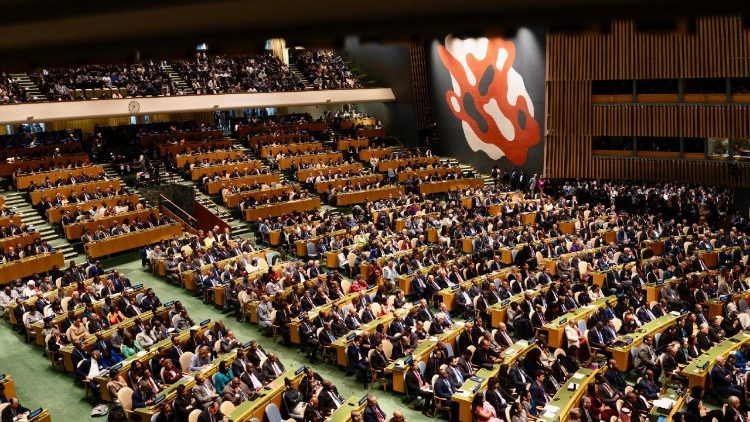
This is what was stated in the declaration of the Permanent Observer Mission of the Holy See to the United Nations during an Emergency Special Session of the General Assembly. This meeting was an occasion to encourage the parties involved in the conflict in Ukraine, as well as the international community, to “continue working for the return of children to their families, which is an issue of justice and must not be overshadowed by political considerations.”
Opening to dialogue
“The protracted war in Ukraine,” the statement continues, “with its profound and painful consequences, has resulted in the devastation of once-vibrant cities and the disruption of the lives of children, who should be growing up in a peaceful environment, not one afflicted by conflicts.”
The statement thus appeals for “an immediate ceasefire, which will pave the way for sincere and courageous dialogue,” to bring an end to the war “not at some undefined moment in the future, but right now.”
“With each passing day, the number of victims increases, the destruction widens and the hatred deepens. Every day without peace steals something from all of humanity,” the declaration insists.
The Holy See urges the nations gathered at the UN in New York to “reject passivity and provide tangible support for any initiative that could lead to genuine negotiations and lasting peace.”
The UN resolution
The General Assembly has therefore asked Russia - with a non-binding resolution passed with 91 votes in favor, 12 against and 57 abstentions - for “the immediate, safe and unconditional return of all Ukrainian children who have been forcibly transferred or deported.”
The resolution also urges Moscow “to cease, without delay, any further practice of forcible transfer, deportation, separation from families and legal guardians, change of personal status, including through citizenship, adoption or placement in foster families, and indoctrination of Ukrainian children.”
They also express “deep concern about the impact of the war on children, in particular the fate of all Ukrainian children who have been separated from their families since 2014, including those forcibly transferred within the temporarily occupied territory of Ukraine by the Russian Federation and those deported to the Russian Federation.”
Thank you for reading our article. You can keep up-to-date by subscribing to our daily newsletter. Just click here
Franciscan friars join rescue operations in flood-struck Indonesia
Search and rescue operations are underway in Indonesia, Sri Lanka and Thailand following last week’s catastrophic floods and landslides. In Indonesia, the Franciscan community has mobilised to help rescuers and provide shelter to the most vulnerable.
By Vatican News
In Indonesia alone, at least 800 people are dead and over 550 are still missing after a tropical cyclone caused floods and landslides across the provinces of West Sumatra, North Sumatra and Aceh.
The death toll is expected to rise as rescuers struggle to reach remote villages. At least a million others are displaced.
Speaking to Fides News Agency, the Provincial Superior of the Capuchin Friars in Sibolga in northern Sumatra said that entire villages have been swept away.
“Many people are homeless”, Friar Yoseph Norbert Sinaga said, “Rescue teams are now trying to reach the displaced” but some areas remain isolated.
The Capuchin Friars of Sibolga mobilised all their resources after Tropical Cyclone Senyar brought torrential rains, floods, and landslides to the nation and beyond
They are evacuating people, providing aid, and accompanying the displaced throughout the territory of their diocese.
Now, Friar Sinaga explains,“We are suffering from the lack of water and electricity, but above all, the lack of drinking water is a serious problem.”
The Franciscan fraternity established itself in the area more than 100 years ago. Today, it counts some 65 professed friars and more than 30 novices bearing witness in a territory where the majority is Muslim.
In the current crisis, they have opened the doors of the monastery and are sheltering over 200 vulnerable displaced persons in the Novitiate. They have also launched an appeal for solidarity to all the Franciscan communities in Indonesia who are responding with compassion and promptness.
“Now our brothers and sisters need immediate help, says Friar Sinaga, Later, we will also try to help rebuild their homes.”
Thank you for reading our article. You can keep up-to-date by subscribing to our daily newsletter. Just click here
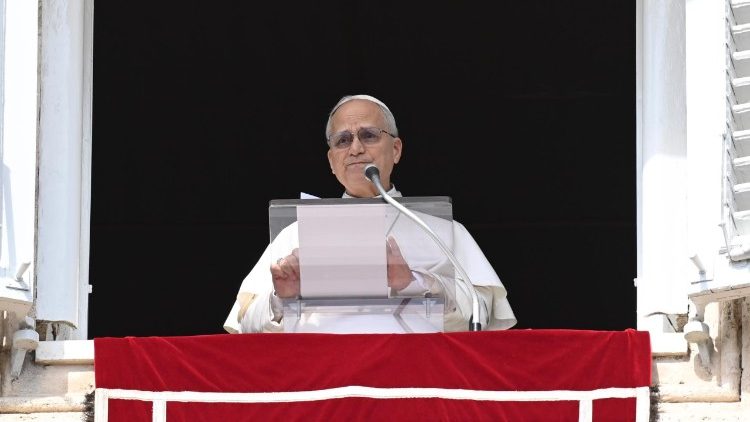
In addition to meeting with Pope Leo, the President also meets with the Secretary of State, Cardinal Pietro Parolin. These talks focused on cultural collaboration and the Church's contribution to the country, particularly in the fields of healthcare and education.
Holy See Press Office
On 4 December 2025, His Holiness Pope Leo XIV received in audience the President of Mongolia, H.E. Mr. Ukhnaagiin Khürelsükh, at the Apostolic Palace in the Vatican. Following the audience, the President met with His Eminence Cardinal Pietro Parolin, Secretary of State of His Holiness, and the Reverend Monsignor Mihăiță Blaj, Under-Secretary for Relations with States.
During the cordial discussions at the Secretariat of State, the good relations between the Holy See and Mongolia were highlighted, with a shared desire to further develop these ties, particularly in the cultural field. The positive contribution of the local Catholic Church to Mongolian society was also noted, especially in the areas of education and healthcare.
Thank you for reading our article. You can keep up-to-date by subscribing to our daily newsletter. Just click here
The U.N. human rights chief has warned of another wave of atrocities in Sudan as fighting intensifies across the Kordofan region.
By Nathan Morley
The U.N. human rights chief has warned of another wave of atrocities in Sudan as fighting intensifies across the Kordofan region.
Volker Turk said clashes between the Sudanese Armed Forces, the Rapid Support Forces and the Sudan People’s Liberation Movement-North have forced more than 45,000 people from their homes in the past month.
He called for safe passage for civilians, protection of aid workers and the restoration of telecommunications.
Since late October, when the RSF seized Bara in North Kordofan, the U.N. rights office has documented at least 269 civilian deaths from airstrikes, artillery fire and summary executions.
A Sudanese refugee from al-Fashir, gestures inside the Tine transit refugee camp in eastern Chad
Turk said the true toll is likely far higher, with internet and phone outages hampering reporting.
The office has also received accounts of retaliatory killings, arbitrary detention, abductions, sexual violence and forced recruitment, including of children.
Civilians have been detained on accusations of collaborating with rival groups, Turk said, while divisive rhetoric is fueling fears of further violence.
“It is truly shocking to see history repeating itself in Kordofan so soon after the horrific events in El Fasher,” Turk said. “We must not allow Kordofan to become another El Fasher.”
Displaced Sudanese who fled El-Fasher after the city fell to the Rapid Support Forces (AFP or licensors)
Deadly attacks have continued across the three Kordofan states. On November 3, an RSF drone strike on a mourning tent in El Obeid reportedly killed 45 people, mostly women. On November 29, an SAF airstrike in Kauda, South Kordofan, killed at least 48, most of them civilians, according to the U.N.
Thank you for reading our article. You can keep up-to-date by subscribing to our daily newsletter. Just click here
Pope Leo suppresses Commission for Donations to the Holy See
As a result of consultations with the Council for the Economy and other experts, Pope Leo XIV issues a chirograph suppressing the Commission for Donations to the Holy See, which had been established by Francis on 11 February 2025.
By Christopher Wells
With a chirograph (a papal decree intended for the Roman Curia) signed on 29 September but released today, 4 December, Pope Leo XIV suppresses the Commission for Donations for the Holy See, less than ten months after its establishment by Pope Francis in February 2025.
Francis had intended to the new commission to promote donations from the faithful, episcopal conferences, and other potential benefactors in support of the mission and charitable work of the Holy See. The chirograph establishing the commission was signed on 11 February 2025 and made public two weeks later, on 26 February, while Francis was hospitalized at the Gemelli Policlinic in Rome.
In the new chirograph, Pope Leo writes, “The issue of donations and fundraising for the Holy See represents an important aspect of the bond of unity and charity between the particular Churches and the Apostolic See, particularly from the perspective of the effective exercise of the Petrine ministry.”
He goes on to note that the Council for the Economy, charged with overseeing the administrative and financial structures and activities of the Holy See “has devoted particular attention” to the study of fundraising for the Holy See, and made “several recommendations aimed at reshaping the current institutional structure responsible for managing this area.”
In accordance with the procedures outlined in Praedicate Evangelium, after evaluating the suggestions of the Council and consulting experts, Pope Leo goes on to approve the content of the Council’s “resolution and recommendations,” beginning with the suppression of the Commission for Donations to the Holy See.
Suppression of the Commission
The chirograph goes on to repeal the statutes of the suppressed Commission, and decrees that all members of the commission immediately cease their function. Further, it requires that “all assets currently belonging to the Commission be immediately transferred to the Holy See,” delegating to the President of the Administration of the Patrimony of the Apostolic See the power “to proceed with the liquidation of the Commission” according to the current legislation.
Pope Leo provides for the Secretariat for the Economy, together with a working group appointed by it, to be responsible for any issues that arise from the dissolution of the Commission, instructing them to keep the Council for the Economy informed of all measures undertaken for that end.
Another working group “will be established to formulate proposals regarding the general issue of fundraising for the Holy See, along with the definition of an appropriate structure. The Council for the Economy will propose the names of the members of this group, which will be submitted to the Roman Pontiff through the Secretariat of State.”
Thank you for reading our article. You can keep up-to-date by subscribing to our daily newsletter. Just click here
“100 Nativity Scenes in the Vatican” exhibition to open 8 December
The Vatican will inaugurate the 8th edition of the exhibition featuring nativity scenes from around the world as part of the cultural event series “Jubilee is Culture”.
By Kielce Gussie
The International Exhibition “100 Nativity Scenes in the Vatican” will return for its 8th edition beginning on 8 December. Under the left colonnade of St. Peter’s Square, the inauguration ceremony will take place at 4pm that day.
Part of the cultural event series “Jubilee is Culture”, this exhibition features pieces made by artists from various parts of the world, each expressing their artistry through creative versions of Nativity scenes.
Pilgrims visiting the 100 Nativity Scenes Exhibition in 2024 (Vatican Media)
Archbishop Rino Fisichella, pro-prefect of the Dicastery for Evangelization and head of the Jubilee organization, will inaugurate the exhibition with other members of the Dicastery. A traditional folkloric performance organized by the Embassy of Mexico to the Holy See will also be featured.
A global take on a centuries-old tradition
About 23 countries from across the globe will be showcased in 132 nativity scenes. Some include Croatia, Romania, Peru, Eritrea, and Taiwan. A wide variety of materials such as Japanese paper, silk, resin, wool, coconut and banana fibers, and glass have been used in the nativity scenes.
One has been designed on the front of an ATAC bus; another is made from a tannery drum. The exhibition showcases a number of mechanical nativity scenes and a large traditional Mexican rendition as well.
Archbishop Rino Fisichella to inaugurate the exhibition on 8 December (Vatican Media)
This year, the large displays which will frame the entrance have been made possible by Urban Vision Group—an Official Supporter of the Jubilee 2025. The CEO of this group, Gianluca de Marchi, described this exhibition as a reminder of the Christian faith and the origins of Christmas.
“Today, through technological innovation, we offer our expertise to serve the community of believers, participating in a spiritual and cultural journey that brings together stories, traditions, and peoples from all over the world, continuing our broader commitment to the Jubilee 2025.”
The “100 Nativity Scenes in the Vatican” exhibition will be open from 8 December to 8 January, 2026.
Thank you for reading our article. You can keep up-to-date by subscribing to our daily newsletter. Just click here
Bishops of Mozambique gather for plenary assembly in Maputo as Cardinal Parolin visits
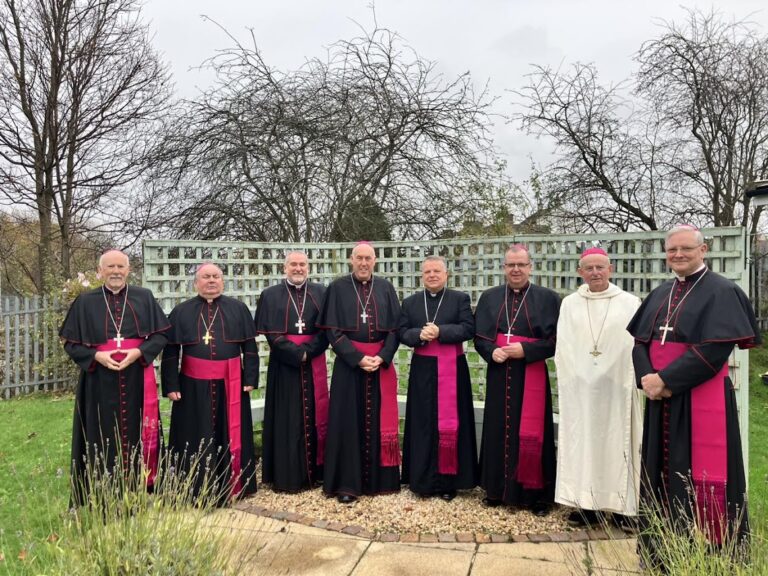
The Episcopal Conference of Mozambique (CEM) has said that Cardinal Pietro Parolin will visit Mozambique this week. The visit is being seen as a gesture of reassurance and closeness by the Holy Father, Pope Leo XIV, given the ongoing insurgency in the restive Cabo Delgado Province. Attacks by Islamist militants have displaced thousands and caused the deaths of many innocent civilians. CEM’s plenary assembly will also take place during this period. Cardinal Parolin is expected to be in Mozambique
Cremildo Alexandre – Nampula
The announcement was made by Archbishop Inacio Saure, President of the Episcopal Conference of Mozambique and Archbishop of Nampula.
According to Archbishop Saure, in addition to the honour of hosting the Vatican Secretary of State, the Bishops will convene for their annual Plenary Assembly. This gathering will bring together all the country’s Bishops. It will run concurrently with the Third National Youth Day—one of Mozambique’s largest Catholic youth event and festival.
Archbishop Saure emphasised the significant pastoral and organisational importance of these upcoming events for the Mozambican Church.
Pope Leo XIV’s closeness
Regarding Cardinal Parolin’s visit, Archbishop Saure highlighted its importance as a strong sign of Pope Leo’s closeness and solidarity with the Mozambican people, particularly those affected by social, economic, and security challenges.
“The Cardinal will carry a message of solidarity and the Holy Father’s closeness to the suffering Mozambican people,” said the Archbishop. He further expressed confidence that the visit would bring comfort especially to the populations of Cabo Delgado and Nampula.
The Third National Youth Day, on the other hand, is expected to gather thousands of young people from all dioceses and archdioceses of Mozambique, fostering faith, peer fraternity, and reaffirming the Church’s commitment to its youth.
The Church hopes that the tripartite events taking place in the coming days will strengthen unity, hope, and the evangelising mission at a time when Mozambique continues to face numerous social and humanitarian challenges.
Thank you for reading our article. You can keep up-to-date by subscribing to our daily newsletter. Just click here

Jubilee Year 2025 concludes without comprehensive debt cancellation
Africa’s economic crisis expected to continue after creditors’negative response to appeals for debt relief.
By John Baptist Tumusiime
The Holy Year 2025, also commonly referred to as the Jubilee year, will officially conclude on January 6th 2026, the solemnity of the Epiphany, with the closing of the Holy Door of St. Peter’s Basilica in the Vatican. The objectives of the Holy Year have been to promote reconciliation, conversion, and a deeper relationship with God, with one another, and with creation. Some of its goals have been to foster hope and peace in our troubled world, performing acts of mercy, and encouraging social justice, such caring for the poor, the sick, and migrants and in line with biblical tradition, cancelling debts of poor countries. Advocacy for debt cancellation has been a major theme of the Jubilee Year by the Catholic church and by many secular leaders and organisations.
The late Pope Francis, for example, called several times for the cancellation of foreign debt for the world's poor countries during the Jubilee year, citing the current debt crisis as a major obstacle to development and justice. According to statistics privided by Caritas Internationalis 54 countries are in a debt crisis today compared to 22 in 2015. Thirty-four of these are in Africa.
Unfortunately, while many creditors cancelled the debts of poor countries 25 years ago, following the appeals and campaign mounted by St. Pope John Paul II in 2000, this time large-scale cancellation has not occurred despite the appeals of the Church and of many humanitarian organisations, which have highlighted the devastating consequences of the ongoing debt crisis on developing countries.
According to Roberto Carlés, a lawyer, researcher and author on the debt crisis, most countries in Africa are spending more than half of their revenues on paying their debts. This year alone, African countries have paid around 89 billion US dollars in debt service. These countries spend more on interest payments than on social investment in health, education and infrastructure. Such levels of indebtedness, according to Mr. Carles, erode the efforts of these nations to reduce poverty and achieve sustainable development.
Why African countries Fall into Debt
African countries are continuously falling into debt due to a combination of factors: first, they borrow money from international lending institutions such as the World Bank and the International Monetary Fund and from rich countries at high interest rates to finance infrastructure and other projects. During economic crises such as sharp drops in the value of the dollar and the devaluation of national currencies, the interest rates are usually raised by creditors, leading to a rise in the amount of money the borrower must pay to the lender to service the debt.
At this actual time, many African countries have not been in position to start paying the actual debts they took 15 years ago because their revenues are sometimes not enough to cover the annual interest. Secondly, natural disasters, epidemics, rises in oil prices, and sudden changes in policy often compel governments to borrow money to cover the crises. Thirdly, African countries have a weak domestic tax base. This means they have few economic activities that are taxable for government revenue. Consequently because of insufficient revenue, in order to pay salaries of public servants and to cover the costs of providing services such as education, health, security, etc, they borrow money by issuing securities and bills to institutions and other countries, which have to berepaid with interest.
Fourthly, many Africa countries are victims of public financial mismanagement. This includes corrupt handling of government money, which starts with dishonesty in collecting revenue, corrupt allocation of funds in the national budgets, poor planning, deliberate misuse of government funds, and illegal diversion of funds for private gain. Mismanagement leads to loss of funds and inability to deliver services, and keeps governments in a vicious circle of borrowing. Solutions to the debt crisis must correctly address these factors.
The Declaration of the G20
The G20, a club of the world's major economies, which held its summit from November 22nd to 23rd this year in the South African City of Johannesburg, addressed the debt crisis of poor countries, after its 2020 debt cancellation schemes came under strong criticism for being extremely slow and for providing inadequate relief. In its final declaration it recognized that high debt levels and mounting financing costs are gravely affecting many low and middle-income countries, especially in Africa, by limiting their capacity to invest in development and to reduce poverty and inequality.
The heads of state and government at the summit expressed concern over the sharp rise in interest payments over the past decade and reaffirmed their commitment to help the affected countries to address debt vulnerabilities in a comprehensive way. They pledged to enhance debt transparency, and support the review of the International Monetary Fund and World Bank debt sustainability framework for low-income countries. That framework is a joint tool that guides a country's borrowing decisions by comparing its financing needs with its capacity to repay debt. The declaration underlined the importance of dialogue in debt management and repayment, and reflected a shared awareness of today’s debt challenges, and how to address them.
The Catholic Church’s Debt Cancellation Campaign
For the past 40 years, the Catholic Church has pressed for reform of the international debt system, beginning with the Millennium Jubilee campaign inspired by St. Pope John Paul II, which secured debt relief in 2000. Since then, every pope has called for debt relief as an instrument of poverty reduction. Currently, the church is promoting a global campaign, Turn Debt into Hope, through its charity, Caritas Internationalis.
In his message to the United Nations Climate Conference that took place in Brazil from November 10th to 21st this year, Pope Leo XIV, in continuity with his predecessors, called for a new human-centred international financial system that ensures that all countries, especially the poorest and those most vulnerable to climate disasters, can reach their full potential and see the dignity of their citizens respected, taking into account both external debt and ecological debt.
According to Roberto Carlés, the gravity of today’s debt crisis calls for large-scale efforts that only the wealthiest states can initiate and sustain. Unfortunately, deep divisions continue within them, as shown by the boycott of the G20 summit in South Africa by the United States of America. These divisions make it difficult to reach the kind of agreements needed to confront the debt crisis, and other great challenges facing humanity today, for example, the climate emergency and the inequality emergency. Mr. Carles appeals to the major powers to understand that these problems go beyond borders and will eventually reach their own territories in one way or another, if they don’t cooperate in finding actual solutions.
Thank you for reading our article. You can keep up-to-date by subscribing to our daily newsletter. Just click here
Archdiocese of Bangalore, India, opens new ‘Pope Francis’ migrant centre
The Pope Francis Migrant’s Centre & Short Stay Home will offer pastoral care, counselling services, legal aid, skill development programmes, and emergency support.
By Vatican News
The Archdiocese of Bangalore, India, has expanded its charitable outreach to migrant families, with the establishment of a new centre near Mathikere.
In partnership with the Scalabrinian Missionaries, the Archdiocese has opened the Pope Francis Migrant’s Centre & Short Stay Home, which will offer pastoral care, counselling services, legal aid, skill development programmes, emergency support, and community-building initiatives.
An external shot of the new centre
The centre was inaugurated on 3 December 2025, and the Inauguration Stone was blessed by Cardinal Silvano Tomasi, together with Archbishop Peter Machado of Bangalore.
In his address, Cardinal Tomasi spoke with pastoral tenderness about the Church’s enduring mission in a rapidly changing world. “The Church is alive here and now whenever she bends down to care for migrants," he said. "Every act of welcome is a living Gospel.”
The Cardinal praised the partnership between the Archdiocese and the Scalabrinian family, affirming that the new Centre is as a concrete expression of faith put into action.
The inauguration ceremony
Shri K.J. George, Cabinet Minister of Energy in Government of Karnataka, shared his own family’s centuries-long journey of migration. He recalled that his ancestors migrated from Syria to Kerala nearly 1,600 years ago, and he himself migrated to Bangalore in search of opportunity and growth.
“Migration is part of my family’s story,” he said. “I know what it means to start again. That is why I feel such closeness to every migrant seeking hope.” The minister added that “the Government will always stand by the Catholic Church in its efforts to uplift and build a society where everyone, migrant or local, can live with dignity and confidence.”
The gathering also heard messages from Church leaders engaged in migrant ministry. Archbishop Victor Henry Thakur, Chairman of the CCBI Migrants Commission, reminded those present that “A migrant should never feel alone. The Church must be a home that listens, protects, and walks with them.”
The leadership of the Scalabrinians, whose mission is entirely focused on migrants, spoke with conviction and warmth. Fr. Leonir Chiarello, Superior General of the Scalabrinians, said that “For over 130 years, our mission has been to accompany migrants with compassion and professionalism. This Centre continues that mission, ensuring that no migrant is left unseen or unsupported.”
Thank you for reading our article. You can keep up-to-date by subscribing to our daily newsletter. Just click here
Bishop Simon Kulli, witness to the faith in post-communist Albania, dies at 52
Bishop Simon Kulli of Sapë, Albania. / Credit: ACN
ACI Prensa Staff, Dec 3, 2025 / 18:51 pm (CNA).
The pontifical foundation Aid to the Church in Need (ACN) announced the sudden death of Bishop Simon Kulli of Sapë in northern Albania on Saturday, Nov. 29, at the age of 52.
The prelate, a close collaborator of ACN and one of the most prominent voices in the Albanian Church, belonged to the first generation of priests formed after the fall of the communist regime, considered the most atheist and repressive of the 20th century.
In a statement, the pontifical foundation said that it received ”with deep sorrow the news of the sudden death of Bishop Kulli, who has been a project partner of ACN … He rendered an invaluable service not only to the Church but also to his country and to humanity.”
A vocation born from the suffering of the Albanian martyrs
During a visit to the international headquarters of ACN earlier this year, Kulli recounted the origin of his priestly vocation, which was inspired by “seeing one of those old priests [who had been in prison for 28 years] celebrating Mass in Latin in my parish for the first time” after the fall of communism and the restoration of religious freedom in Albania.
“That was the exact moment I felt my vocation. Seeing that suffering priest, who found it so difficult to celebrate Mass, who was bent over at the altar because of the years in prison, I thought I could replace him,” the bishop recalled.
His personal story reflected the drama and hope of the Church in Albania. He was secretly baptized a few days after birth by the Stigmatine nun Sister Marije Kaleta, who risked her life secretly bringing the Eucharist to the sick and baptizing children all while keeping out of sight of the communist police.
“This baptism that I received was a great gift that the Lord wished to give me, in secret, at the height of the communist regime. If somebody were to discover that I had been baptized, my grandparents and the rest of my family would have been thrown into jail,” he explained in an interview with ACN in February.
A pastor marked by the suffering of the martyrs
Kulli was part of a generation that personally knew the so-called “living martyrs” of Albania: priests, men and women religious, and laypeople who endured years of imprisonment and torture for remaining faithful to their religion. Their testimonies profoundly impacted the future bishop.
“They filled me with great hope. Even though I was never in prison, I felt what it was like to live in a country in which man is deprived of his main sustenance: faith. And these testimonies were a great source of hope for me and my future,” he said.
The bishop also served as the Albanian Bishops’ Conference’s commissioner for the pastoral care of health care workers and was a member of the executive committee of the European Federation of Catholic Medical Associations.
In 2024, he actively participated in promoting the Albanian martyrs, 38 of whom were beatified in 2016 and two more in 2024. “Their blood will produce many vocations,” he said at the time.
A year before his death, representatives from ACN visited four Albanian dioceses and met with Kulli in Sapë. There, the bishop reiterated his gratitude for the assistance provided to the Church in Albania.
During his last interview with the pontifical foundation, the bishop gave a powerful message addressed to persecuted Christians: “After death, there is always resurrection … Stay strong, with no fear… because Christ always wins… with Christ you can overcome any difficulty.”
ACN noted that “his testimony of faith, humility, and joy will surely be a fruitful seed for the Catholic Church in Albania. May he rest in eternal peace!”
This story was first published by ACI Prensa, CNA’s Spanish-language news partner. It has been translated and adapted by CNA.
The kitchen friar’s book that inspires Pope Leo’s spirituality
Pope Leo XIV speaks with reporters on his flight from Beirut to Rome on Dec. 2, 2025. / Credit: Elias Turk/EWTN
CNA Staff, Dec 3, 2025 / 18:21 pm (CNA).
On the papal plane on the way home from his first international trip, Pope Leo XIV referenced a book that has greatly influenced his spirituality after being asked by a journalist about the conclave and what it’s been like becoming the pope.
“Besides St. Augustine,” Pope Leo said that “The Practice of the Presence of God” by a 17th-century Carmelite friar named Brother Lawrence of the Resurrection is a book that can help anyone to understand his spirituality.
“It’s a very simple book by someone who doesn’t even give his last name,” the pope told journalists on the papal plane Dec. 2. “I read it many years ago, but it describes a type of prayer and spirituality where one simply gives his life to the Lord and allows the Lord to lead.”
“And if you want to know something about me, that’s been my spirituality for many years, in midst of great challenges — living in Peru, during years of terrorism, being called to service in places where I never thought I would be called to serve to — I trust in God, and that message is something that I share with all people,” he continued.
After being asked what it was like for him during the conclave, Pope Leo mentioned the book and said: “I resigned myself to the fact, when I saw how things were going, [that] this could be a reality.”
“I took a deep breath. I said, here we go. Lord, you’re in charge, and you lead the way,” he said.
Who was Brother Lawrence?
“The Practice of the Presence of God” is a collection of Brother Lawrence’s teachings — memorialized in about 30 pages of letters and records of his conversations.
Though Brother Lawrence was virtually unknown in life, Father Joseph de Beaufort compiled his wisdom into a pamphlet published soon after his death in 1691. The book is now beloved by Catholics and Protestants alike.
In his writings, Brother Lawrence presents a spirituality that involves being constantly in contact with God, being accompanied by him in all things — from cooking to shoe repair.
Before he was Brother Lawrence, Nicholas Herman was a soldier during the Thirty Years’ War. Because of a wartime injury, his leg impaired his movement and caused him constant pain for life. But as a young adult, he had a vision of Christ that would inspire him for the rest of his life; or, as de Beaufort recalled: “which has never since been effaced from his soul.”
He went on to join the Discalced Carmelite Prior in Paris, doing humble work as a cook, and eventually working in the sandal repair shop as well.
Brother Lawrence believed that little things could please God just as much as great things.
“We ought not to be weary of doing little things for the love of God, who regards not the greatness of the work but the love with which it is performed,” he taught.
Amid the busy environment of a kitchen serving about 100 people, he still connected with God.
In one recorded conversation, de Beaufort recalled Brother Lawrence saying that “the time of business … does not with me differ from the time of prayer.”
“And in the noise and clutter of my kitchen, while several persons are at the same time calling for different things, I possess GOD in as great tranquillity as if I were upon my knees at the Blessed Sacrament,” he continued.
Catholic Charities affiliates fear SNAP disruptions amid Trump administration warning
The Trump administration intends to cut off federal food assistance for 21 states, which has caused concern for some local Catholic Charities affiliates. / Credit: rblfmr/Shutterstock
Washington, D.C. Newsroom, Dec 3, 2025 / 17:51 pm (CNA).
President Donald Trump’s administration intends to cut off federal food assistance for 21 states amid a dispute over reporting data about recipients, which has caused concern for some local Catholic Charities affiliates whose areas may be affected.
In May, Secretary of Agriculture Brooke Rollins ordered states to share certain records with the federal government about people who receive food stamps through the Supplemental Nutrition Assistance Program (SNAP). She said this was to ensure benefits only went to eligible people.
Although 29 states complied, 21 Democratic-led states refused to provide the information and sued the administration. The lawsuit alleges that providing the information — which includes immigration status, income, and identifying information — would be a privacy violation.
Rollins said in a Cabinet meeting on Dec. 2 that “as of next week, we have begun and will begin to stop moving federal funds into those states until they comply and they … allow us to partner with them to root out this fraud and protect the American taxpayer.”
She said an initial overview of the data from states that complied showed SNAP benefits given to 186,000 people using Social Security numbers for someone who is not alive and about a half of a million people receiving SNAP benefits more than once. The Department of Agriculture has not released that data.
If funding is halted, this would be the second disruption for SNAP benefits in just two months. In November, SNAP payments were delayed for nearly two weeks until lawmakers negotiated an end to the government shutdown.
For many of the states that will be impacted, Catholic Charities is the largest provider of food assistance after SNAP, and some affiliate leaders fear that the disruption will cause problems.
Rose Bak, chief operating officer of Catholic Charities of Oregon, told CNA the nonprofit keeps stockpiles for emergencies, but “we’ve gone through most of our supplies” amid the November disruption and an increase in people’s needs caused by the high cost of groceries.
She said their food pantry partners have told her “they’ve never been this low on stock” as well.
“Our phones were ringing off the hook,” Bak said. “Our mailboxes were flooded with emails.”
When asked how another disruption would compare to the problems in November, she said: “I think it will definitely be worse.”
“People are scared,” Bak said. “They’re worried about how they’re going to feed their families.”
Ashley Valis, chief operating officer of Catholic Charities of Baltimore, similarly told CNA that another disruption “would place immense strain on families already struggling as well as on organizations like ours, which are experiencing growing demand for food and emergency assistance.”
“Food insecurity forces children, parents, and older adults to make impossible trade-offs between rent, groceries, and medication,” she said.
Catholic Charities DC President and CEO James Malloy offers a prayer before a Thanksgiving meal Nov. 25, 2025. Credit: Courtesy of Ralph Alswang for Catholic Charities DC.
James Malloy, CEO and president of Catholic Charities DC, told CNA: “We work to be responsive to the needs of the community as they fluctuate,” and added: “SNAP cuts will certainly increase that need.”
“These benefits are critical for veterans, children, and many low-income workers who have multiple jobs to cover basic expenses,” he said.
Catholic Charities USA launched a national fundraising effort in late October, just before SNAP benefits were delayed the first time. Catholic Charities USA did not immediately respond to a request for comment.
Lilly Endowment announces 45 multimillion-dollar grants for theological schools
null / Credit: Mehdi Kasumov/Shutterstock
Washington, D.C. Newsroom, Dec 3, 2025 / 17:21 pm (CNA).
The Lilly Endowment announced it will distribute 45 large-scale grants to theological schools across the U.S. and Canada, including directing about $60 million to several Catholic institutions.
The grants, which range from $2.5 million to $10 million, are a part of the Lilly Endowment’s Pathways for Tomorrow Initiative, helping theological schools to “enhance their educational and financial capacities” and train pastors “to effectively lead congregations from a wide variety of contexts,” according to a press release from the organization.
The grants will benefit a range of ecumenical traditions, including Catholic institutions, as well as mainline Protestant, evangelical, and Orthodox ones.
Catholic institutions receiving grants include The Catholic University of America, which received over $7 million; Mount Angel Abbey in Saint Benedict, Oregon, which received $10 million; Saint Mary Seminary and Graduate School of Theology in Wickliffe, Ohio, which received nearly $8.9 million; the University of Notre Dame, which received over $5 million; and Saint John’s School of Theology and Seminary, which received $10 million. Loyola University of Chicago received $10 million and Santa Clara University was awarded $10 million.
Saint John’s said in a statement its grant would be used as a part of a mission called “Stabilitas: Renewing Rural Ministry.” It will collaborate with nine partner dioceses across the country as a part of the mission, including the Diocese of Saint Cloud, the Archdiocese of Saint Paul and Minneapolis, the Diocese of Duluth, the Diocese of Rapid City, the Diocese of Sioux Falls, the Archdiocese of Dubuque, the Diocese of Davenport, the Diocese of Cheyenne, and the Diocese of Great Falls-Billings.
The Catholic University of America said it would use its $7.2 million grant to develop a program to help “strengthen practical leadership skills of current and new priests, seminarians, and other pastoral leaders.” The program also will provide ongoing formation for bishops, according to a release from the university. The Catholic Project will serve as a partner in the program, called New Wineskins.
“This initiative allows us to address some of the most pressing issues in leadership for seminarians, men’s religious communities, bishops, and pastoral leaders. This is an opportunity to build on the School of Theology’s 130-year foundation of preparing leaders for service to the Church,” said Susan Timoney, the principal investigator for New Wineskins.
The initiative has been in place since 2021 and has provided more than $700 million in grants to 163 theological schools.
“Theological schools play a vital role in preparing and supporting pastoral leaders for Christian congregations,” said Christopher L. Coble, the Lilly Endowment’s vice president for religion. “We believe that one of the most promising paths for theological schools to carry forward their important missions and enhance their impact is to work collaboratively with other schools, as well as congregations and other church-related organizations.”
“By doing so they can strengthen their collective capacities to prepare and support pastoral leaders for effective congregational service now and in the future,” he added.
“Collectively, these schools will work collaboratively with nearly 400 other theological schools, colleges and universities, congregations, church agencies, denominations and other religious organizations to educate and support more effectively both aspiring and current pastoral leaders of churches,” the Lilly Endowment said.
Catholics form coalition opposed to the death penalty amid execution surge
Sister Helen Prejean is an anti-death-penalty advocate. / Credit: Don LaVange via Wikimedia Commons
Washington, D.C. Newsroom, Dec 3, 2025 / 16:42 pm (CNA).
Catholics and pro-life conservatives joined a broad coalition of more than 50 organizations seeking to end the death penalty in the United States amid the 2025 surge in executions.
Leaders of the coalition, the U.S. Campaign to End the Death Penalty (USCEPD), said they hope the coordinated team can abolish the death penalty in states where it is still practiced. Capital punishment is still on the books in 27 states, but just 16 have executed prisoners over the past decade.
The group’s goals include working with Democrats and Republicans to pass state-level laws that end the use of capital punishment, reducing the imposition of the death penalty in jurisdictions where it remains legal, and increasing awareness about the risk of executing innocent people, the lack of fairness in the system, and the harms inflicted on everyone affected by the death penalty.
In 2024, there were 25 people executed in the United States. In 2025, there have already been 44 executions, and three more are scheduled this month. Florida executed one person in 2024 and has already executed 17 people in 2025. Another two people are scheduled for execution this month.
At the same time, public support for the death penalty hit a 50-year low in 2025, with about 52% of Americans supporting its use and 44% opposing it, according to Gallup, which is a sharp decline from the 1980s and 1990s, when support was above 70% most years. Juries are also less likely to give out death sentences.
Sister Helen Prejean, who serves on the advisory council of the coalition, said in a Dec. 3 news conference that the death penalty functions as a “semi-secret ritual behind prison walls” and that “when people are separated from this experience, they just go along [with it].”
She discussed her activism in Texas against the execution of Ivan Cantu in 2024 and noted that “people in Texas did not even know an execution was going on.” She said if people have better information, “they will reject that.”
Prejean quoted Psalm 85:12, which says “truth will spring from the earth,” and added that it also “springs up from the experience of people.”
“When we bring them close, they get it,” she said.
Prejean said people who are poor and people who are ethnic minorities tend to face harsher penalties in the criminal justice system, and there is an inaccurate belief that “only the worst of the worst” will be handed the death penalty.
“To give the state the right to take life means you’re going to trust the state,” she said.
One of the group’s partners is the Catholic Mobilizing Network, which works closely with the United States Conference of Catholic Bishops to oppose the death penalty. Other organizers include Amnesty International USA, the American Civil Liberties Union, The Innocence Project, and Conservatives Concerned.
Catholic Mobilizing Network Executive Director Krisanne Vaillancourt Murphy told CNA in a statement that the campaign “is an exciting expression of the growing momentum and interest in ending capital punishment in the United States.”
“The impressive range of organizations involved in the USCEDP represent the incredibly effective efforts happening across the country for this critical mission,” she said. “Catholic Mobilizing Network is honored to be part [of] USCEDP and our collective endeavor to dismantle a system of death and honor the dignity of all life.”
Demetrius Minor, executive director of Conservatives Concerned, said in the news conference that there’s been a growing concern about the death penalty “from a pro-life perspective” within conservative circles.
“[There is a] significant growing interest in the pro-life community into how the death penalty fits into their advocacy for pro-life issues,” he said.
Minor said many state-level bills to abolish the death penalty have won bipartisan support, such as a few Republicans joining the successful effort in Virginia and Republicans signing onto unsuccessful efforts in Ohio, Pennsylvania, and Indiana.
“We can ensure that these efforts continue to be inclusive and bipartisan in the future,” he said.
In addition to national advocacy groups, state-level groups in 23 states have joined the coalition’s efforts.
Nigerian, Iraqi priests tell of aiding persecuted Christians seen in photo exhibit
A photo display of persecuted Christians in Iraq and Nigeria can be seen at the Saint John Paul II National Shrine in Washington, D.C., until Feb. 8, 2026. / Credit: Madalaine Elhabbal/CNA
Washington, D.C., Dec 3, 2025 / 13:50 pm (CNA).
A discussion featuring Father Atta Barkindo and Father Karam Shamasha breathed life into a photo exhibit featuring the “forgotten faces” of persecuted Christians in Nigeria and Iraq on Tuesday.
The photo display can be seen at the Saint John Paul II National Shrine in Washington, D.C., until Feb. 8, 2026. Stephen Rasche, a professor of theology at the Franciscan University of Steubenville and senior fellow at the Religious Freedom Institute, who spent years serving persecuted Christians in Iraq and Nigeria, said he hopes people will see “the spark of human dignity” in his photographs of Iraqi and Nigerian Christians on display.
The Dec. 2 discussion, titled “Seeing the Persecuted and Displaced: Experts Tell Their Stories,” organized in part by the Knights of Columbus, comes amid calls for the U.S. to take concrete action toward the Nigerian government after President Donald Trump announced his decision to designate Nigeria as a country of particular concern (CPC).
Rasche was a founding member of the Catholic University in Erbil in 2014. According to his bio, he has served as an official representative to the Vatican Dicastery on Refugees and Migrants, and belongs officially to the historical commission to the Vatican postulator in the cause of Father Ragheed Ganni, a servant of God, and three Iraqi deacons who were murdered in June 2007.
Alongside Rasche’s photos of Nigerian Christians, Barkindo said the persecution of his community in Nigeria is happening on two levels. “The first level is the level of government policy,” he said, “and the second level is the physical violence that we have seen and continue to see in Nigeria.”
Barkindo said before Nigeria became a country, there were two existing Islamic caliphates in the north: the Kanem Borno Empire and the Sokoto Caliphate, both of which had diplomatic relationships with the Ottoman Empire and “were fully established as a pure Islamic territory.” After the British destroyed these empires and installed constitutional democracy, he said, “the grief that followed the dismantling of the Islamic empires actually never left northern Nigeria.”
On a policy level, he said, the government then established sharia law, shuttered Christian mission schools and other institutions, and made it “increasingly difficult” for Christians in the north to participate in civilian life.
“The ideology was very established, and that was what now led to the physical violence that we now see in Nigeria,” Barkindo said.
“The most important thing is that the violence evolved over time,” he said. “It evolved because there was a complete and massive failure of the government to deal with the insecurity and the situation.”
Father Atta Barkindo, Father Karam Shamasha, and photographer Stephen Rasche discuss persecution. Credit: Madalaine Elhabbal/CNA
As director of The Kukah Centre, Barkindo has led grassroots efforts to bolster security in Nigeria. He holds a licentiate degree in political Islam and interreligious dialogue from the Pontifical Institute for Arabic and Islamic Studies in Rome and a doctorate from the SOAS University of London.
In an interview with CNA, Barkindo described his efforts with The Kukah Centre to promote peace throughout Nigeria’s 36 states. “We have the National Peace Committee that mediates in elections, but they don’t have the gift of bilocation,” he said, explaining how the center goes to states where the Peace Committee cannot reach and trains its civilians in mediation and data collection on early warning and early response for security threats.
“If they observe serious issues and collect intelligence, they can flag that with us at the national level. We reach out to the government and they’re able to mitigate the situation before it turns into crisis,” he said. The Kukah Centre has done this in 23 states so far and hopes to expand its reach to all 36 states before next year’s elections.
Reflecting on the evening’s discussion, Barkindo said “the willingness of the American people to just listen” had struck him.
“America, I don’t want to sound too political, is such a significant country right now globally: When Trump spoke, the whole of Nigeria shook,” he said with emotion. “It’s like for the first time Christians now have somewhere to run to because we have been shouting and speaking for years.”
Persecution in Iraq
During his testimony, Shamasha also noted the deeply engrained presence of Islamist ideology in Iraq, where he said “we are not dying in the streets today as it was in 2014, but our persecution is different today … there is a lot of discrimination against Christians in this land.”
Shamasha recounted his experience of persecution, which began in 2003 while at a seminary in Baghdad, which closed several times while he was a student. He was eventually forced to leave in 2005 for Erbil, the Kurdish region of Iraq. He became a parish priest in the Nineveh Plains, then fled once more to Erbil in 2014 with the invasion of ISIS.
It was during this time that the Catholic University of Erbil was founded. While the Knights of Columbus helped to support and feed the Iraqi Christian community, Shamasha said, the university sought to help young people to not only survive but also “to live with dignity” and eventually become leaders, he said.
“Thanks to God, we are still there,” the Iraqi priest said. “We are fighting to remain not just numbers in these countries, but we are fighting to, in fact, be a real member that can shine, that can give light to all the people that they are.”
Shamasha holds a doctorate and master’s degree in moral theology from the Pontifical Alphonsian Academy in Rome as well as degrees in canon law, interreligious studies, and priestly formation from the Gregorian University, Lateran University, and the Congregation for the Clergy.
Transforming pain into hope: Patriarch Minassian on Apostolic Visit
In the wake of Pope Leo XIV’s Apostolic Visit to Türkiye and Lebanon, the Patriarch of the Armenian Catholic Church reflects on the journey's legacy.
By Jean-Charles Putzolu – Beirut
Hope, unity, peace, and justice.
These, according to Patriarch Raphaël Bedros XXI Minassian of the Armenian Catholic Church, are the seeds Pope Leo XIV has planted in Lebanese soil.
In an interview with Vatican News, the Patriarch reflected on the Pope’s first Apostolic Journey, which had come to an end the previous day.
A people alive and faithful
Patriarch Minassian said the Pope was struck by the vibrancy and faith of Christian communities in Türkiye and Lebanon: “Here, in this corner of the globe, there is a people who believe, a people who suffer in silence but whose resilience is strong.”
The Patriarch said the Pope had seen these qualities firsthand, in his encounters with young people and during the closing Mass on the Beirut Waterfront.
Absorbing and transforming pain
Minassian recalled his own meeting with the Pope with particular emotion: “When I described the situation we are living through, you could sense from his gaze how much he was taking it all upon himself — like someone who absorbs the hurt in your heart, carries it within his own, and transforms it into something positive, into deep and solid hope.”
Reflecting on the region’s broader challenges, Minassian stressed that peace cannot be built without a genuine pursuit of justice: “There is a call — a cry — for peace,” he said, a peace rooted both in social and personal transformation.
An invitation to Jerusalem
The Pope’s trip also included an invitation to all Christian Churches to come to Jerusalem for the 2033 Jubilee of Redemption, marking 2,000 years since the traditional date of Jesus’ death and resurrection.
Minassian commented: “I think this is a beginning; unity already exists among the people of God.” He entrusted the journey of the entire Church to prayer, which is, he said, “an invincible weapon.”
“We are never alone”
Finally, Patriarch Minassian recalled the immense crowd gathered in prayer for the papal Mass: “I was deeply moved to see more than a hundred thousand people praying.”
Bringing the interview to a close, he stressed: “This is why we are never alone. And it is on this foundation that we must continue walking together.”
Thank you for reading our article. You can keep up-to-date by subscribing to our daily newsletter. Just click here
The Trump administration on Tuesday said it paused all immigration applications, including green card and U.S. citizenship processing, filed by immigrants from 19 non-European countries, citing concerns over national security and public safety.
The pause on immigration applications applies to people from 19 countries that were already subjected to a partial travel ban in June, placing further restrictions on immigration - a core feature of U.S. President Donald Trump's political platform.
The list of countries includes Afghanistan and Somalia.
The official memorandum outlining the new policy cites the attack on U.S. National Guard members in Washington last week in which an Afghan man has been arrested as a suspect. One member of the National Guard was killed and another was critically wounded in the shooting.
Trump has also stepped-up rhetoric against Somalis in recent days, calling them “garbage” and saying “we don’t want them in our country.”
The flurry of promised restrictions since the attack on National Guard members suggests an increased focus on legal immigration framed around protecting national security and casting blame on former President Joe Biden for his policies.
Last month, the US Bishops issued a “Special Message” addressing their concerns “for the evolving situation impacting immigrants in the United States."
The Bishops’ message called for nations “to recognize the fundamental dignity of all persons, including immigrants” and called for “meaningful reform” of immigration laws and procedures in the United States
The list of countries targeted in Wednesday’s government memorandum includes Afghanistan, Burma, Chad, the Republic of the Congo, Equatorial Guinea, Eritrea, Haiti, Iran, Libya, Somalia, Sudan and Yemen, which were subjected to the most severe immigration restrictions in June, including a full suspension on entries with a few exceptions.
Others on the list of 19 countries, which were subjected to partial restrictions in June, are Burundi, Cuba, Laos, Sierra Leone, Togo, Turkmenistan and Venezuela.
The new policy places a hold on pending applications and mandates that all immigrants from the list of countries “undergo a thorough re-review process, including a potential interview and, if necessary, a re-interview, to fully assess all national security and public safety threats.”
Thank you for reading our article. You can keep up-to-date by subscribing to our daily newsletter. Just click here
Israel is preparing to open the Rafah crossing to allow Gaza residents into Egypt, officials said Wednesday.
By Nathan Morley
Israel is preparing to open the Rafah crossing to allow Gaza residents into Egypt, officials said Wednesday.
No specific time has been announced, but the opening is expected to permit travel for medical and other purposes. Officials said the move is intended to demonstrate progress on the cease‑fire agreement.
In other developments, a U.N. official says large stocks of aid remain blocked from entering Gaza.
Adnan Abu Hasna, media adviser to the U.N. Relief and Works Agency for Palestine Refugees, said the agency has food, medicine and winter shelter supplies — including hundreds of thousands of tents, tarpaulins, blankets and clothing — but Israeli restrictions have prevented delivery.
A U.N. official says large stocks of aid remain blocked from entering Gaza
He said many tents now in use are worn out and offer little protection from wind or rain. UNRWA has waited six months for clearance to bring in the supplies, but Israel has allowed only a fraction, despite what Abu Hasna called a “critical humanitarian situation” affecting nearly 1.5 million Palestinians.
Conditions remain catastrophic, he said, with about 9,400 children suffering acute malnutrition, a collapsed health system and contaminated water sources, now worsened by winter rains and flooding.
Last week, the UN said Israel’s war in Gaza had created a “human‑made abyss,” and rebuilding could cost more than $70 billion over decades.
The U.N. trade and development agency said in a report that military operations have “significantly undermined every pillar of survival” and left Gaza’s 2.3 million people facing “extreme, multidimensional impoverishment.”
The report said Gaza’s economy shrank 87% in 2023 and 2024, driving GDP per capita down to $161, among the lowest in the world.
Thank you for reading our article. You can keep up-to-date by subscribing to our daily newsletter. Just click here
Nigerian foundation defends Catholic bishop after remarks about Christian genocide
Bishop Matthew Hassan Kukah of the Catholic Diocese of Sokoto is the founder of The Kukah Centre, a Nigeria-based public policy institute. / Credit: The Kukah Centre
ACI Africa, Dec 3, 2025 / 10:00 am (CNA).
The Kukah Centre (TKC), a Nigeria-based public policy institute, has responded to what it describes as a “mischaracterization” of the remarks of its founder, Bishop Matthew Hassan Kukah, about the alleged genocide of Christians in the West African nation.
In a press release on Tuesday, the executive director of TKC, Father Atta Barkindo, blamed the media for its inadequate reporting of Kukah’s remarks, which he made during the launch of the 2025 World Report on Religious Freedom at the Vatican on Oct. 21, and in his subsequent address to the 46th Supreme Convention of the Knights of St. Mulumba (KSM) in Kaduna on Friday, Nov. 28.
Barkindo said what the media are reporting reflect neither Kukah’s remarks nor the context of his work spanning half a century.
“TKC has followed with humility and keen attention recent reports about remarks attributed to our founder, His Lordship Bishop Matthew Hassan Kukah, concerning the very current issue of the protection — or lack thereof — of the right to freedom of conscience, religion, and worship in Nigeria, particularly as it affects adherents of the Christian faith in northern Nigeria and related concerns about persecution of Christians,” Barkindo said.
He added that the foundation is “heartened by the heightened public interest in both the subject matter of religious freedom in Nigeria and in the views of our founder on the subject.”
At a gathering of KSM in Kaduna on Nov. 28, Kukah reportedly reaffirmed his view that current claims of a genocide or systematic persecution of Christians in Nigeria are not supported by credible data. He reportedly argued that the claim “1,200 churches are burned every year in Nigeria” lacks verification.
He asked: “In which Nigeria?”, pointing out that no one had checked with the Catholic Church to confirm such numbers.
The bishop emphasized that “genocide” is defined not by the number of deaths or attacks alone but by intent, a deliberate plan to eliminate a group. “You can kill 10 million people, and it still won’t amount to genocide,” he said. “What matters is intent.”
He also challenged the use of terms such as “martyrdom,” pointing out that some violence might be criminal or opportunistic rather than motivated by religious hatred.
Various religious organizations and Christian advocacy groups in Nigeria have shared divergent opinions.
The Christian Association of Nigeriapublicly stated that ongoing violence against Christians across Nigeria amounts to a “Christian genocide.” It has claimed that many attacks are clearly targeted at Christian communities.
Critics argue that focusing only on “intent” or official data overlooks reality on the ground. Many Christians who have lost family or property feel vulnerable and unsafe, even if there is no verified nationwide data.
Still others worry that Kukah’s stance may dampen international awareness or pressure that could help protect vulnerable communities.
In the Dec. 1 press release, Barkindo said: “For the avoidance of doubt, at no point has His Lordship diminished the seriousness of the crisis of faith-based persecution in parts of Nigeria nor has he failed to identify with the very real sufferings caused by it.”
Referring to Kukah’s remarks at the Vatican event on Oct. 21, Barkindo said the bishop acknowledged that there is a problem in Nigeria.
At the Vatican, Kukah said: “By whatever names we choose, the fact is that Nigerians are dying unacceptable deaths across the country. In many cases, they are targeted because of their beliefs but also because of their ethnicity.”
Barkindo maintained that TKC continues to urge zero tolerance for religious persecution, solidarity with the victims and affected communities, and accountability for the perpetrators.
This story was first published by ACI Africa, CNA’s news partner in Africa, and has been adapted by CNA.
Pope Leo to continue traditionaI visit for Immaculate Conception
On the Solemnity of the Immaculate Conception, Pope Leo XIV will continue the papal tradition of visiting the statue of the Blessed Virgin Mary near Rome’s Spanish Steps.
By Vatican News
Tradition and devotion intertwine in the “homage” or veneration paid to the Blessed Virgin Mary, on the occasion of the solemnity of the Immaculate Conception, celebrated each year on 8 December.
Each year, representatives of the city and various religious and civic organisations pray and offer flowers at the statue of the Virgin in Piazza Mignanelli, near the famous Spanish Steps in the heart of Rome. This year, Pope Leo XIV will take part in the traditional act of devotion, following in the footsteps of his predecessors, including Benedict XVI and St John Paul II.
Last year, on 8 December 2024, it was Pope Francis who prayed at the feet of Mary and entrusted to her the upcoming Jubilee, “a message of hope for humanity tried by crises and wars.” Now, just a few weeks before the conclusion of the Holy Year, Pope Leo returns to the feet of Our Lady.
Pope Leo’s visit
In a statement issued on Wednesday, the Vicariate of Rome announced that, as is tradition, the first to leave flowers at the statue of the Immaculate Conception will be the fire brigade, who, at 7 a.m., will climb to the top to place their wreath of flowers on the Virgin's arm.
In the afternoon, at 4 p.m., the Pope will arrive and be welcomed by the Cardinal Vicar of the Diocese of Rome, Baldo Reina, and Rome’s mayor, Roberto Gualtieri. He will pause in prayer at the foot of the 12-metre-high column, at the top of which stands the statue of Our Lady, and leave a wreath of flowers.
The Solemnity will feature a series of events throughout the day: at 8:30 a.m., the Vatican Gendarmerie band will perform a hymn to the Madonna; then the parish of Sant'Andrea delle Fratte, the Sovereign Order of Malta, the Legio Mariae, the Circolo S. Pietro, the Don Gnocchi Foundation, Unitalsi, and various educational institutions will perform.
At 9 a.m., in the church of Trinità dei Monti, there will be Mass, presided over by Monsignor Francesco Pesce, diocesan representative for social and labour pastoral care, with workers from several Roman companies.
A novena to Mary
The Conventual Friars Minor (Franciscans) of the Basilica of the Twelve Holy Apostles will also be hosting various events throughout the day. Among other things, the church hosts the oldest novena to the Immaculate Conception in Rome: from 29 November to 7 December, every day at 5:45 pm, the Rosary in the Church, followed by the singing of various litanies; then, at 6.30 pm, Mass is introduced by the singing of “Tota Pulchra”, composed by the Conventual Franciscan Alessandro Borroni.
Each day of the novena will see a different Cardinal presiding over the main Mass in the Basilica.
Thank you for reading our article. You can keep up-to-date by subscribing to our daily newsletter. Just click here

Mary is the servant of her son, but not co-redemptrix, Brazilian archbishop says
Archbishop Juárez Marqués shepherds the Archdiocese of Teresina, Brazil. / Credit: Photo courtesy of Archbishop Juárez Marqués
Brasilia, Brazil, Dec 3, 2025 / 09:00 am (CNA).
“We don’t need to say that Mary is co-redemptrix, that Jesus needs Mary to save humanity. Mary herself is prepared, saved by God; she is a creature of God. She makes herself the servant of her own son, but she is not co-redemptrix; she is now our intercessor,” Archbishop Juárez Marqués of Teresina, Brazil, declared on Nov. 27.
In an interview with a local television station, the archbishop referred to the publication of the document Mater Populi Fidelis (“Mother of the Faithful People of God”), issued by the Dicastery for the Doctrine of the Faith on Nov. 3.
The document discourages the use of the “co-redemptrix” title for Mary, considering that “some titles, such as that of Mediatrix of all graces, have limitations that do not facilitate a correct understanding of Mary’s unique place.”
Marqués emphasized that he is in profound communion with what the Church has taught throughout time, with the faith of the Church, and with Pope Leo, “who represents us and presides over us in charity.” The archbishop affirmed that Jesus Christ is “our only Savior” and that “God saves us through his son Jesus Christ.”
“The Blessed Virgin Mary is part of the life of Christ, of the life of the Church, of our lives,” but “in a different way,” because “she is the servant, she is our mother, our intercessor.”
He also noted that when Mary was invited to be the mother of the Son, prepared by the Father and conceived without original sin to be the mother of Jesus Christ, she responded: “Yes, behold the handmaid of the Lord.”
Marian dogmas
The archbishop further explained that the Church has “four great” Marian dogmas, “truths of the Catholic Christian faith that we cannot doubt, because they are dogmas”:
1. Mary is the Mother of God. This affirmation was consolidated at a council after the First Council of Nicaea. Jesus Christ is true God and true man, consubstantial with the Father, the prelate pointed out, and added that a heresy arose that denied that the Virgin was the Mother of God, which is why this confirmation was necessary at the Council of Ephesus in 431.
2. Mary is a virgin before, during, and after childbirth. This is a truth of faith.
3. The Immaculate Conception: Mary was conceived without original sin.
4. The Assumption: Mary was taken up body and soul into heaven.
And what about the saints?
The archbishop added that the Church professes “the veneration of the saints” but “never the worship of them,” because “worship is only for God.” The saints, he explained, “are witnesses of the faith who help us and intercede for us, because they are close to God.”
“God is the Father who creates and saves. The saints are our intercessors. Who are they?” the archbishop of Teresina asked. “They are human beings who lived here imitating Christ, a life of holiness, and that is why they are recognized by the Church, canonized, and [their relics] are part of our altar,” he explained.
This story was first published by ACI Digital, CNA’s Portuguese-language news partner. It has been translated and adapted by ACI Prensa/CNA.
Sri Lanka: Local Christian communities offer aid to victims of Cyclone Ditwah
As flooding and landslides continue to devastate Southeast Asia, Catholic and Christian parishes and organizations step up to offer support and “together to alleviate the suffering of the victims.”
By Kielce Gussie
Southeast Asia continues to reel from devastating floods and landslides over the last few weeks. The death toll from cyclone-induced flooding across four countries—Indonesia, Sri Lanka, Thailand, and Malaysia—has reached about 1,300 people.
In Sri Lanka, Cyclone Ditwah struck the country on 27 November and caused landslides and flooding in the following days. The government declared a state of emergency as the heavy and relentless rains led to dam breaches and destruction. More than 300 people have died and more than 200 are missing—making this one of the worst natural disasters in recent years.
Officials in Indonesia and Sri Lanka battled on December 3 to reach survivors of deadly flooding in remote, cut-off regions as the toll in the disaster that hit four countries topped 1,300. (AFP or licensors)
The Sri Lanka Disaster Management Centre reported some 20,000 houses have been damaged and over 100,000 people, including those internally displaced, have sought shelter in emergency lodgings organized by the civil defense. One third of the country is reportedly without running water and electricity.
Universal care, no matter the denomination
Fr. Basil Rohan Fernando is a priest from Colombo who also serves as the National Director of the Pontifical Mission Societies in Sri Lanka. He described to the Vatican’s Fides agency how the country is “under water…We are seeing much suffering and people who have lost everything.”
The eastern region was hardest hit and the Mavil Aru dam was damaged. Colombo and other important economic areas are also enduring considerable loss. Over 24,000 police officers and soldiers are helping in the rescue efforts, yet aid has not been able to reach every area impacted.
In response, Fr. Fernando stressed the importance of being united as a country. “All the country’s healthy forces and people of goodwill are working together to alleviate the suffering of the victims,” he explained. This includes religious communities, churches, parishes, and Catholic institutions which have found housing for those who have been displaced.
Villagers receive free sacks of rice from the Indonesian military, distributed amid relief efforts from the government's rice warehouse at Sarudik as officials in Indonesia and Sri Lanka battled on December 3 to reach survivors of deadly flooding in remote, cut-off regions (AFP or licensors)
The Colombo priest shared that Caritas has launched its network at various levels. “Volunteers are working tirelessly in the dioceses and parishes, and the Catholic communities have made all their resources and skills available to help the displaced—of course without distinction of ethnicity or faith”, Fr. Fernando explained.
On top of that, different Christian communities of all denominations are also giving humanitarian aid to those in need and continue to be involved in providing emergency relief—shelter, food, water, and hygiene supplies—for the victims.
Support for those affected by the disasters is both psychological and spiritual, Fr. Fernando stressed. “A gesture of love, affection, and closeness means a great deal in such situations; listening and human warmth are a testament to God’s love for every person.”
Thank you for reading our article. You can keep up-to-date by subscribing to our daily newsletter. Just click here
European Union imposes recognition of ‘homosexual marriage’ on all member states
null / Credit: Reshetnikov_art/Shutterstock
ACI Prensa Staff, Dec 3, 2025 / 08:00 am (CNA).
The Court of Justice of the European Union (CJEU) has ruled that all member states are obliged to recognize so-called “homosexual marriages” legally contracted in another country, even when this type of union is not valid under their own legal system.
Although the CJEU clarified that the regulation of these types of unions remains the responsibility of each state, it requires all European Union countries to recognize the “fundamental rights” entailed by these unions, such as the right to private and family life and freedom of residence.
The ruling, issued Nov. 25, concerns the case of a Polish same-sex couple who “married” in Germany in 2018. Upon returning to Poland, the authorities refused to record the union in the civil registry. The European Court of Justice has deemed this refusal contrary to EU law, meaning that all member states are now obligated to recognize the rights stemming from such a union.
Almost half of the European Union countries have not legalized same-sex marriage. This is the case in Poland, Bulgaria, Cyprus, Slovakia, Hungary, Italy, Latvia, Lithuania, the Czech Republic, and Romania.
The Catechism of the Catholic Church states that in marriage “a man and a woman establish between themselves a partnership of the whole life.” By its very nature, it is ordered “to the good of the spouses and to the procreation and education of offspring."
The Church has remained firm in this position throughout its history. Earlier this year, Pope Leo XIV reiterated this understanding during an audience at the Vatican: “The family is founded on the stable union between a man and a woman.”
This story was first published by ACI Prensa, CNA’s Spanish-language news partner. It has been translated and adapted by CNA.